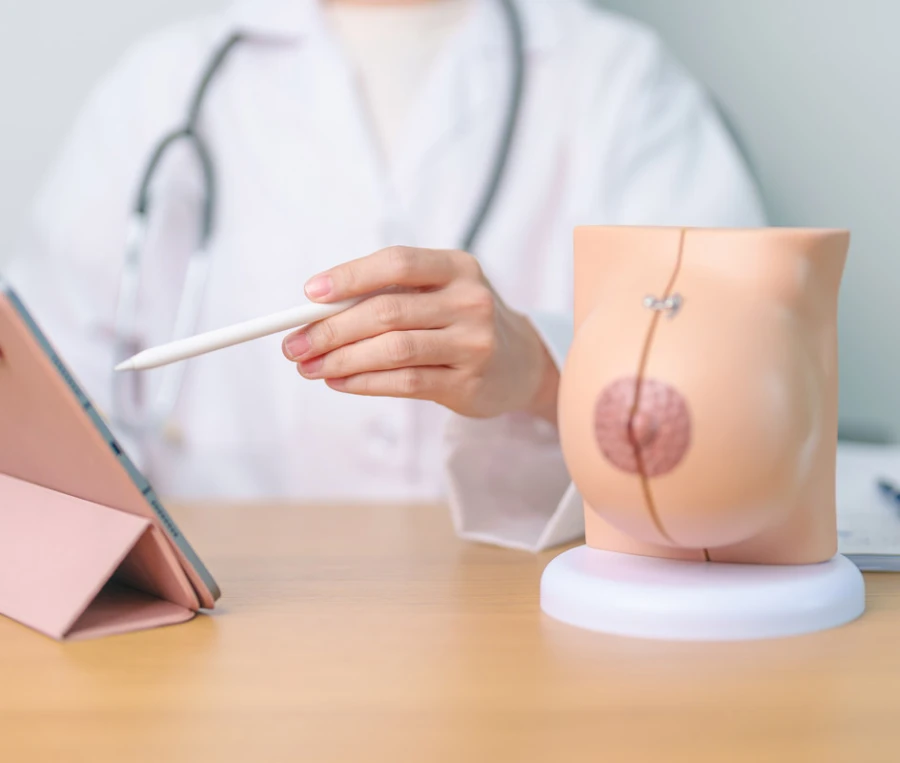
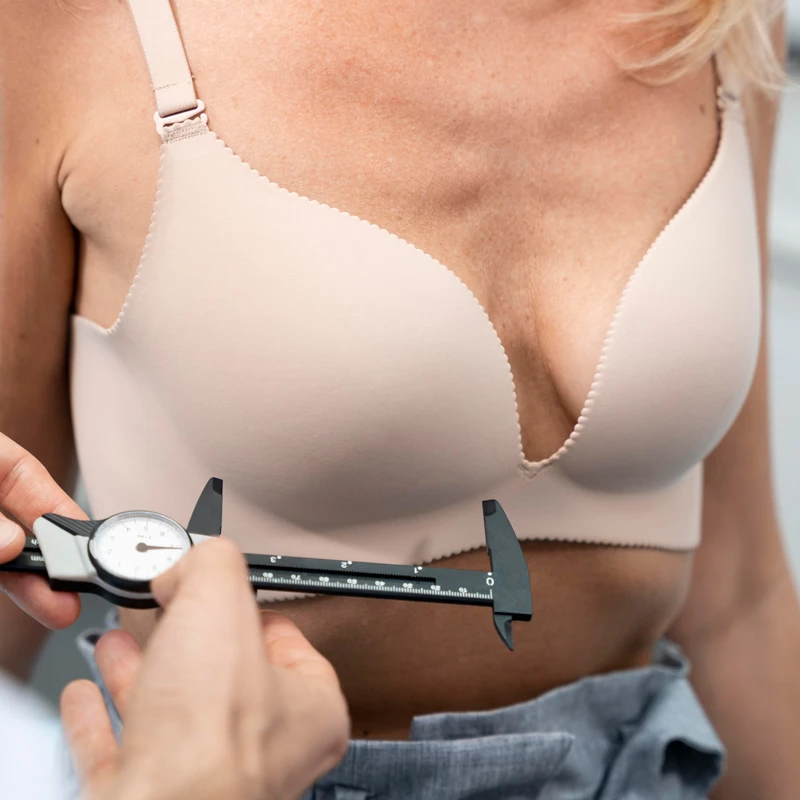
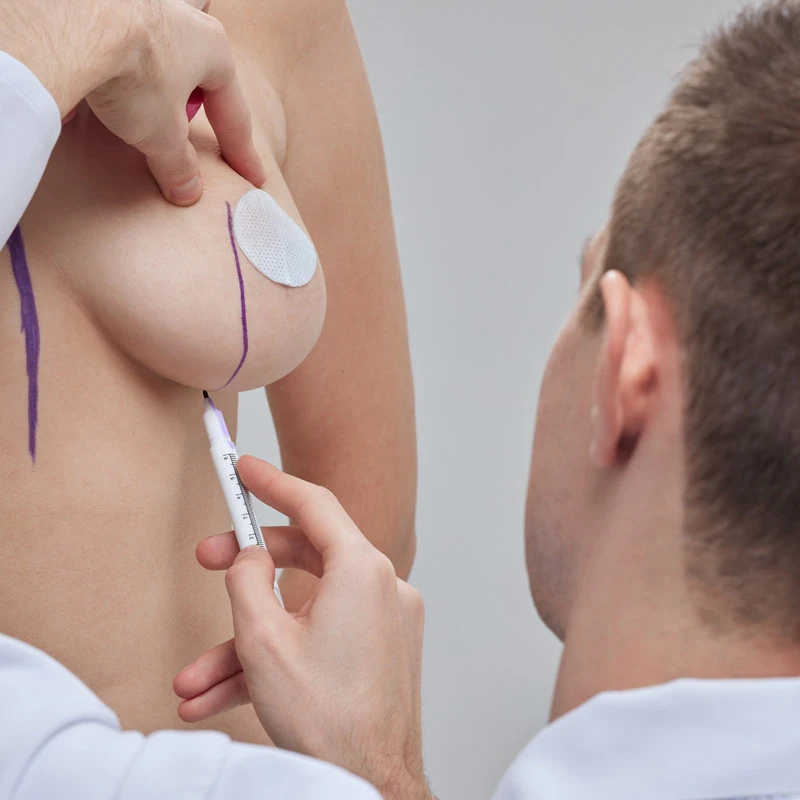
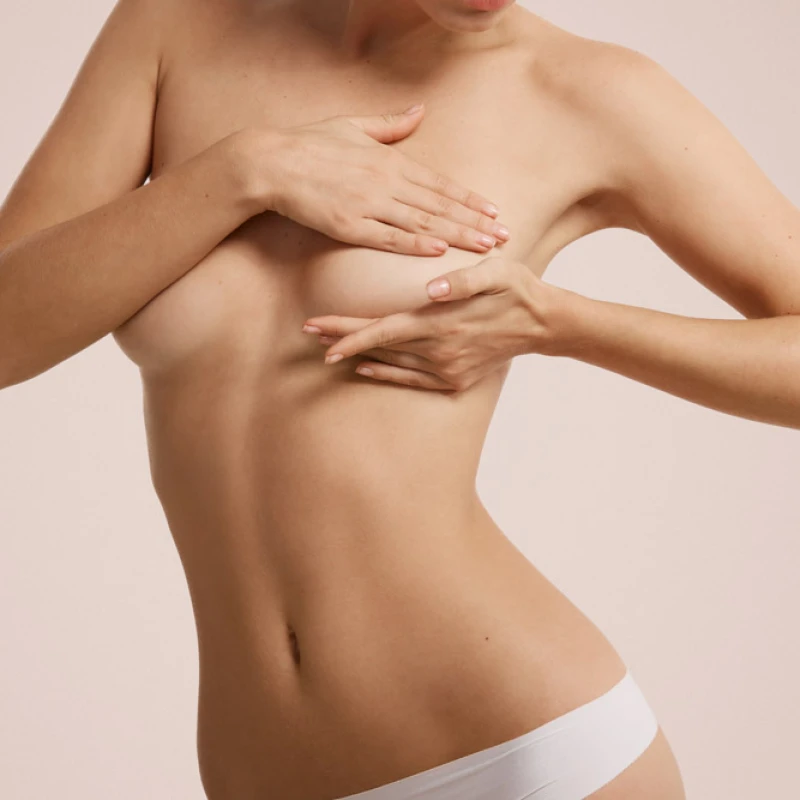
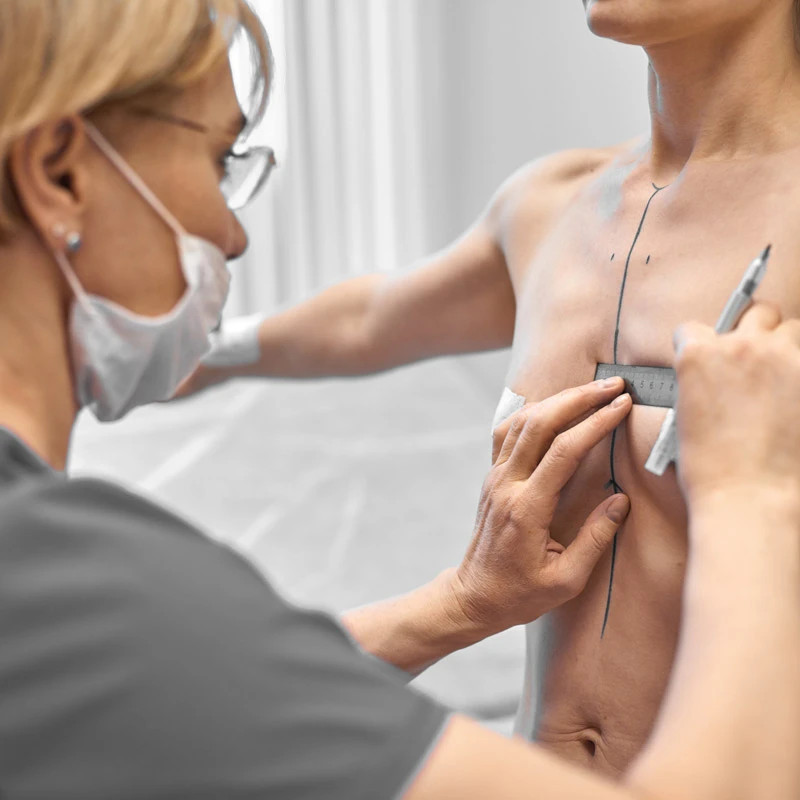
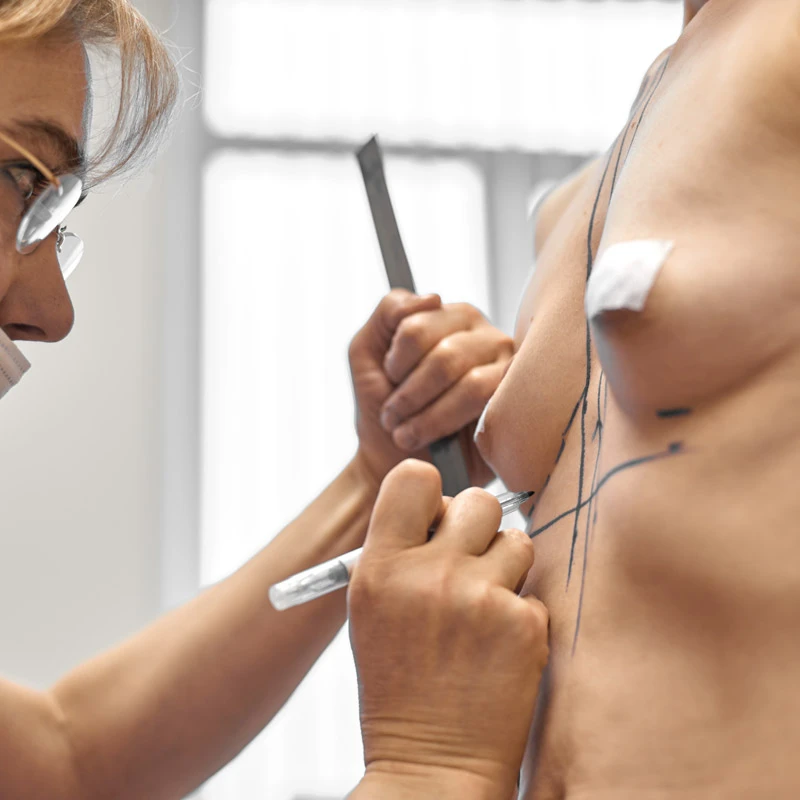
A breast lift is a proven method for restoring a youthful and firm breast shape.
During the procedure, excess skin is removed and the breast tissue is reshaped to create a more natural and aesthetic contour. Stamboul Clinic offers personalized breast lift solutions tailored to the patient’s individual desires and physical needs.
A breast lift can sustainably improve breast shape, leading to increased self-confidence and a greater sense of well-being.
Long-term breast lift results are supported by comprehensive aftercare.
Attractive contours achieved through the latest lifting techniques
Before & After: Breast Lift Results
Before-and-after images show the significantly improved breast shape and firmness achievable through a breast lift.
An effective procedure to restore a firm breast shape.
A breast lift is a surgical procedure that aims to lift and firm the breast shape by removing excess skin and reshaping the breast tissue. It’s particularly suitable for women who wish to restore a more youthful breast form after pregnancy, weight loss, or aging.
At Stamboul Clinic, we use modern techniques for natural, long-lasting results.
Gentle lifting and reshaping for an aesthetic breast appearance.
During a breast lift, excess skin is removed and the breast tissue is lifted and reshaped to achieve a more natural, youthful contour. The treatment can be customized to meet individual needs.
Stamboul Clinic ensures a safe and precise treatment experience.
Before & After: Breast Lift Results
Before-and-after images show the natural and youthful breast shape that can be achieved through a breast lift.
You can visit our Instagram account for all our photos: Instagram
Long-lasting results with a healthy lifestyle.
Breast lift results are generally long-lasting if the patient maintains a healthy lifestyle. Regular follow-up and a balanced way of life support the longevity of the results.
Stamboul Clinic provides comprehensive aftercare for long-term satisfaction.
Short recovery and a quick return to normal life.
After a breast lift, the recovery time is about two to four weeks. During this period, intense activities should be avoided, after which patients can gradually resume their normal daily routines.
Stamboul Clinic ensures a pleasant experience and comprehensive aftercare.
Stamboul Clinic guarantees the highest standards for breast lifts.
Our experienced specialists use modern technologies and certified techniques to ensure a safe and effective breast lift. Our aftercare ensures the lasting quality of the result.
About UsBreast lift for an aesthetic and harmonious breast shape.
Stamboul Clinic provides comprehensive support and modern technology to shape your breasts according to your preferences and strengthen your self-confidence.
Free Preliminary ExaminationFrequently Asked Questions (FAQ)
Before a breast lift, patients often have questions about the method, its effects, and safety. Here we answer the most common questions to put your mind at ease.
A breast lift is a surgical procedure that aims to correct sagging breast tissue and create a firmer breast contour. With age, pregnancy, breastfeeding, or weight fluctuations, the breasts can lose elasticity. A breast lift offers a medical solution for these changes.
Modern techniques focus on creating a natural-looking result that matches the patient’s body proportions. In many cases, the procedure reshapes the breast tissue, improves nipple position, and enhances symmetry while maintaining a balanced and youthful appearance.
The cost varies depending on the country, clinic, and extent of the surgery. The final price can also be influenced by the surgeon’s experience, the hospital setting, anesthesia type, and whether additional procedures (such as liposuction, implant placement, or revision work) are required.
Some quotes include pre-operative testing, compression garments, medications, and follow-up visits, while others list these separately. For an accurate comparison, patients should ask for a written breakdown of what is included.
Many patients opt for medical tourism, as some countries offer more affordable prices. These lower prices may be related to operating costs, competition among clinics, and package-based care models.
When choosing treatment abroad, it is important to consider clinic accreditation, surgeon credentials, implant/material quality (if relevant), and the availability of structured aftercare during recovery.
| Region | Average Cost |
|---|---|
| Turkey | USD 2,500 – 6,000 |
| Germany | EUR 6,000 – 12,000 |
| USA | USD 8,000 – 15,000 |
| UK | GBP 7,000 – 14,000 |
Countries with modern medical infrastructure, experienced surgeons, and strict clinic standards are considered leaders. “Best” can also depend on the patient’s priorities, such as access to advanced technology, strict safety protocols, or long-term follow-up care.
A strong choice is usually a destination where clinics have transparent standards, documented outcomes, and reliable post-operative support—especially important for international patients.
There is no universally accepted ranking. Patients should pay attention to experience, certifications, and postoperative care. Reviewing before-and-after cases, understanding the surgeon’s approach to scar placement, and checking hospital conditions can also help guide a safer decision.
A consultation should include a clear explanation of technique, expected scars, recovery timeline, and realistic outcome planning based on the patient’s anatomy.
Yes, a breast lift can correct sagging tissue. The procedure is designed to elevate the breast, reshape the internal tissue, and improve nipple position when needed.
The main benefit is improved contour and firmness, particularly when sagging affects breast shape and the position of the nipple-areola complex.
By removing excess skin and adjusting the breast tissue, a natural contour is possible. The exact technique depends on the degree of sagging and the desired final shape.
For patients who also want more volume, a lift can be combined with implants or fat transfer, depending on suitability and goals.
A bra can only support the visual position. A true lift without medical treatment is not possible.
Lifestyle habits like stable weight and good overall fitness may help maintain appearance, but they cannot reverse significant tissue stretching once it has occurred.
There is no fixed age limit. The decisive factor is the patient's overall health.
Surgeons typically consider medical history, smoking status, skin quality, and whether the breast shape has stabilized (especially in younger patients).
Breasts are usually most elastic in young adulthood. With time, connective tissues and skin naturally lose elasticity due to aging and hormonal changes.
Pregnancy, breastfeeding, major weight changes, and genetics can accelerate changes in breast firmness and position.
Yes, provided there are no medical contraindications. Age alone is not the main limitation; overall health, cardiovascular fitness, and safe anesthesia assessment are more important.
A detailed pre-operative evaluation helps determine whether surgery can be performed safely and what recovery support may be needed.
Pain is usually described as moderate and can be controlled with medication. Many patients report tightness and pressure rather than sharp pain, especially in the first days after surgery.
Discomfort typically improves as swelling decreases, and following the surgeon’s aftercare instructions can make recovery more comfortable.
Risks can include infection, scarring, or temporary changes in sensation. As with any surgery, bleeding, delayed wound healing, fluid buildup, asymmetry, or the need for revision can also occur.
Choosing an experienced surgeon, avoiding smoking, and attending follow-up visits significantly reduce complication risks and support better scar healing.
Many patients report that the first 2 to 3 days can be the most uncomfortable. During this period, swelling and tightness often peak, and movement can feel more limited.
After the initial phase, most patients notice gradual improvement, especially with proper rest, prescribed medications, and supportive garments.
The pain is usually mild to moderate and varies depending on the surgical technique. Discomfort often comes more from the liposuction donor areas than from the breast itself.
Swelling and soreness typically improve over the following days and weeks, and recovery depends on how many areas were treated.
There may be a slight reduction in size as excess skin is removed. In many cases, the “cup size change” is more about a reshaped, tighter breast than a major loss of volume.
If volume preservation is important, surgeons may discuss combining a lift with implants or fat transfer based on anatomy and goals.
Visually, the breasts may appear smaller because the shape becomes more compact and firmer. The breast is lifted and tightened, which can make it look less “spread out.”
Many patients find the result looks more youthful and proportionate even if the perceived size is slightly reduced.
Large breasts are generally considered to exist when their weight or size causes physical discomfort. This can include back and neck pain, skin irritation, posture strain, or activity limitations.
Medical assessment often considers symptoms and proportionality rather than an exact cup size threshold.
This depends on the goal. A lift corrects loss of shape, while implants create additional volume.
If sagging and volume loss are both concerns, a combined approach may be recommended to improve both position and fullness.
The decision should be made after a medical examination and based on personal preference. A consultation helps clarify whether sagging is the main issue, whether volume is sufficient, and what outcome is realistically achievable.
A good candidate typically has stable weight, realistic expectations, and is prepared to follow aftercare instructions for optimal healing.
Complete bed rest is usually not necessary, but rest during the first few days is recommended. Light walking is often encouraged early to support circulation and reduce clot risk.
Most patients return to light daily routines within 1–2 weeks, while strenuous activity requires longer restriction.
The procedure usually takes 2 to 4 hours, depending on the extent of the surgery. Complexity increases if significant reshaping is required or if the procedure is combined with implants or other corrections.
Operating time can also vary based on the technique chosen to achieve the desired lift and scar placement.
Strenuous physical activity, saunas, direct sunlight, and pressure on the breasts should be avoided. Heavy lifting and upper-body strain can increase swelling and stress incision lines.
Support bras, gentle movement, and follow-up appointments are typically part of the recovery plan to protect results.
The change is individual and depends on the amount of tissue removed. Some patients experience minimal size change, while others notice a more visible reduction if significant skin and tissue adjustment was necessary.
It is important to discuss goals clearly so the plan matches both aesthetic expectations and anatomical safety.
The results can remain stable for many years, but depend on age, weight, and lifestyle. Pregnancy, major weight changes, and natural aging can influence breast position over time.
Stable weight, supportive garments during sports, and healthy habits can help preserve results longer.
Studies show that the majority of patients are satisfied if their expectations are realistic. Satisfaction is strongly linked to good surgical planning, clear communication, and proper aftercare.
Some patients need time to adjust during swelling and scar maturation, as the final outcome may take several months to fully settle.
Dissatisfaction is usually related to scarring or not meeting expectations. This can happen when expectations are unrealistic, or if the patient did not fully understand scar placement and healing timelines.
Choosing an experienced surgeon and having a detailed pre-operative discussion significantly lowers the chance of regret.
Normality varies greatly. Medically speaking, there is no single perfect breast shape.
Natural breasts vary in symmetry, projection, nipple position, skin quality, and size, and many differences are completely normal.
This rule is sometimes used in cosmetic surgery planning to optimize the proportions between breast position and body structure.
It can be used as a guideline in aesthetic planning, but individual anatomy and personal preference always remain the main factors in designing a natural result.
With proper healing, the results can be long-lasting. Typically, a portion of the transferred fat survives permanently, while another portion is naturally absorbed by the body during early healing.
Long-term stability is best when weight remains stable and post-procedure instructions are followed carefully.
Limited volume growth and partial fat resorption are among the disadvantages. Some patients may require more than one session to reach the desired volume increase.
Results also depend on donor fat availability, blood supply in the recipient area, and individual healing response.
Strict bed rest is usually not necessary; however, patients should take it easy for the first few days and avoid strenuous physical activity.
Short walks are often encouraged early, while heavy lifting and intense movement are restricted until the surgeon confirms safe healing.
Intense exercise, heavy lifting, saunas, direct sunlight, and pressure on the breast area should be avoided for the first few weeks.
These restrictions help reduce swelling, protect incisions, and support better scar outcomes.
Light everyday movements are often possible after a few days, while sports are only permitted after about 4 to 6 weeks.
The exact timeline depends on healing progress, incision type, and whether additional procedures were performed.
Showering is usually possible after 3 to 5 days, provided the wound healing is progressing well.
Patients should follow the surgeon’s instructions regarding dressings, incision care, and avoiding soaking (baths, pools) in early recovery.
Pain is usually described as moderate and can be controlled with prescribed medication.
Tightness and swelling are common early symptoms, and they typically improve progressively over the first weeks.
The first 48 to 72 hours are often considered the most uncomfortable phase.
After this period, swelling generally begins to reduce and most patients feel noticeably more comfortable with each passing day.
The discomfort is usually less than with extensive surgical lift procedures.
However, donor areas treated with liposuction may feel sore or bruised for longer, which is a normal part of recovery.
There is no fixed age limit. Health, skin elasticity, and a medical examination are important factors.
Surgeons also consider the stability of breast development in younger patients and overall anesthesia safety in older patients.
Yes, provided there are no serious medical contraindications.
A pre-operative evaluation is essential to confirm that surgery and anesthesia are safe for the individual patient.
Breasts usually exhibit their highest natural elasticity in young adulthood.
Over time, hormonal changes, weight fluctuations, and pregnancy-related stretching can reduce firmness and alter breast position.
Visually, the breasts may appear smaller because sagging tissue is removed and the shape becomes more compact.
Many patients find that the lifted contour looks more youthful, even if perceived volume feels slightly reduced.
The change is individual and depends on the initial breast volume.
In many cases, the lift reshapes and tightens rather than dramatically reducing volume, unless large tissue adjustments are required.
Medically, there is no universally perfect breast size. The optimal shape is determined by body proportions.
From an aesthetic planning perspective, the most satisfying results usually come from proportional balance and comfort in daily activities.
Normal breasts vary considerably from person to person. Symmetry, skin quality, and position differ from individual to individual.
Small asymmetries are extremely common, and “normal” includes a broad range of shapes and sizes.
With qualified surgeons and modern surgical techniques, complications are rare, but not entirely impossible.
Common risks include scarring, swelling, temporary numbness, and wound healing delays, while serious issues like infection or bleeding are less common with proper care.
Pregnancy, active infections, serious chronic illnesses, or uncontrolled metabolic disorders can be contraindications.
Additional risk factors such as uncontrolled diabetes, severe clotting disorders, or heavy smoking may require postponement or special medical management.
Limited volume growth and potential fat resorption are among the most significant limitations.
Some patients may need multiple sessions, and results depend on donor fat availability and individual tissue response.
There is no objective ranking. Experience, clinic quality, and patient safety are crucial.
Patients should review credentials, verified outcomes, facility standards, and the quality of aftercare support when comparing options.
Countries with advanced medical technology, strict hygiene regulations, and experienced specialists are often preferred.
The best destination depends on the patient’s priorities, including safety, technique options, cost transparency, and follow-up logistics.
Competition among clinics, lower operating costs, and the medical tourism sector influence prices.
Despite affordability, patients should still verify surgeon qualifications, clinical standards, and what is included in the treatment package.
The result can remain stable for many years, but this depends on age, weight fluctuations, and lifestyle.
Long-term stability is best supported by weight control, healthy habits, and avoiding repeated major stretching events when possible.
Studies show that the majority of patients are satisfied when their expectations are realistic.
Clear consultation, realistic scar understanding, and choosing a qualified surgeon are among the strongest factors for high satisfaction.
Dissatisfaction usually arises from scarring problems or unrealistic expectations.
A detailed pre-operative plan, proper aftercare, and patience during scar maturation can significantly reduce disappointment and support better long-term outcomes.