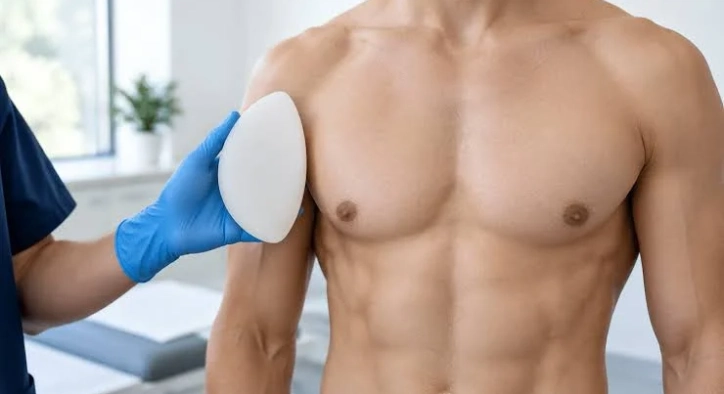
A well-developed, square-contoured chest represents a primary anatomical hallmark of masculine vitality, physical presence, and athletic conditioning. However, many men dedicated to progressive resistance training, bench presses, and strict high-protein diets struggle with a persistently flat, deflated, or asymmetrical anterior thorax. Often caused by unfavorable genetic muscle insertion points, neurogenic developmental variations, or congenital chest wall conditions such as Poland syndrome (pectoral aplasia) or pectus excavatum, this structural volume deficiency remains impervious to rigorous gym workouts. In modern male aesthetic and reconstructive plastic surgery, a pectoral implant provides the definitive surgical solution to project the chest wall, augment muscular thickness, and achieve permanent athletic symmetry.
At Stamboul Clinic, we coordinate specialized male aesthetic contouring and post-bariatric chest reconstruction within accredited hospital facilities in Istanbul. Whether you are researching an all-inclusive medical trip to Turkey, evaluating the surgical nuances of male pectoral implant surgery, comparing sub pectoral implant placement against a pre pectoral implant pocket, exploring the combined aesthetic synergy of pectoral implant etching, or assessing the dynamic variables behind global pectoral implant cost and male pectoral implant cost, this comprehensive clinical guide provides deep surgical insights and recovery protocols.
Table of Content
- What Is Pectoral Implant Surgery?
- Solid Silicone Elastomer vs. Female Breast Implants
- Surgical Planes: Sub Pectoral Implant vs. Pre Pectoral Implant
- High-Definition Body Sculpting: Pectoral Implant Etching
- Incisions and Scars: The Trans-Axillary Approach
- Recovery Timeline: Gym Milestones and Healing Roadmap
- Visual Proof: Pectoral Implant Before and After Transformations
- Cost Determinants: Understanding Male Chest Surgery Pricing Variables
- Frequently Asked Questions (FAQ)
- Can pectoral implants shift, rotate, or move during heavy bench pressing?
- Will pectoral implants feel hard or artificial to the touch?
- Can pectoral implants correct Poland syndrome or pectus excavatum?
- How long do male pectoral implants last, and will they ever need replacement?
- Why do male pectoral implant prices vary between different patients?
What Is Pectoral Implant Surgery?
To establish a clear medical foundation, let us examine what happens during pectoral implant surgery from an anatomical and biomechanical standpoint. Clinically defined as subfascial or submuscular pectoral augmentation, this is an inpatient or outpatient plastic surgery performed under general anesthesia lasting roughly 1 to 2 hours.
THE MALE CHEST AUGMENTATION SURGICAL SEQUENCE:
[Pre-Op Muscular Vector & Dimension Mapping] ➡️ [Hidden Trans-Axillary Incision (4–5 cm in Armpit Crease)] ➡️ [Sub-Pectoralis Major Pocket Dissection] ➡️ [Solid Silicone Elastomer Insertion & Anatomical Orientation] ➡️ [Deep Fascial Anchoring & Multi-Layer Suture Closure]
Solid Silicone Elastomer vs. Female Breast Implants
A common misconception among prospective male patients is that pectoral prostheses resemble female breast implants. This is clinically incorrect:
- Solid Silicone Elastomer: Unlike female implants filled with liquid silicone gel or saline that carry rupture risks, pectoral implants are manufactured from medical-grade, soft, solid silicone elastomer. They cannot leak, pop, or deflate.
- Anatomical Geometry: Rather than round or teardrop shapes designed for conical projection, male implants feature a firm, rectangular or trapezoidal cross-section that mimics the natural muscular bellies of the pectoralis major, creating flat upper fullness without feminine softness.
Surgical Planes: Sub Pectoral Implant vs. Pre Pectoral Implant
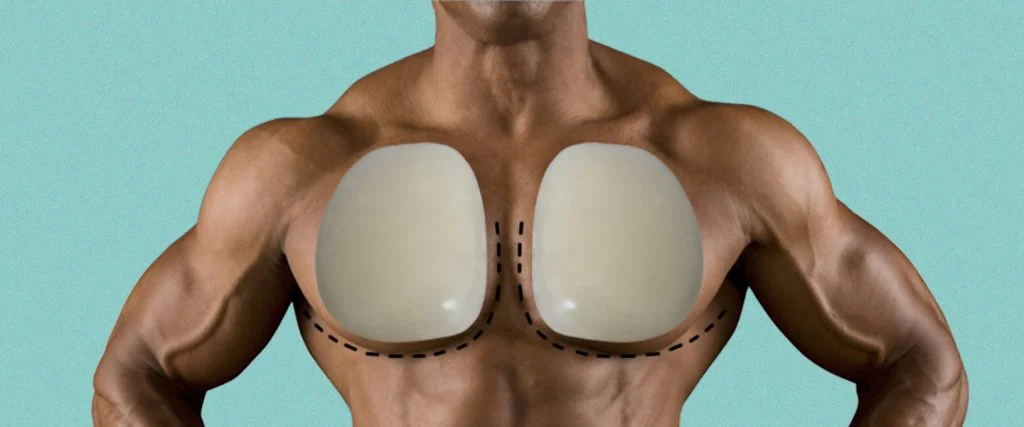
The anatomical pocket selected by your plastic surgeon dictates implant stability, edge visibility, and tactile naturalness.
SURGICAL POCKET COMPARISON:
- Sub Pectoral Implant (Submuscular / Subpectoral): Placed beneath the pectoralis major muscle; gold standard; zero edge visibility.
- Pre Pectoral Implant (Subfascial / Subcutaneous): Placed above muscle beneath fascia; higher visibility risk in lean men.
1. The Sub Pectoral Implant (Submuscular Gold Standard)
In over ninety percent of male aesthetic cases, the surgeon places a sub pectoral implant. By dissecting a precise optical pocket between the deep underside of the pectoralis major and the anterior surface of the pectoralis minor muscle, the implant is fully cushioned beneath thick natural muscle fibers. This guarantees that implant edges remain completely imperceptible to touch or sight, and ensures the prosthesis flexes naturally whenever the chest muscles contract.
2. The Pre Pectoral Implant (Subfascial Technique)
A pre pectoral implant approach places the prosthesis on top of the muscle belly, beneath the deep pectoral fascia. While this approach involves less post-operative muscular soreness during the first three days, it carries a substantially higher risk of visible implant rippling, step-off borders, and lateral displacement in athletic men who possess low subcutaneous body fat percentages.
High-Definition Body Sculpting: Pectoral Implant Etching
To achieve an ultra-athletic, chiseled upper torso, contemporary plastic surgeons frequently combine prosthetic insertion with pectoral implant etching.
HIGH-DEFINITION PECTORAL ETCHING MECHANICS:
- [Subpectoral Implant Placement for Projection] ➕ [VASER Ultrasonic Liposuction of Subcutaneous Fat] ➕ [Negative Space Etching Along Sternal & Inframammary Borders] ➡️ [Deep Muscular Shadowing & Natural Chiseled Definition]
By utilizing high-frequency VASER ultrasound energy, the surgeon precisely aspirates superficial fat along the sternal midline (cleavage), the lower inframammary fold, and the lateral borders of the pectoralis major. Removing the subcutaneous blanket in these transition zones creates defined natural shadows (negative space) that frame the newly projected implant, eliminating any puffy or bloated appearance.
Incisions and Scars: The Trans-Axillary Approach
Because male chests are frequently exposed in athletic, beach, and intimate environments, concealing surgical incisions is vital.
THE TRANS-AXILLARY SCAR CONCEALMENT PROTOCOL:
- Hidden Access Point: A 4 to 5 cm incision placed strictly within the natural apex fold of the hair-bearing armpit.
- Zero Chest Wall Cuts: No scars are made on the anterior chest, sternum, or areolar borders.
- Concealed Maturation: Once armpit hair regrows, the faded thin line becomes virtually impossible to detect.
By utilizing the trans-axillary incision vector, the entire anterior chest remains untouched by external cutting. Modern endoscopic camera guidance allows the surgeon to visualize the subpectoral pocket through this small axillary tunnel, ensuring precise hemostasis and accurate implant positioning before closing the deep dermis with absorbable sutures.
Recovery Timeline: Gym Milestones and Healing Roadmap
Adhering to post-operative arm mobility restrictions and garment protocols protects the subpectoral pocket from trauma or early migration.
THE POST-OPERATIVE RECOVERY TIMELINE:
- - Days 1 to 3: Acute Tightness ➡️ Sensation of heavy chest soreness (similar to an intense workout); compression vest worn 24/7.
- Days 7 to 10: Mobility Milestone ➡️ Return to light desk work and daily walking; avoiding arm abduction above 90 degrees.
- Weeks 3 to 4: Settling Phase ➡️ Post-operative swelling subsides; light lower-body cardiovascular exercise safely resumed.
- Weeks 6 to 8: Gym Clearance ➡️ Pectoral pocket securely healed; full return to bench pressing, push-ups, and heavy lifting.
- Months 3 to 6: Final Muscle Integration ➡️ Tissues settle fully; natural muscular contour and dynamic movement established.
Patients wear a specialized supportive male chest compression vest for four to six weeks to eliminate dead space and prevent fluid accumulation (seroma). Heavy upper-body compound movements, such as bench pressing, dips, and overhead pressing, must be avoided for six to eight weeks to prevent the contracting muscle from shifting the prosthesis before capsule formation stabilizes.
Visual Proof: Pectoral Implant Before and After Transformations
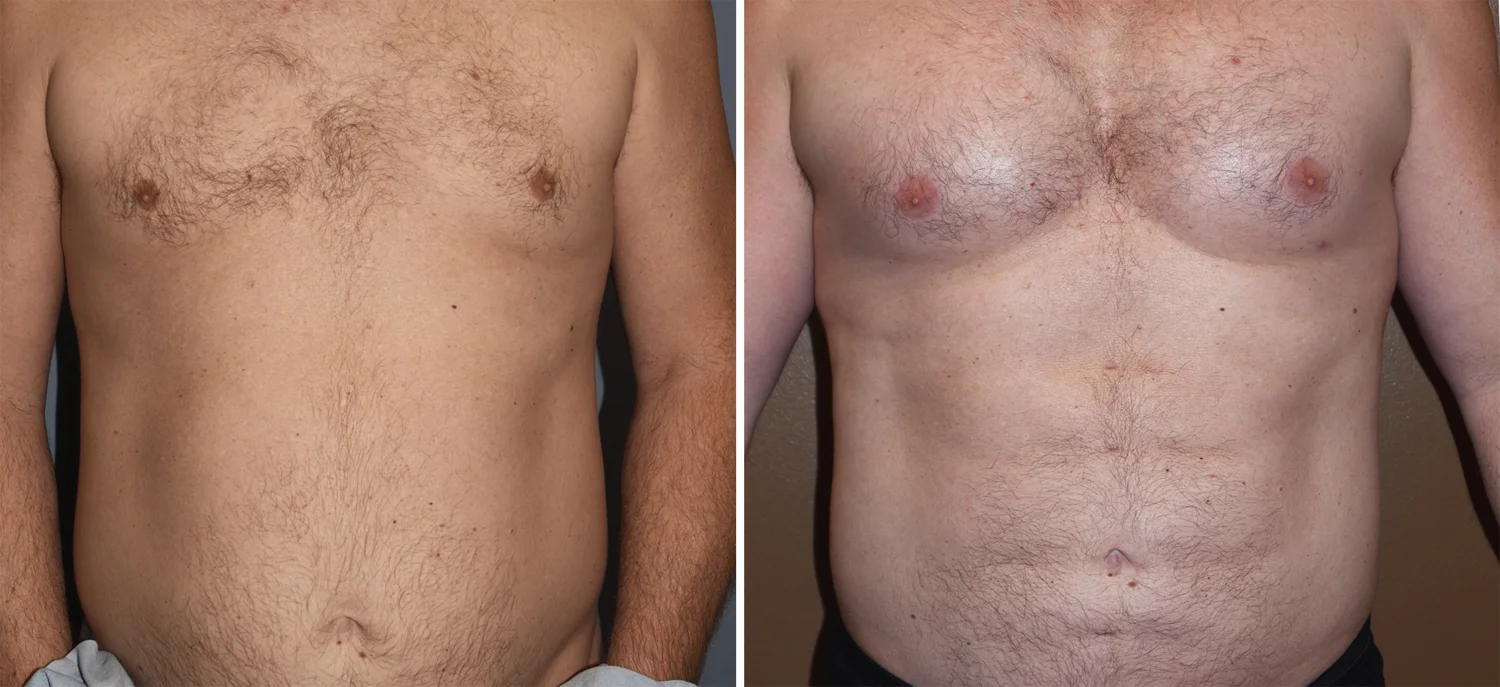
Reviewing unedited clinical male pectoral implant surgery cases demonstrates how anatomical prostheses restore muscular balance to the male thorax:
The transformation produces an expanded horizontal chest width, filled subclavicular hollows, and an athletic rectangular silhouette that harmonizes with broad shoulders and abdominal contours.
Cost Determinants: Understanding Male Chest Surgery Pricing Variables
When evaluating prosthetic chest enhancement, prospective patients should note that pricing varies considerably depending on individual anatomical needs and combined body contouring procedures rather than a single fixed rate. The overall pectoral implant cost and male pectoral implant cost are shaped by several clinical and logistical variables:
- Custom vs. Standard Prostheses: Off-the-shelf anatomical implants require standard sizing protocols, whereas patients with severe asymmetric Poland syndrome or pectus excavatum often require custom-molded implants generated from 3D CT scans, altering manufacturing overhead.
- Combination with High-Definition Etching: Adding VASER ultrasonic liposuction across the torso, flanks, or gynecomastia gland excision extends operating theater time and specialized equipment utilization.
- Anesthesia and Hospital Infrastructure: Performing surgery under general anesthesia in an accredited tertiary hospital with overnight post-operative observation involves different clinical facility costs compared to minor outpatient clinics.
- Surgeon's Reconstructive Expertise: Board-certified plastic surgeons with dedicated experience in male aesthetic surgery and endoscopic pocket dissection command specialized professional fees.
- Comprehensive Logistics: All-inclusive medical packages in Turkey incorporating VIP airport transfers, luxury hotel accommodations, compression garments, medications, and certified follow-up care create variable pricing tiers.
Because surgical plans are customized to individual chest wall dimensions, exact quotations are established following a personalized clinical and photographic evaluation. The matrix below outlines relative regional price structures for 2026:
Healthcare Destination / Region | Cost Structure & Price Variability | Relative Price Level | Typical Package Framework |
United States (USA) | High variability by surgeon & state | Very High | Surgery Only (Facility, Anesthesia & Garments Extra) |
United Kingdom (UK) | Variable by private clinic & implant tier | High | Surgery Only (Consultations & Aftercare Invoiced Separately) |
Germany / Switzerland | Variable by medical fee scale (GOÄ) | High | Surgery Only (Hospitalization & Meds Invoiced Separately) |
Stamboul (Turkey) | Dynamic Custom Package | High Value / Accessible | Comprehensive (Hospital Stay, Hotel, VIP Transfers & Care) |
Frequently Asked Questions (FAQ)
Can pectoral implants shift, rotate, or move during heavy bench pressing?
When placed in the subpectoral space by an experienced surgeon, the implant resides in a tightly dissected submuscular pocket that matches its exact dimensions. Over the initial six weeks, your body develops a stable biological capsule around the implant, locking it in place. Once fully healed, you can resume heavy bench pressing, bodybuilding, and contact sports without risk of implant displacement.
Will pectoral implants feel hard or artificial to the touch?
No. Modern pectoral implants are crafted from soft, solid cohesive silicone elastomer that mimics the resting firmness of natural, flexed muscle tissue. Because the implant is situated beneath the thick pectoralis major muscle, someone touching your chest will feel your natural muscle and skin rather than the prosthesis.
Can pectoral implants correct Poland syndrome or pectus excavatum?
Yes. Pectoral implants serve as a primary reconstructive intervention for Poland syndrome (congenital absence or hypoplasia of the pectoralis muscle on one side) and mild-to-moderate pectus excavatum (funnel chest). In unilateral cases, a custom-designed implant is fabricated to mirror the unaffected muscle, creating chest symmetry.
How long do male pectoral implants last, and will they ever need replacement?
Because male pectoral implants are made of solid silicone elastomer rather than liquid or gel-filled envelopes, they cannot rupture, deflate, or leak. Barring trauma or rare infection, pectoral implants are designed to last permanently for life and do not require routine replacement.
Why do male pectoral implant prices vary between different patients?
Pricing varies because treatment is tailored to the individual thorax. Factors such as whether standard anatomical prostheses or custom 3D-molded implants are needed, whether complementary VASER liposuction and chest etching are integrated, and the choice of international travel accommodation packages directly shape total procedural costs.
Über den Autor