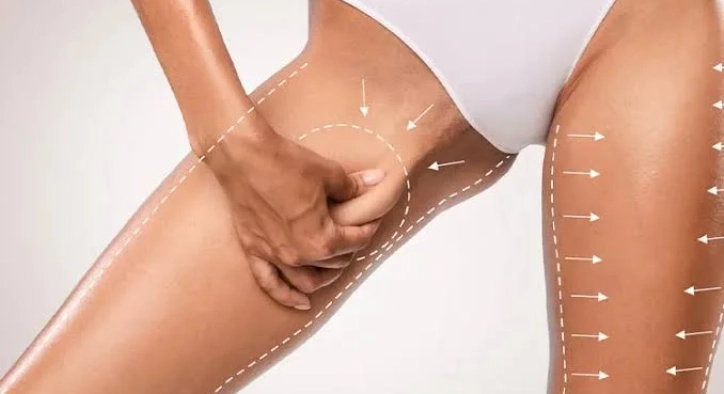
Significant weight reduction (whether achieved through bariatric surgery, lifestyle changes, or natural aging) is a major health milestone. However, rapid weight loss frequently leaves behind stretched skin and loss of tissue elasticity around the upper legs. Excessive skin fold accumulation along the inner thighs causes physical discomfort, painful skin chafing during daily walking, difficulty finding fitting clothing, and hygiene challenges. Because exercise and targeted muscle training strengthen underlying quadriceps and hamstrings without tightening loose skin, body contouring surgery offers the ultimate corrective solution. In modern plastic surgery, thigh lift surgery stands as the definitive procedure for restoring smooth, firm leg contours.
At Stamboul Clinic, we coordinate world-class body plastic and post-bariatric reconstructive surgeries within accredited, state-of-the-art hospital settings. Whether you are evaluating options for a thigh lift surgery Turkey travel plan, seeking clarity on what is a thigh lift surgery from an anatomical standpoint, researching medial thigh lift surgery incision patterns, or analyzing global thigh lift surgery cost parameters, this clinical guide provides deep medical insights and post-operative protocols.
Table of Content
- What Is a Thigh Lift Surgery?
- Surgical Incision Patterns: Inner (Medial) vs. Extended Thigh Lift
- Tracking Thigh Lift Surgery Before and After Transformations
- How Much Is Thigh Lift Surgery Globally?
- Frequently Asked Questions (FAQ)
- How do I manage walking, hygiene, and sitting during the first 2 weeks after thigh lift surgery?
- Will surgical thigh lift scars be visible when wearing shorts or swimwear?
- How long do I need to wear the medical leg compression garment after surgery?
- When can I safely return to working out, running, and heavy leg exercises?
- Can liposuction alone fix sagging inner thigh skin without a surgical lift?
What Is a Thigh Lift Surgery?
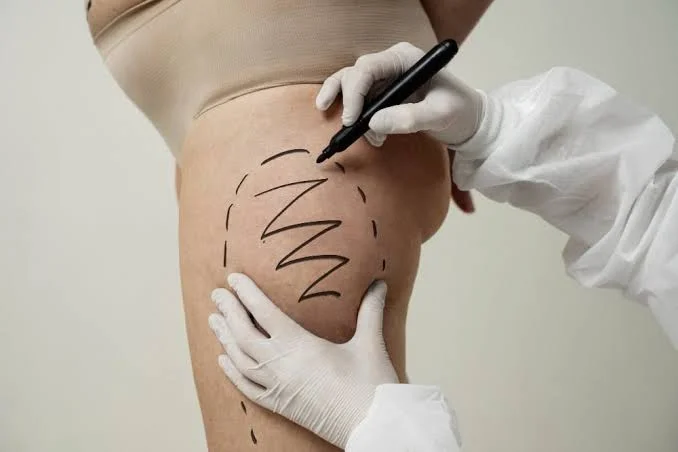
To establish a clear medical foundation, let us answer a primary question: what is a thigh lift surgery from a reconstructive perspective? Clinically defined as a thighplasty, a thigh lift surgery procedure is an extensive body-contouring operation performed under general anesthesia that removes redundant skin folds, reshapes underlying subcutaneous fat, and re-anchors the dermal tissues to the deep fascial network of the upper leg.
THE THIGHPLASTY STRUCTURAL RECONSTRUCTION SEQUENCE:
- [Pre-Op Surgical Marking] ➡️ [Liposuction Emulsification] ➡️ [Redundant Skin Excision] ➡️ [Deep Fascial Anchoring (Colles' Fascia)] ➡️ [Multi-Layer Tension-Free Closure]
The Dual Role of Liposuction and Excision
A comprehensive thighplasty combines specialized Vaser or tumescent liposuction with surgical skin excision. Liposuction thins the dense subcutaneous fat layer first, freeing the tissue planes while preserving lymphatic channels and blood vessels intact. The surgeon then excises the pre-marked excess skin, pulls the dermal flap upward, and anchors the underlying deep fascia to Colles' fascia (the firm ligamentous structure in the groin) to prevent the surgical scar from pulling downward.
Surgical Incision Patterns: Inner (Medial) vs. Extended Thigh Lift
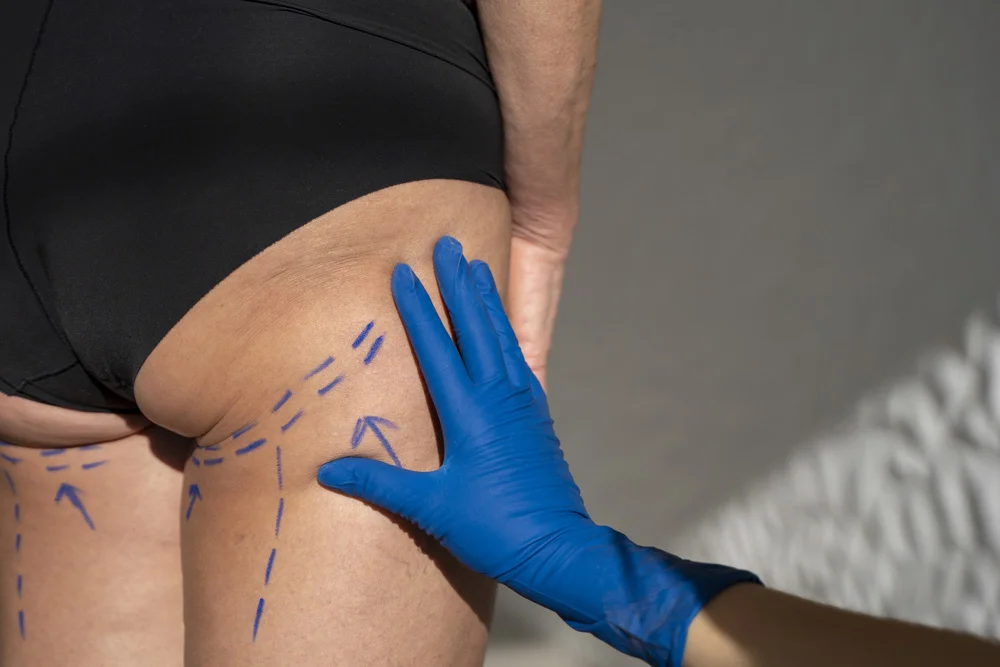
Selecting the appropriate surgical incision pattern depends on the amount of excess skin, its distribution along the leg, and your aesthetic goals.
THIGHPLASTY INCISION METHODOLOGIES:
- Crescent (Horizontal) Medial Lift: Ideal for minimal-to-moderate skin excess confined to the upper third of the inner thigh.
- Vertical (Extended / T-Shaped) Lift: Recommended for severe circumferential skin laxity extending down to the knee joint.
1. Crescent (Horizontal) Medial Thigh Lift
For patients with moderate skin laxity localized near the groin, an inner thigh lift surgery utilizes a crescent-shaped incision hidden within the natural groin crease. The surgeon removes a horizontal strip of skin and fat, pulling the leg tissue upward. The resulting scar remains hidden within the underwear or bikini line.
2. Vertical Extended Medial Thigh Lift
When excessive skin hangs down the entire inner leg to the knee (common after massive weight loss following bariatric surgery), a horizontal incision alone cannot achieve adequate tightness. An extended medial thigh lift surgery adds a vertical incision along the inner inseam of the leg, running from the groin down toward the inner knee. While this technique creates a longer visible scar line, it delivers superior tightening along the entire circumference and length of the leg.
Tracking Thigh Lift Surgery Before and After Transformations
Evaluating unedited thigh lift surgery before and after patient profiles illustrates how swelling resolves, skin tightening stabilizes, and scar maturation evolves along a natural post-operative timeline:
THE CHRONOLOGICAL RECOVERY TIMELINE:
- Weeks 1 to 2: Acute Phase ➡️ Wearing compression garments; localized edema; limited stride length during walking.
- Weeks 3 to 4: Suture Clearance ➡️ Incision lines heal; drain removal complete; return to light desk work.
- Months 2 to 3: Tissue Settlement ➡️ Residual swelling subsides; inner leg chafing completely eliminated.
- Month 6+: Final Contour Maturity ➡️ Scars fade from pink to light skin tones; full leg mobility restored.
Modern thighplasty techniques prioritize functional comfort alongside cosmetic improvement. By anchoring the deep tissue flap securely to the pelvic fascia, our partner surgeons prevent downward scar migration, ensuring that the inner groin boundary remains clean and comfortable during walking.
How Much Is Thigh Lift Surgery Globally?
A primary consideration when planning post-bariatric body sculpting is the financial investment. Prospective patients routinely research how much is thigh lift surgery or compare inner thigh lift surgery cost structures across international healthcare hubs.
In the United States, Canada, the UK, and Western Europe, thighplasty is classified as an elective cosmetic or reconstructive procedure. Private hospital bills in Western centers range from $7,500 to $16,000+, depending on whether a horizontal crescent or vertical extended technique is required.
Selecting a thigh lift surgery Turkey package allows international patients to access board-certified plastic surgeons and accredited hospital facilities through transparent, all-inclusive packages. The table below outlines structural pricing comparisons for 2026:
Healthcare Destination / Hub | Crescent (Horizontal) Medial Lift Range | Vertical Extended (Full-Length) Lift Range | Package Inclusions |
United States (USA) | $7,500 – $12,000 USD | $11,000 – $18,000 USD | Surgery Only (Facility & Checks Extra) |
United Kingdom (UK) | £5,500 – £9,500 GBP | £8,500 – £14,000 GBP | Surgery Only (Consults & Checks Extra) |
Germany / Switzerland | €6,000 – €10,500 EUR | €9,000 – €15,000 EUR | Surgery Only (Hospital & Meds Extra) |
Stamboul (Turkey) | €2,850 – €3,800 EUR | €3,450 – €4,600 EUR | All-Inclusive (Hotel, VIP Transfers & Aftercare) |
Frequently Asked Questions (FAQ)
How do I manage walking, hygiene, and sitting during the first 2 weeks after thigh lift surgery?
During the initial 14 days, you must walk with short, deliberate steps, keeping your knees close together to prevent tension on the inner groin incision lines. Avoid wide-legged sitting or squatting. After using the restroom, gently pat the groin area clean with antiseptic wipes and dry thoroughly to prevent moisture accumulation near the sutures. Wear your specialized compression garment continuously to support the surgical site.
Will surgical thigh lift scars be visible when wearing shorts or swimwear?
Visibility depends on the surgical technique used. A crescent medial thigh lift scar is hidden entirely within the groin crease, remaining completely concealed by standard underwear or swimsuits. A vertical extended thigh lift leaves a scar along the inner inseam of the thigh; while visible on the inner leg, it is strategically placed so it is not seen from the front or back when standing naturally.
How long do I need to wear the medical leg compression garment after surgery?
You must wear the specialized thigh-length compression garment 24 hours a day for the first 3 to 4 weeks (removing it only briefly for showering). Between weeks 4 and 6, you wear it for 12 hours a day. Compression prevents fluid accumulation (seroma), supports healing tissue layers against the leg muscles, and reduces post-operative swelling.
When can I safely return to working out, running, and heavy leg exercises?
Light walking is encouraged starting on day 1 to promote healthy blood circulation and prevent deep vein thrombosis (DVT). You can safely return to desk work after 10 to 14 days. However, intense cardiovascular exercise, running, heavy leg presses, squatting, and wide stretching must be strictly avoided for 6 to 8 weeks to prevent wound separation and incision distress.
Can liposuction alone fix sagging inner thigh skin without a surgical lift?
No. Liposuction removes localized fat deposits but cannot tighten stretched, redundant skin. Performing liposuction alone on thighs with poor skin elasticity can worsen sagging and result in a wrinkled, empty skin envelope. Patients with significant skin excess require a surgical thigh lift to physically excise redundant tissue.
Über den Autor