
A healthy smile is built on the strength of the gums, yet dental infections can strike even the most diligent patients. One of the most urgent and uncomfortable conditions a person can face is an abscess on gum. Often appearing suddenly as a painful, throbbing bump, this condition is far more than a minor irritation. It is a sign that bacteria have breached your body’s defenses, creating a localized pocket of infection that requires immediate attention.
At Stamboul Clinic, we prioritize the rapid diagnosis and treatment of oral infections. Whether it is an abscess on gum near wisdom tooth or a more generalized infection, our approach focuses on eliminating the bacterial source and preventing systemic spread. Understanding the symptoms of an abscess on gum and knowing when to seek professional help can mean the difference between saving a tooth and facing a complex extraction.
In this guide, we explore the clinical nature of this infection and the advanced pathways for an abscess on gum cure.
Table of Content
What is an Abscess on the Gum? Understanding the Infection
Technically, a periodontal abscess is an inflammatory reaction to bacteria that have become trapped in the periodontal pocket (the space between the tooth and the gum). While it is often confused with a periapical abscess a gum-based abscess is primarily a disease of the supporting tissues.
The bacteria thrive in an environment lacking oxygen, multiplying rapidly and causing the body to send white blood cells to the area. This battle creates pus, which builds up and creates pressure, resulting in the characteristic swelling. A mouth abscess on gum can be acute, appearing with intense pain and fever, or chronic, where a small "fistula" or pimple develops and drains periodically, masking the underlying severity of the bone destruction.
Top 5 Symptoms of a Gum Abscess You Shouldn’t Ignore
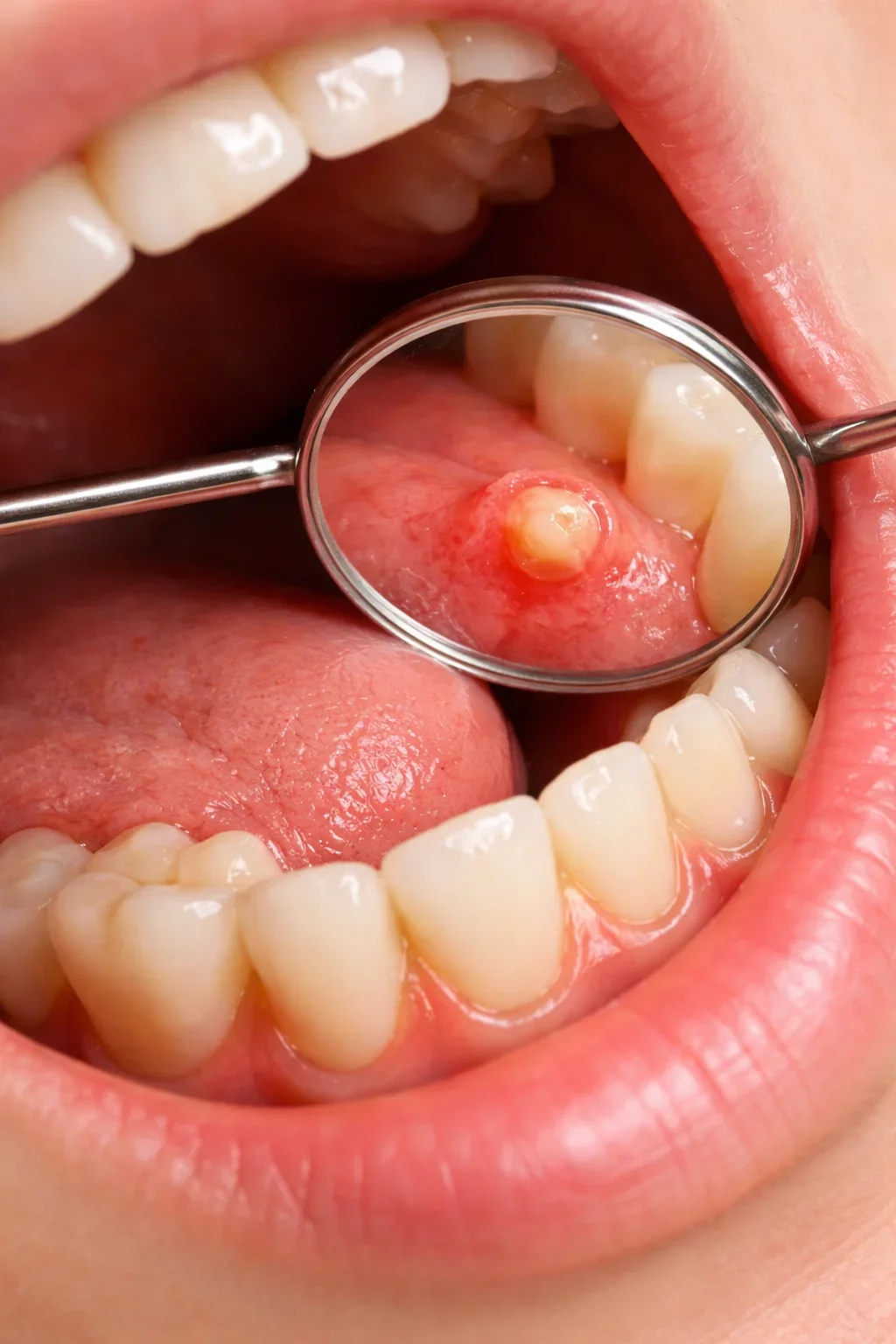
Many patients wonder how to tell if a sore spot is a minor ulcer or a true infection. Tooth abscess symptoms are generally distinct because of their intensity and the physical presence of pus.
If you notice these five signs, you are likely dealing with a mouth abscess on gum:
- Persistent Throbbing Pain: Unlike the sharp pain of a cavity, this is a deep, radiating ache that may extend to your jaw, neck, or ear.
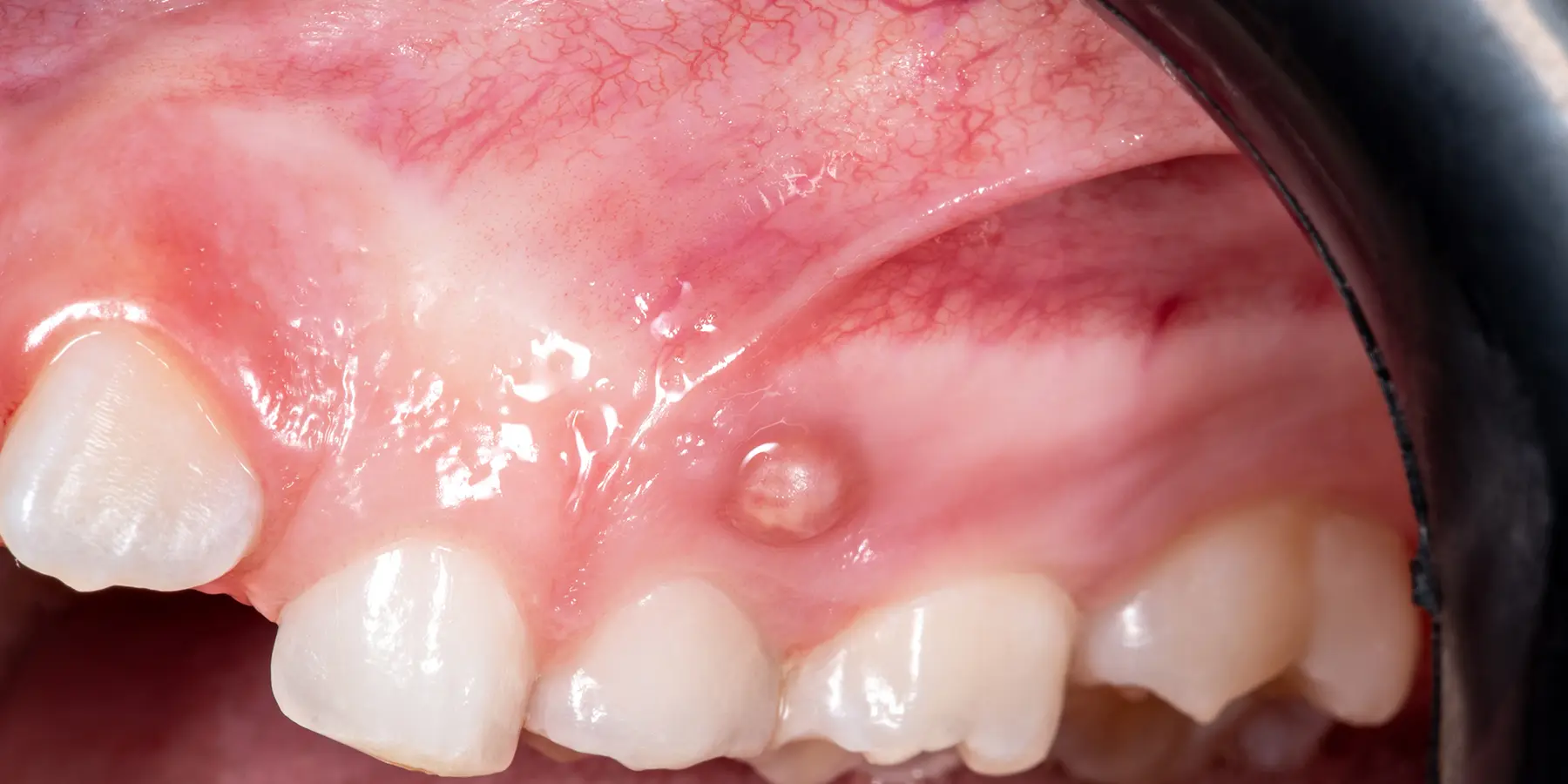
- Visible Swelling (The Gum Boil): A red, shiny, or white-topped bump on the gum tissue that feels tender to the touch.
- Foul Taste or Odor: If you experience a sudden, bitter taste in your mouth, it may be due to a bursting abscess on gum releasing pus.
- Sensitivity to Temperature: Intense pain when consuming hot or cold liquids, which often lingers long after the trigger is gone.
- Systemic Illness: Feeling feverish, having swollen lymph nodes under the jaw, or experiencing facial swelling are signs the infection is attempting to spread.
Can a Dental Abscess Go Away on Its Own?
One of the most dangerous misconceptions in dental health is the belief that a can gum abscess heal on its own. The short answer is no. While the pain might temporarily subside if the abscess ruptures and drains, the underlying bacterial colony remains active in the tissues and bone.
Ignoring the infection is not a passive choice; it allows the bacteria to continue dissolving the alveolar bone that supports your teeth. In 2026, we see cases where a "silent" abscess has caused significant bone loss simply because the patient waited for the pain to return before seeking an abscess on gum treatment. If the infection is not mechanically removed and the area disinfected, it will inevitably recur, often with more severe consequences.
How is a Gum Abscess Treated?
When you arrive at the clinic, the first priority is to stabilize the infection and relieve the pressure. A dentist will perform a clinical exam and take a periapical X-ray to determine the depth of the abscess on gums. Depending on the source of the bacteria, several treatment paths are available to provide a permanent abscess on gum cure.
Incision and Drainage: Immediate Relief
If the abscess is large and causing significant pressure, the dentist may perform a small incision. This allows the trapped pus to escape, providing near-instant relief from the throbbing pain. The area is then thoroughly flushed with a saline or antimicrobial solution. While this treats the symptom, the source must still be addressed to prevent the pocket from refilling.
Root Canal Therapy: Saving the Internal Structure
If the abscess on gum is determined to be "endodontic" in origin a root canal is necessary. This involves removing the infected pulp, disinfecting the canals, and sealing them. This is the most effective way to save a natural tooth that has been compromised by a deep infection.
Periodontal Cleaning: Treating the Pocket Infection
In cases of a true periodontal abscess, the treatment focuses on the space between the tooth and the gum. A deep cleaning (scaling and root planing) is performed to remove tartar and bacterial biofilm from deep within the periodontal pocket. In 2026, we often supplement this with laser disinfection to kill bacteria in areas that traditional tools cannot reach.
Why Popping a "Gum Boil" at Home is Dangerous
It can be tempting to try and "pop" a swelling to relieve the pressure, but this is highly discouraged. When you attempt a bursting abscess on gum at home, you risk several complications:
- Secondary Infection: Your mouth is home to millions of bacteria; using non-sterile tools can introduce new, more aggressive pathogens into the open wound.
- Incomplete Drainage: You may drain the surface pus, but the "core" of the infection remains deep in the tissue, allowing it to spread laterally into the jawbone.
- Spreading the Bacteria: The act of squeezing can actually push the bacteria deeper into the bloodstream or surrounding tissues, potentially leading to a serious condition called cellulitis.
The best way how to treat abscess on gum is to leave the physical manipulation to a professional who can control the drainage and ensure the site is properly disinfected.
Prevention and Long-Term Care: Keeping Your Gums Infection-Free
Once you have received abscess on gum treatment, the focus shifts to preventing a recurrence. Most gum-based infections are the result of untreated periodontal disease or food particles becoming trapped in deep pockets.
To keep your gums healthy:
- Focus on the Gum Line: Brushing isn't just for the teeth. Tilt your brush at a 45-degree angle to clean the "sulcus" where the gum meets the tooth.
- Interdental Cleaning: An abscess on gums often starts between the teeth where a regular brush cannot reach. Use floss or interdental brushes daily.
- Regular Professional Cleanings: A dental hygienist can remove the hardened tartar that acts as a "hotel" for the bacteria that cause abscesses.
- Address Wisdom Teeth: If you have an abscess on gum near wisdom tooth, it may be due to "pericoronitis"—an infection of the gum flap covering a partially erupted tooth. In these cases, removing the wisdom tooth is often the best preventative measure.
Feature | Periodontal Abscess | Periapical (Tooth) Abscess |
Origin | Gum pocket or tissue | Tip of the tooth root (nerve) |
Primary Symptom | Swelling on the side of the gum | Pain when biting / Sensitivity |
Vitality | The tooth is usually still "alive" | The tooth nerve is usually dead |
Primary Treatment | Deep cleaning / Drainage | Root canal / Extraction |
FAQ
How serious is an abscess on the gum?
It is very serious. Any infection in the head or neck region is a potential emergency. If left untreated, the bacteria can lead to bone loss, tooth loss, or a systemic infection known as sepsis.
Will a gum abscess go away by itself?
No. While it may "burst" and the pain may diminish, the bacterial source will remain. Only professional intervention can fully how to get rid of abscess on gum permanently.
How to treat an abscess on gum at home?
You should never try to "cure" an abscess at home. You can manage the symptoms by rinsing with warm salt water and taking over-the-counter pain relievers, but these are only temporary measures until you reach a dentist.
What does an abscess on the gum look like?
It usually looks like a red, swollen bump or a pimple-like growth on the gums. It may have a white or yellow center where the pus is closest to the surface.
What happens if you pop a gum boil yourself?
Popping it yourself can push the infection deeper into your jaw or bloodstream. It also increases the risk of a secondary infection from non-sterile tools.
How long does it take for a gum abscess to heal after treatment?
After professional drainage or treatment, the acute pain usually disappears within hours. The gum tissue typically heals within 7 to 14 days, though bone regeneration (if necessary) can take several months.
Über den Autor