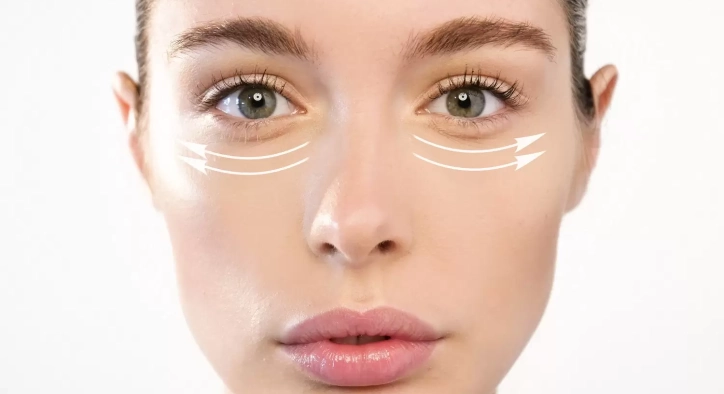
Hollow tear troughs, deep under-eye grooves, and persistent dark circles often create an exhausted, aged appearance that does not respond to adequate sleep, hydration, or topical eye creams. As the delicate periorbital tissues thin with age or due to genetic predisposition, the underlying orbital bone and vascular network become visible through translucent lower eyelid skin. While synthetic hyaluronic acid dermal fillers are frequently used for temporary masking, they carry notorious complications in the eye zone including the bluish Tyndall effect, chronic lymphatic swelling, and unnatural lumpiness.
In modern aesthetic plastic surgery and oculoplastic medicine, under eye fat transfer represents the definitive, biocompatible solution for permanently restoring smooth under-eye contours and brightening the lower eyelids. At Stamboul Clinic, we coordinate world-class facial plastic and autologous fat grafting procedures within accredited, state-of-the-art surgical hospital settings.
Table of Content
- What Is Under Eye Fat Transfer?
- Tailored Architecture: Under Eye Fat Transfer for Men
- Timeline and Longevity: Under Eye Fat Transfer Recovery Time & Results
- Under Eye Fat Transfer Before and After Transformations
- How Much Is Under Eye Fat Transfer Globally?
- Frequently Asked Questions (FAQ)
- How should I sleep and care for my eyes during the first week after an under eye fat transfer?
- Why is under eye fat transfer superior to hyaluronic acid tear trough fillers?
- Can an under eye fat transfer fix severe puffy under-eye bags?
- How much of the transferred fat survives permanently under the eyes?
- When can I safely return to working out, driving, and applying eye makeup?
What Is Under Eye Fat Transfer?
To establish a clear medical foundation, let us examine what happens during periorbital autologous fat transplantation. Clinically defined as periorbital micro-lipofilling and stromal vascular fraction (SVF) nano-grafting, an under eye fat transfer is a refined surgical procedure performed under local anesthesia with sedation or general anesthesia.
THE PERIORBITAL REGENERATIVE SEQUENCE:
- [Gentle Donor Liposuction (Abdomen/Inner Thigh)] ➡️ [Closed-System Filtration] ➡️ [Mechanical Emulsification to Nano-Fat] ➡️ [Deep Pre-Periosteal Micro-Infiltration] ➡️ [Tissue Neovascularization]
Micro-Fat vs. Nano-Fat: The Regenerative Difference
The skin beneath the human eye is the thinnest on the body (approximately 0.5 mm thick). Standard macro-fat grafting cannot be used in this region because it would create visible, palpable lumps. Instead, surgeons utilize a dual-component approach:
- Micro-Fat for Deep Structural Support: Purified micro-droplets of fat are placed deeply along the orbital bone rim (sub-orbicularis, pre-periosteal plane) to fill the hollow structural groove of the tear trough natively without touching the delicate eyelid surface.
- Nano-Fat for Dermal Rejuvenation: Harvested fat is passed through specialized micron filters to break down mature fat cells into a liquid suspension containing the Stromal Vascular Fraction (SVF) and adipose-derived stem cells (ADSCs). Injected superficially beneath the skin, nano-fat stimulates new micro-capillary formation, thickens the dermis, and lightens dark brownish or purplish under-eye shadows.
Tailored Architecture: Under Eye Fat Transfer for Men
The structural anatomy and aesthetic goals for under eye fat transfer men require specific surgical adjustments to prevent an overfilled, softened appearance.
GENDER-SPECIFIC GRAFTING TARGETS:
- Female Aesthetic Target: Soft, rounded, seamless transition from lower eyelid into cheek apex.
- Male Aesthetic Target: Conservative, flat infraorbital transition; maintains straight masculine cheek lines.
In male patients, under-eye hollowing often occurs alongside heavy work schedules and physical fatigue. When performing fat grafting for men, the plastic surgeon takes a conservative approach, placing micro-droplets deeply along the infraorbital bone rim to erase the sunken, hollow furrow without adding excess forward projection to the upper cheek. This sharpens the gaze, eliminates a chronically tired look, and preserves natural masculine facial lines.
Timeline and Longevity: Under Eye Fat Transfer Recovery Time & Results
Understanding the biological milestones of your under eye fat transfer recovery time ensures realistic expectations regarding early fluid shifts and final graft integration.
THE POST-OPERATIVE RECOVERY TIMELINE:
- - Days 1 to 3: Acute Edema ➡️ Mild swelling and bruising peak; sleeping with head elevated at 45 degrees.
- Days 7 to 10: Social Clearance ➡️ 70% of bruising fades; donor site sutures removed; return to light desk work.
- Weeks 3 to 6: Vascularization Window ➡️ Body metabolizes 20% to 30% of non-viable fat; surviving cells permanently anchor.
- Months 3 to 6: Final Stable Outcome ➡️ Neovascularization complete; smooth tear troughs and brightened skin tone.
Surgeons deliberately calculate for a natural 20% to 30% biological reabsorption rate during the initial 3 months. Once the 6-month milestone is reached, surviving fat cells establish a permanent blood supply and function as a living part of your facial tissue. Unlike synthetic fillers that dissolve every 9 to 12 months, autologous fat transfer results are permanent and evolve naturally with your facial expressions.
Under Eye Fat Transfer Before and After Transformations
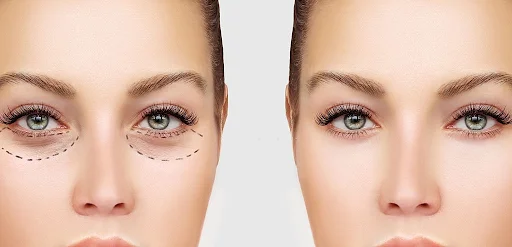
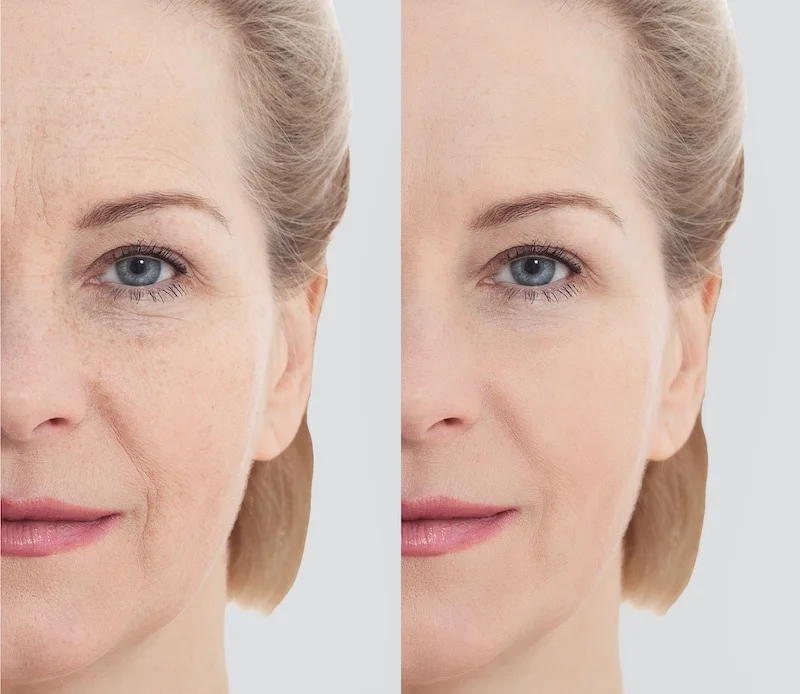
Reviewing unedited under eye fat transfer before and after patient profiles illustrates how structural micro-grafting smooths the lid-cheek junction without creating an unnatural appearance:
By avoiding synthetic gels, patients completely eliminate the risk of the Tyndall effect (where hyaluronic acid reflects a blue hue through translucent lower eyelid skin). The living fat cells restore a soft, warm skin tone while eliminating hollow under-eye shadows naturally.
How Much Is Under Eye Fat Transfer Globally?
A primary consideration when evaluating periorbital rejuvenation is the total financial investment. Prospective patients routinely ask how much is under eye fat transfer and compare private healthcare costs across international surgical hubs.
In the United States, Canada, the UK, and Western Europe, under-eye micro-fat grafting is billed as a specialized facial surgery involving surgeon fees, sterile processing kits, and facility charges. Total Western private clinic prices range from $4,000 to $9,000+.
Selecting an all-inclusive under eye fat transfer Turkey package allows international patients to access European-board-certified plastic surgeons and accredited hospital facilities through transparent, fixed pricing. The table below outlines structural pricing comparisons for 2026:
Healthcare Destination / Hub | Standalone Under Eye Fat Transfer (Tear Troughs) | Combined Under Eye Fat + Full Face Nano-Grafting | Package Inclusions |
United States (USA) | $4,500 – $7,500 USD | $8,000 – $14,000 USD | Procedure Only (Facility & Anesthesia Extra) |
United Kingdom (UK) | £3,200 – £5,500 GBP | £5,500 – £9,000 GBP | Procedure Only (Consults & Care Extra) |
Germany / Switzerland | €3,500 – €6,000 EUR | €6,000 – €10,500 EUR | Procedure Only (Hospital & Checks Extra) |
Stamboul (Turkey) | €1,450 – €2,200 EUR | €2,200 – €3,200 EUR | All-Inclusive (Hotel, VIP Transfers & Aftercare) |
Frequently Asked Questions (FAQ)
How should I sleep and care for my eyes during the first week after an under eye fat transfer?
During the initial 7 days, you must sleep strictly on your back with your head elevated at a 30-to-45-degree angle using 2 to 3 pillows to minimize fluid accumulation in the lower eyelids. Apply cold compresses gently across the upper cheeks for 10 minutes at a time during the first 48 hours (never place heavy ice packs directly on the delicate under-eye grafting site). Avoid rubbing or pressing your lower eyelids, and refrain from wearing eye makeup or contact lenses for 7 to 10 days.
Why is under eye fat transfer superior to hyaluronic acid tear trough fillers?
Hyaluronic acid fillers injected under the thin eyelid skin can attract water, leading to chronic puffy swelling, lumpiness, and a bluish skin discoloration known as the Tyndall effect. Autologous fat transfer uses your own living tissue, eliminating allergic reactions and foreign-body risks. Furthermore, nano-fat contains active stem cells that improve skin thickness and permanently brighten dark circles, whereas fillers merely stretch the skin temporarily and dissolve within 9 to 12 months.
Can an under eye fat transfer fix severe puffy under-eye bags?
No. An under eye fat transfer is designed to add volume to sunken hollows, not remove protruding fat herniations. If you have severe lower eyelid fat bags, the recommended treatment is a combined lower blepharoplasty (which removes or repositions the bulging fat pads) with micro-fat grafting to fill the adjacent hollow groove for a smooth, unified transition.
How much of the transferred fat survives permanently under the eyes?
On average, 60% to 75% of the transferred fat droplets permanently survive and establish capillary blood flow. Expert surgeons account for the 20% to 30% biological reabsorption rate during placement. The surviving fat remains permanently for life, naturally expanding or shrinking with future body weight fluctuations.
When can I safely return to working out, driving, and applying eye makeup?
You can safely resume light walking immediately to encourage circulation. Driving and desk work can be resumed after 5 to 7 days once initial eyelid swelling clears. However, intense cardiovascular exercise, heavy weightlifting, swimming, and facial massages must be avoided for 3 to 4 weeks to protect the newly forming micro-capillaries around the fat grafts.
Über den Autor