A full, well-defined beard and mustache profile serves as a cornerstone of masculine facial aesthetics and self-confidence. However, millions of men struggle with patchy beard growth, sparse cheeks, asymmetrical density, or completely bare facial zones caused by genetics, hormonal variations, scarring, or past trauma. While over-the-counter beard oils, dermarollers, and minoxidil serums claim to stimulate dormant follicles, they cannot generate new hair roots in areas with zero active follicular units. In modern aesthetic hair restoration, a beard transplant represents the only clinically validated, permanent method for sculpting a dense, natural-looking beard and sharp jawline contour.
At Stamboul Clinic, we coordinate world-class facial hair restoration treatments using advanced Direct Hair Implantation (DHI) and Sapphire FUE technologies in accredited surgical facilities. Whether you are evaluating an all-inclusive beard transplant Turkey package, reviewing the detailed beard transplant recovery timeline, analyzing real beard transplant before and after growth milestones, or checking current beard transplant cost and beard transplant Turkey price metrics, this comprehensive clinical guide delivers deep medical insights and post-operative protocols.
Table of Content
- What Is a Beard Transplant?
- Surgical Techniques: DHI vs. Sapphire FUE for Beard Restoration
- Timeline and Shedding: The Beard Transplant Recovery Roadmap
- Visual Proof: Beard Transplant Before and After Milestones
- Beard Transplant Turkey Price Comparison
- Frequently Asked Questions (FAQ)
- How should I sleep and wash my face during the first 10 days after a beard transplant?
- When can I safely shave my beard with a razor or use an electric trimmer?
- Does hair taken from the back of the head feel and look like natural beard hair?
- What is the difference between a partial beard fill and a full beard transplant?
- Why do transplanted beard hairs fall out after 2 to 4 weeks?
What Is a Beard Transplant?
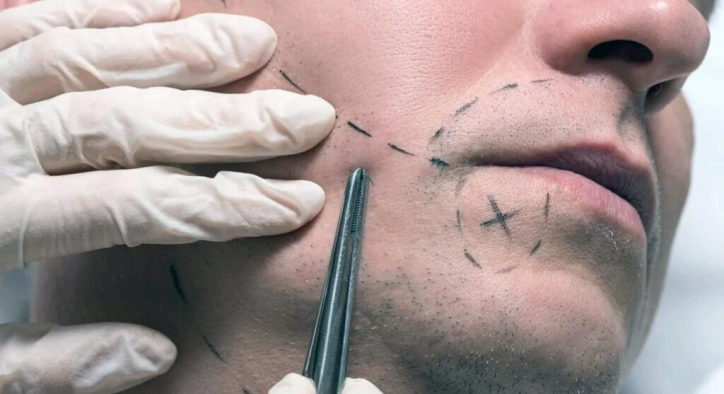
To establish a clear medical foundation, let us examine the biological principles of facial hair restoration. Clinically defined as autologous facial hair grafting, a beard transplant is a microsurgical outpatient procedure performed under local anesthesia that relocates healthy, DHT-resistant hair follicles from the donor area (the back of the head) directly onto the facial skin.
THE FACIAL HAIR RESTORATION SEQUENCE:
- [Donor Mapping at Occipital Scalp] ➡️ [Micro-Motor FUE Single-Graft Extraction] ➡️ [Follicle Sorting & Hydration] ➡️ [Choi Pen Direct Implantation at 10°–20° Angles]
Unlike standard scalp hair restoration, facial skin requires specialized surgical handling:
- Single-Hair Selection: Natural facial hair grows almost exclusively as individual hair shafts. Extracted follicular units must be microscopically separated to ensure that multi-hair grafts (2 or 3 hairs) are not placed on the cheeks, which would create an unnatural, pluggy look.
- Acute Angulation Control: While scalp hair grows outward at a 45° to 60° angle, beard hair lies nearly flat against the facial skin at a sharp 10° to 20° angle, pointing downward on the cheeks and transitioning outward along the jawline.
Surgical Techniques: DHI vs. Sapphire FUE for Beard Restoration
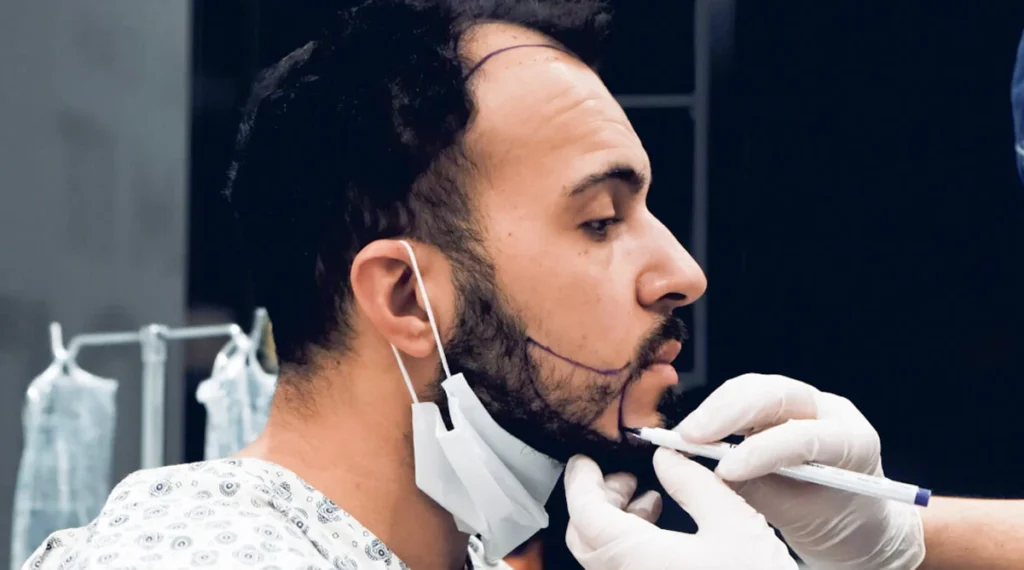
Achieving natural facial hair density and direction depends heavily on the surgical tool used for graft placement.
SURGICAL METHODOLOGIES FOR BEARD RESTORATION:
- DHI (Direct Hair Implantation / Choi Pen): Implants single grafts directly without pre-made slit incisions; gives full control over depth and 15° angles.
- Sapphire FUE: Utilizes ultra-fine sapphire mineral blades to open micro-channels before manual forceps placement; ideal for wide-area coverage.
1. Direct Hair Implantation (DHI with Choi Pen)
DHI is the clinical gold standard for facial hair restoration. Using a specialized, hollow-needle pen (Choi Implanter), the surgical team loads individual follicular units and inserts them directly into the facial dermis in a single motion. This eliminates the need for separate pre-cut incision channels. DHI allows the surgeon to control the exact angle, depth, and direction of each hair root, ensuring that cheek hairs lie completely flat against the skin with zero visible scarring.
2. Sapphire FUE (Follicular Unit Extraction)
In Sapphire FUE, the surgeon uses blades crafted from synthetic sapphire gemstone to open V-shaped micro-channels across the beard design. Forceps are then used to place the extracted grafts into the prepared incisions. Sapphire blades create smaller incisions with cleaner edges than traditional steel blades, minimizing tissue trauma and accelerating initial scab shedding.
Timeline and Shedding: The Beard Transplant Recovery Roadmap
Understanding the biological milestones of beard transplant recovery helps prevent post-operative anxiety, particularly during the expected shock loss phase.
THE POST-OPERATIVE BEARD GROWTH TIMELINE:
- Days 1 to 3: Acute Settling ➡️ Red micro-crusts form around follicles; facial sleeping elevated on back.
- Days 7 to 10: First Wash & Scab Shedding ➡️ Gentle washing softens and removes all crusts; skin appears pink.
- Weeks 3 to 6: Shock Loss Phase ➡️ The transplanted hair shafts fall out naturally; roots enter a temporary resting phase.
- Months 3 to 4: Early Regeneration ➡️ New, permanent facial hair shafts emerge from the dermis with natural texture.
- Months 9 to 12: Full Density Maturity ➡️ Beard achieves maximum thickness, full coverage, and regular shaveability.
During the initial 10 days, patients must avoid rubbing, scratching, or shaving the facial skin. By week 3, nearly all transplanted hair shafts shed (shock loss); this is a normal physiological reset. The living follicular roots remain securely anchored beneath the skin and begin producing permanent facial hair starting in month 3.
Visual Proof: Beard Transplant Before and After Milestones
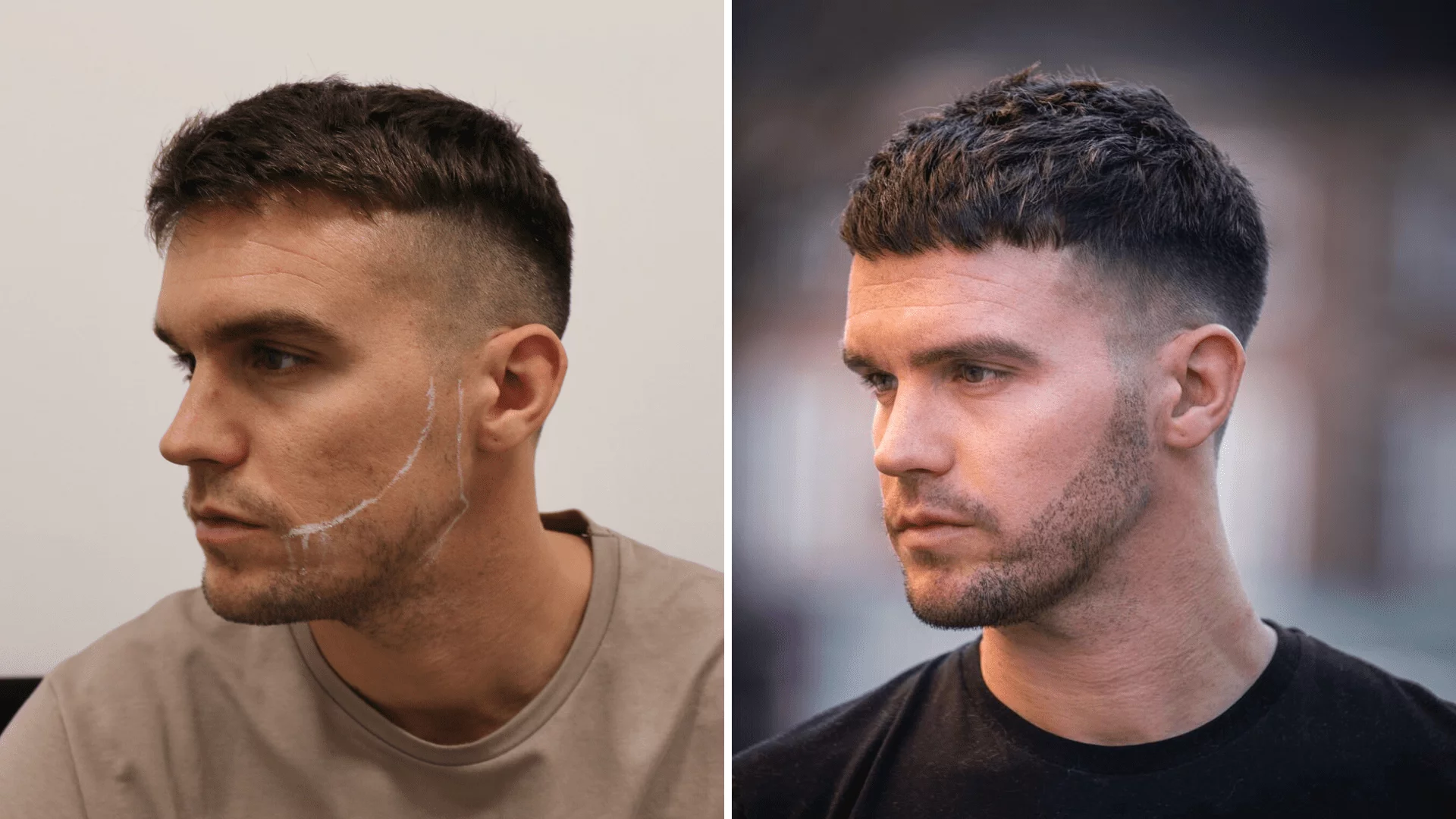
Reviewing unedited beard transplant before and after patient profiles illustrates how natural density, defined jawline borders, and mustache-to-chin transitions evolve over 12 months:
Modern DHI techniques create a seamless aesthetic transition. The surgeon designs a natural, non-linear cheekline that mimics real biological growth patterns rather than an artificial, ruler-straight border. Once fully mature at 12 months, the new beard hair can be trimmed, shaved, shaped, and styled with a razor just like natural facial hair.
Beard Transplant Turkey Price Comparison
A major consideration when planning facial hair restoration is the total financial investment. Prospective patients routinely compare the global beard transplant cost and evaluate why the beard transplant turkey price offers significant cost-to-quality advantages.
In the United States, Canada, the UK, and Western Europe, clinics charge on a per-graft basis ranging from $4.00 to $8.00 per graft, pushing the total cost for a full 2,500-to-4,000 graft beard restoration to $6,000 to $14,000+.
Choosing an all-inclusive facial hair restoration package in Istanbul allows international patients to access specialized DHI surgeons and accredited hospital facilities through transparent, fixed pricing. The table below outlines structural pricing comparisons for 2026:
Healthcare Destination / Hub | Partial Fill (Cheek / Goatee 1,000–1,800 Grafts) | Full Dense Beard (2,500–4,000 Grafts) | Package Inclusions |
United States (USA) | $4,500 – $7,500 USD | $8,500 – $14,500 USD | Procedure Only (Meds & Wash Extra) |
United Kingdom (UK) | £3,200 – £5,500 GBP | £6,500 – £11,000 GBP | Procedure Only (Consults & Care Extra) |
Germany / Switzerland | €3,500 – €6,000 EUR | €7,000 – €12,000 EUR | Procedure Only (Hospital & Checks Extra) |
Stamboul (Turkey) | €1,650 – €2,250 EUR | €2,200 – €3,200 EUR | All-Inclusive (Hotel, VIP Transfers, Care Kit & Wash) |
Frequently Asked Questions (FAQ)
How should I sleep and wash my face during the first 10 days after a beard transplant?
You must sleep strictly on your back with your head elevated at a 30-to-45-degree angle using a neck pillow to avoid rubbing your cheeks against bedding. Starting on day 3, wash your beard using the prescribed foaming cleanser and warm water with gentle patting motions never rub or scratch. Allow the foam to soften crusts for 15 minutes before rinsing with a low-pressure water stream.
When can I safely shave my beard with a razor or use an electric trimmer?
You can gently trim your new beard hairs with scissors starting at week 4. Electric clippers or trimmers can be used after 2 to 3 months once graft anchoring is secure. Wet shaving with a traditional razor blade over the transplanted area must be avoided for at least 5 to 6 months to prevent micro-cuts to the developing follicular bulbs.
Does hair taken from the back of the head feel and look like natural beard hair?
Yes. Although scalp hair is naturally slightly softer than coarse facial hair, hair follicles adapt to their new facial environment over 6 to 12 months. As the transplanted hairs grow and are trimmed or shaved repeatedly, they thicken naturally, matching the texture and appearance of surrounding facial hair.
What is the difference between a partial beard fill and a full beard transplant?
A partial beard fill utilizes 800 to 1,500 grafts to fill small patchy spots on the cheeks, define a weak mustache, or cover acne scars. A full beard transplant uses 2,500 to 4,000+ grafts to build a complete beard from scratch for men with sparse or absent facial hair, covering both cheeks, the mustache, chin, and jawline.
Why do transplanted beard hairs fall out after 2 to 4 weeks?
This shedding process is known as "shock loss" (telogen effluvium) and is a normal biological response to graft relocation. The hair shaft falls away, but the living dermal papilla and follicle root remain securely settled inside your skin, entering a resting phase before producing permanent new beard hair from month 3 onward.
Über den Autor