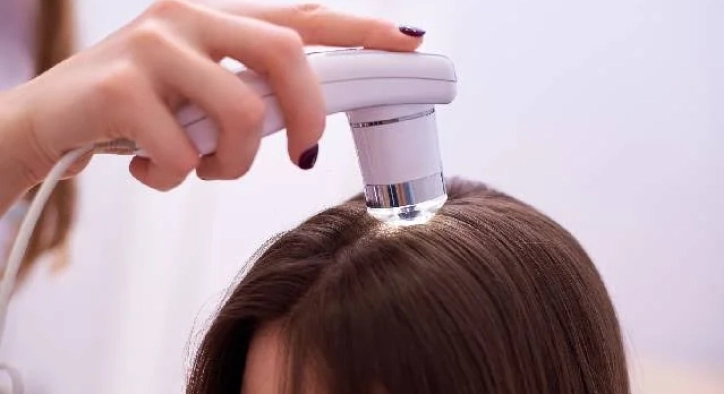
The biological treatment of pattern thinning has shifted from relying solely on standard systemic medications toward advanced, energy-based therapies that work at the cellular level. When addressing progressive hair loss, patients often look for non-invasive treatments to either boost their results after a Sapphire FUE surgery or slow down early thinning without prescription drugs. Among these modern options, low-level laser therapy (LLLT) stands out as a leading, clinically proven method.
At Stamboul Clinic, we combine advanced micro-surgery with targeted cellular therapies to ensure long-term hair density. Understanding the mechanics of low-level laser therapy hair protocols requires analyzing how specific light wavelengths interact with dormant hair follicles. Whether you are considering specialized low-level laser therapy for hair loss, exploring clinical home low-level laser therapy devices, or researching potential low-level laser therapy hair side effects, this guide delivers deep medical insights into your options.
Table of Content
- What Is Low-Level Laser Therapy for Hair Loss and How Does It Work?
- Clinical Low-Level Laser Therapy Devices
- Low-Level Laser Therapy vs. Red Light Therapy
- Low-Level Laser Therapy Hair Side Effects
- Low-Level Laser Therapy Hair Loss Before After Milestones
- Global Cost Comparison
- Frequently Asked Questions (FAQ)
What Is Low-Level Laser Therapy for Hair Loss and How Does It Work?
To understand this treatment option clearly, let let us analyze the biological principles behind the therapy. Low-level laser therapy hair loss solutions do not rely on thermal energy or heat generation. Instead, they utilize "cold" therapeutic lasers that emit a specific wavelength of monochromatic red light, typically between 630 and 670 nanometers (nm).
THE CELLULAR PHOTOBIOMODULATION SEQUENCE:
- 650nm Coherent Laser Light ➡️ Penetrates Scalp Dermis ➡️ Absorbed by Cytochrome C Oxidase ➡️ Boosts ATP Production ➡️ Triggers Active Hair Growth
When this specific red light hits your scalp tissue, it is absorbed by a specialized enzyme inside your cells' mitochondria called cytochrome c oxidase. This absorption kicks off a healthy cellular response: it increases adenosine triphosphate (ATP) production, releases nitric oxide to widen nearby blood vessels, and improves local blood circulation.
By delivering fresh oxygen and vital nutrients directly to thinning hair roots, it helps reverse follicle shrinking and shifts hair strands out of the resting phase back into the active growth phase.
Clinical Low-Level Laser Therapy Devices
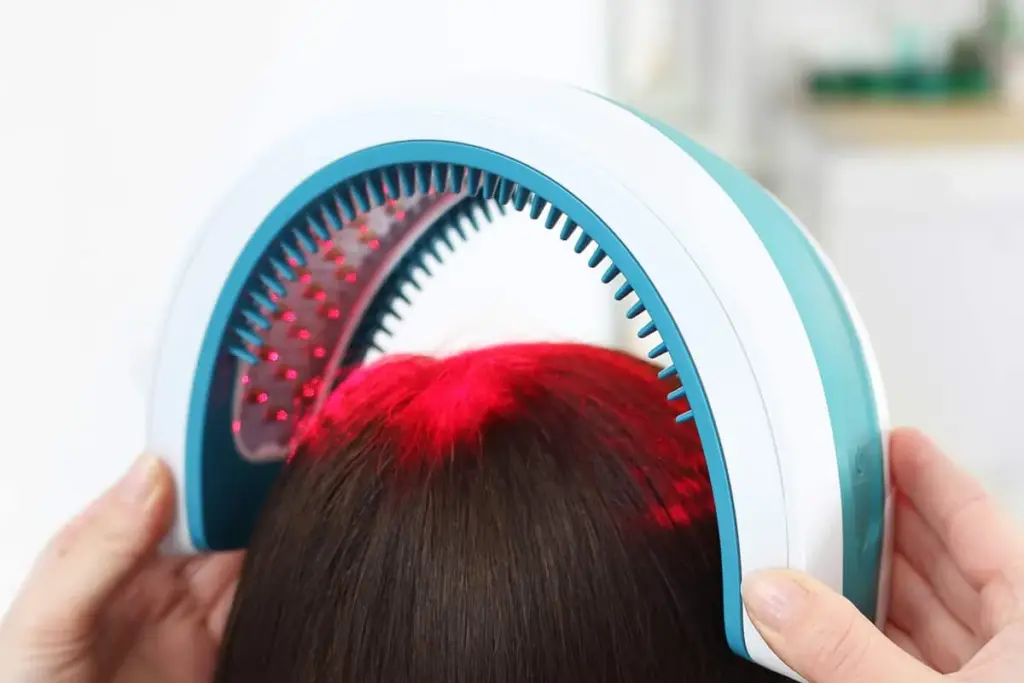
Achieving consistent results depends heavily on the power, configuration, and design of the low-level laser therapy devices used during your treatment cycle. Modern options generally fall into two categories:
THE DEVICE ARCHITECTURE:
- Clinical Laser Hoods: High-density panels containing 200+ medical-grade laser diodes for full, even scalp coverage.
- Home Laser Caps / Helmets: Portable, battery-powered systems designed for consistent, long-term use at home.
When choosing a device, it is important to confirm it uses real, coherent laser diodes rather than basic LED lights. Coherent laser light penetrates deeply into the dermis layer where the hair roots sit, whereas uncollimated light scatters across the skin surface, delivering less energy to the hair follicles.
Low-Level Laser Therapy vs. Red Light Therapy
Prospective patients looking up home wellness solutions frequently ask about the technical differences between different light-based systems, leading to the common query: low-level laser therapy vs red light therapy which is more effective for hair growth?
LIGHT DELIVERY COMPARISON:
- Red Light Therapy (LED): Emits scattered, non-coherent light waves; ideal for surface skin repair and collagen boosting.
- Low-Level Laser Therapy (LLLT): Emits focused, coherent, single-wavelength laser beams; penetrates deeply to stimulate hair roots.
While both systems utilize similar red light wavelengths, their light delivery methods are completely different. Standard red light therapy uses light-emitting diodes (LEDs) that scatter light over a wide area. This is excellent for treating superficial skin conditions or boosting collagen on the surface, but it lacks the focus needed to reach deep tissue.
Conversely, an low-level laser therapy vs red light therapy evaluation reveals that LLLT uses true laser beams that stay focused as they travel. This allows the energy to penetrate deeply into the scalp tissue without losing power, delivering consistent stimulation directly to the hair roots.
Low-Level Laser Therapy Hair Side Effects
A primary benefit of choosing cold laser photobiomodulation is its exceptional safety profile. When analyzing potential low-level laser therapy hair side effects, clinical data shows the treatment is non-invasive and very well tolerated, with zero down-time.
- Mild, Temporary Scalp Warmth: Some patients notice a gentle, warm sensation across the scalp during a session, which clears up naturally within minutes.
- Slight Initial Skin Redness: Increased blood circulation can cause a temporary pink tint on sensitive skin areas.
- Minor Early Shedding: As resting hair roots are stimulated into the growth phase, they may shed old, detached hair shafts during the first few weeks. This is a normal sign of cellular renewal.
- Temporary Dryness or Tingling: Rare cases may experience slight dryness, which can be managed easily with our recommended hydrating lotions.
Low-Level Laser Therapy Hair Loss Before After Milestones
Adhering to a consistent schedule is essential for achieving optimal low-level laser therapy hair loss before after results. Because hair grows through a slow, natural cycle, changes develop gradually over several months.
THE GROWTH TIMELINE:
- [Weeks 1 – 4]: Cellular Shift Stage ➡️ Follicles absorb energy; mild shedding of old hair shafts may occur.
- [Weeks 8 – 12]: Stabilization Stage ➡️ Excess hair thinning slows down significantly; hair roots strengthen.
- [Months 4 – 6]: Visual Progress Stage ➡️ Fresh, fine hair strands break through the surface, adding visible density.
- At the 6-month mark, patients consistently notice a visible improvement in hair thickness, a reduction in overall thinning, and a stronger, healthier hair texture across the treated areas.
Global Cost Comparison
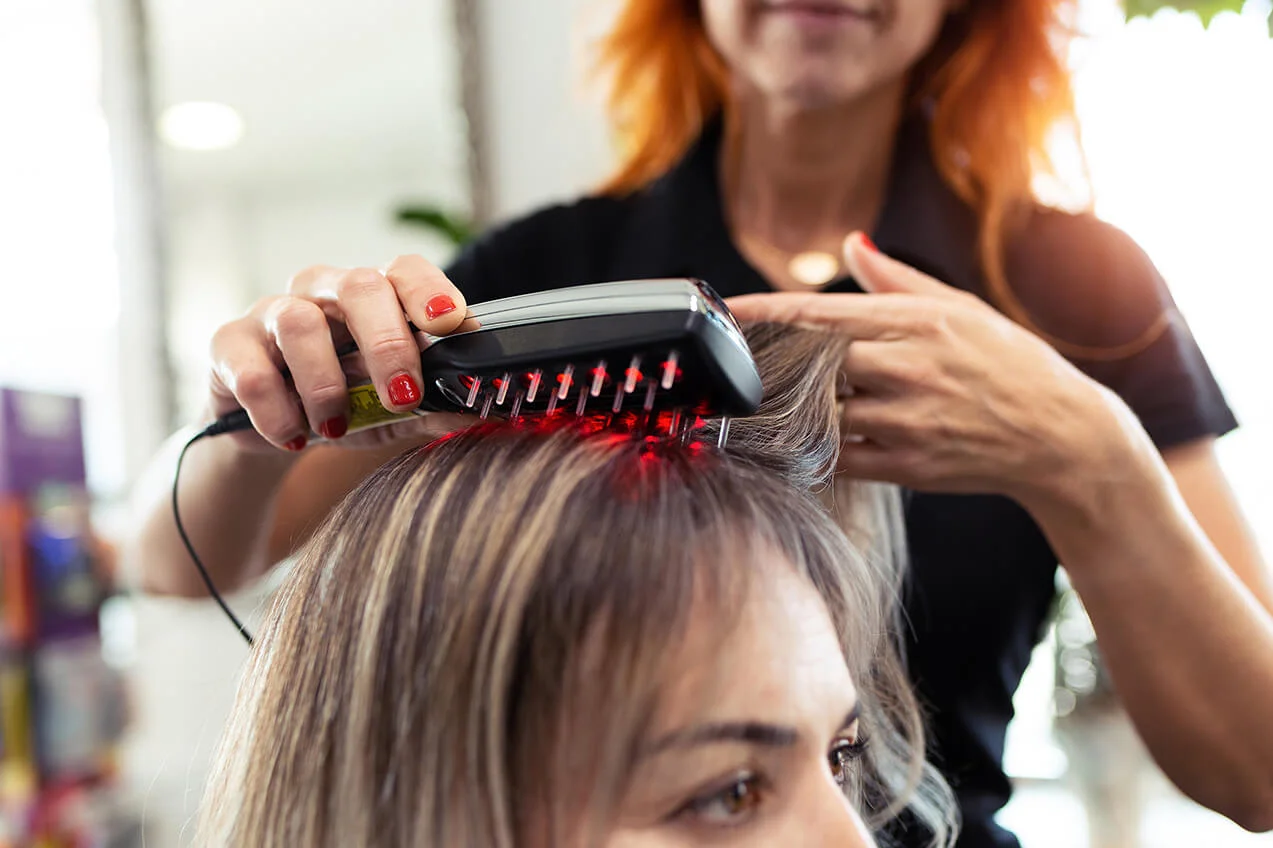
The overall financial investment for laser hair restoration depends on whether you choose in-office clinical sessions or purchase a premium home device. The table below outlines the estimated low-level laser therapy hair cost structures across major destinations:
Treatment Setup & Scope | Average Cost in USA | Average Cost in UK / Germany | Average Cost at Stamboul (Turkey) |
In-Office Session (Per individual treatment) | $70 – $150 | £50 – £110 / €60 – €130 | €30 – €50 (As a post-op package add-on) |
Premium Laser Cap (Medical-grade home device) | $800 – $2,000 | £650 – £1,600 / €750 – €1,850 | Included in Premium Surgical Packages |
Frequently Asked Questions (FAQ)
What is low-level laser therapy for hair loss?
It is a non-invasive, clinically proven treatment that utilizes specific wavelengths of cold red laser light to stimulate cellular energy production inside thin hair follicles, promoting healthy hair growth.
Are there any low-level laser therapy hair side effects?
LLLT is exceptionally safe. Mild, temporary side effects can include a gentle sensation of warmth during the session, slight initial skin redness due to increased blood flow, or minor early shedding as the hair cycle resets.
How long does it take to see laser hair transplant results?
Most patients begin to notice a significant reduction in hair thinning within 8 to 12 weeks, with visible improvements in hair density and thickness appearing between months 4 and 6 of consistent use.
Which is better: low-level laser therapy vs red light therapy?
For hair restoration, LLLT is significantly more effective. True lasers emit focused, coherent beams that penetrate deeply into the scalp tissue to reach the hair roots, whereas standard red light therapy scatters across the surface.
Über den Autor