

Facial balance relies on the harmonic spatial relationship between the forehead, nose, and lower jawline. When a patient presents with a recessed, underprojected chin (microgenia), the visual aesthetics of the entire profile are compromised. A weak chin frequently creates the optical illusion of an overly prominent nose, softens the jawline transition into the neck, and accentuates the appearance of a premature double chin even in slim individuals. While temporary dermal fillers offer brief structural masking, achieving permanent anatomical bone-level projection requires surgical intervention. In modern facial plastic and reconstructive surgery, chin implant placement represents the gold standard for defining jawline architecture and completing facial profiloplasty.
At Stamboul Clinic, we coordinate world-class facial plastic and maxillofacial surgeries within fully accredited, state-of-the-art surgical hospital settings. Whether you are evaluating choices for a chin implant Turkey travel plan, seeking technical clarity on the chin implant surgery operative process, examining structural changes in chin implant before and after patient profiles, or calculating total chin implant cost metrics, this comprehensive clinical guide provides deep medical insights and post-operative recovery parameters.
Table of Content
- What Is Chin Implant Surgery?
- Surgical Access Routes: Submental (Under-Chin) vs. Intraoral (Inside Mouth)
- Profiloplasty Integration: Chin Implants Combined with Rhinoplasty
- Tracking Chin Implant Before and After Transformations
- How Much Is a Chin Implant Globally?
- Frequently Asked Questions (FAQ)
- How should I care for my mouth and incisions if I choose the intraoral chin implant approach?
- Will a chin implant feel unnatural, hard, or noticeable when touched?
- Can a chin implant shift or move out of place after surgery?
- What is the difference between a silicone chin implant and sliding genioplasty bone surgery?
- When can I safely resume intense gym workouts, contact sports, and normal chewing?
What Is Chin Implant Surgery?
To establish a clear medical foundation, let us examine what happens during chin augmentation from a structural perspective. Clinically defined as an alloplastic augmentation mentoplasty, a chin implant surgery is a definitive cosmetic procedure performed under local anesthesia with sedation or general anesthesia that augments the bony framework of the lower face.
THE MENTOPLASTY STRUCTURAL SEQUENCE:
- [Pre-Op 3D Bone Analysis] ➡️ [Concealed Intraoral / Submental Access] ➡️ [Sub-Periosteal Pocket Dissection] ➡️ [Biocompatible Implant Placement] ➡️ [Tension-Free Multi-Layer Fixation]
During surgery, the surgeon creates a precise pocket located directly beneath the periosteum (the fibrous membrane covering the mandibular bone). Placing the implant deep under the periosteum ensures that it rests immovably against the lower jawbone, preventing shifting and ensuring it feels like natural bone to the touch. The implant increases horizontal projection, widens a narrow jawline, or adds vertical height depending on the customized shape chosen during pre-operative digital modeling.
Surgical Access Routes: Submental (Under-Chin) vs. Intraoral (Inside Mouth)
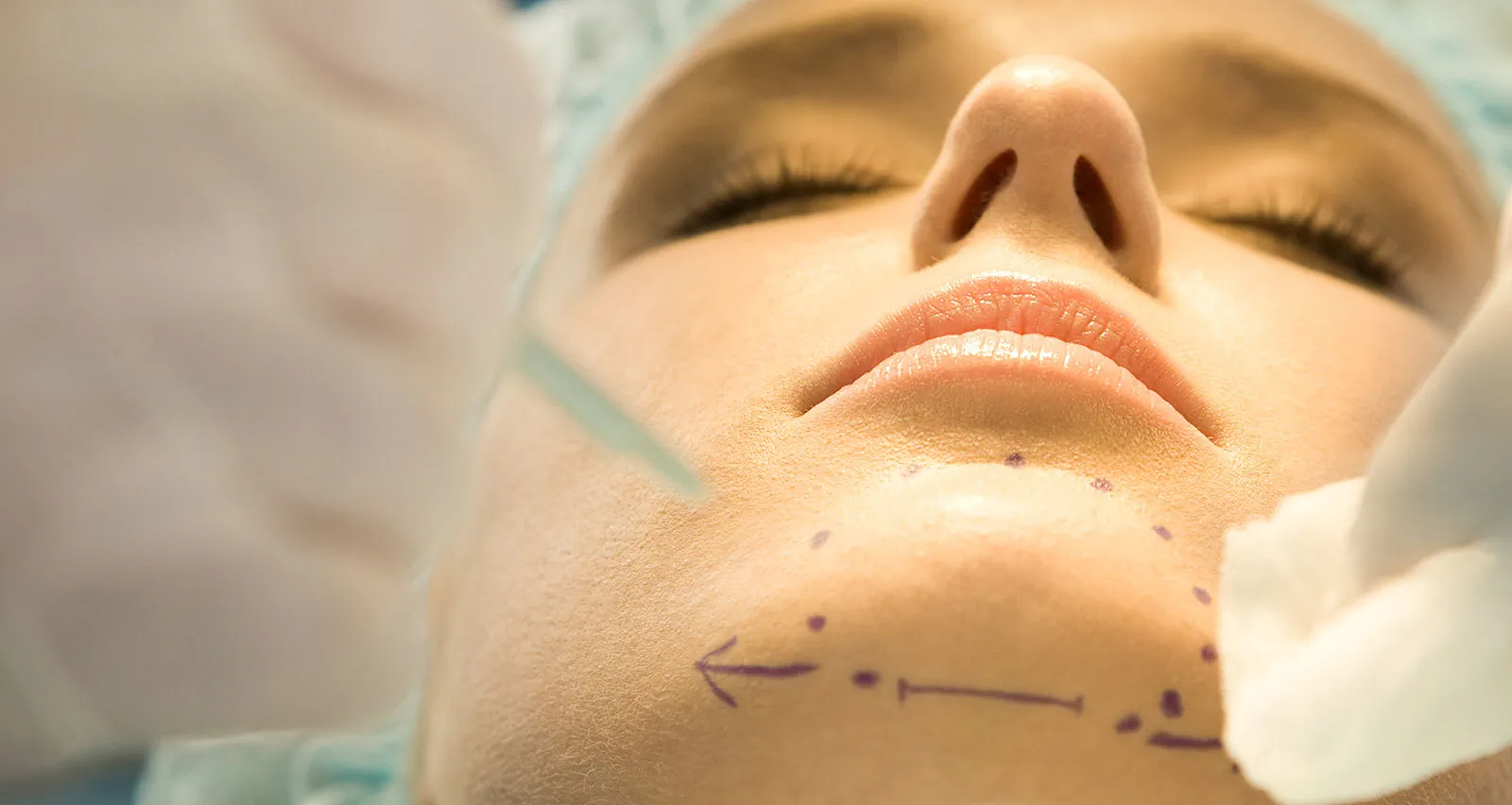
Selecting the appropriate surgical incision approach depends on your facial anatomy, risk factors, and aesthetic preferences regarding scar placement.
SURGICAL INCISION METHODOLOGIES:
- Submental (External) Approach: Tiny incision hidden under the chin crease; lowest infection rate and optimal visualization.
- Intraoral (Internal) Approach: Incision placed inside the lower lip; zero external skin scars but requires strict oral hygiene.
1. Submental (External) Approach
The submental route is the most widely performed technique globally. The surgeon places a discreet 1.5 to 2 cm micro-incision within the natural skin crease beneath the chin. This approach offers direct surgical visualization of the mental nerves (the sensory nerves of the lower lip and chin) and isolates the surgical pocket from oral bacteria, reducing infection risks. Once fully healed, the scar remains hidden under the base of the chin.
2. Intraoral (Internal) Approach
For patients who want to avoid any external skin markings, the intraoral approach places the incision inside the mouth, in the groove between the lower gum line and lower lip (buccal sulcus). The surgeon dissects downward over the jawbone to insert the implant. While this leaves no external scars, it requires strict post-operative oral antiseptic rinses and a soft-food diet during the first 10 days to prevent oral bacterial contamination.
Profiloplasty Integration: Chin Implants Combined with Rhinoplasty
A receding chin and a prominent nasal bridge frequently exist together. Evaluating the face as a unified profile often makes combining chin augmentation with rhinoplasty the ideal strategy.
THE PROFILOPLASTY HARMONY EFFECT:
- Isolated Rhinoplasty on Weak Chin ➡️ Nose still appears relatively forward; profile remains unbalanced.
- Combined Rhinoplasty + Chin Implant ➡️ Chin moves forward as nasal profile refines; perfect aesthetic balance achieved.
When a patient seeks rhinoplasty to reduce a dorsal hump, the surgeon evaluates the projection of the chin relative to the lower lip line. Adding a chin implant balances the lower third of the face, preventing the newly refined nose from appearing disproportionately large. Combining both procedures in a single surgical session ensures unified facial proportions, a single recovery window, and reduced overall anesthesia costs.
Tracking Chin Implant Before and After Transformations
Evaluating unedited chin implant before and after patient profiles illustrates how tissue integration, swelling resolution, and jawline definition evolve along a natural post-operative timeline:
THE CHRONOLOGICAL RECOVERY TIMELINE:
- Days 1 to 3: Acute Phase ➡️ Head elevated; supportive chin tape dressing worn; mild lower lip stiffness.
- Days 7 to 10: Suture / Tape Removal ➡️ External stitches removed; swelling subsides; return to desk work.
- Weeks 3 to 4: Tissue Integration ➡️ Biological capsule forms around the implant; normal chewing fully restored.
- Months 3 to 6: Final Maturity ➡️ Residual deep swelling clears; implant integrates seamlessly into the jawline contour.
By the 4-week mark, acute swelling subsides, revealing a refined, sculpted jawline that transitions smoothly into the neck. Modern anatomical implants feature tapered lateral wings that blend into the mandibular body, avoiding an artificial "button" appearance and ensuring natural movement with speech and facial expressions.
How Much Is a Chin Implant Globally?
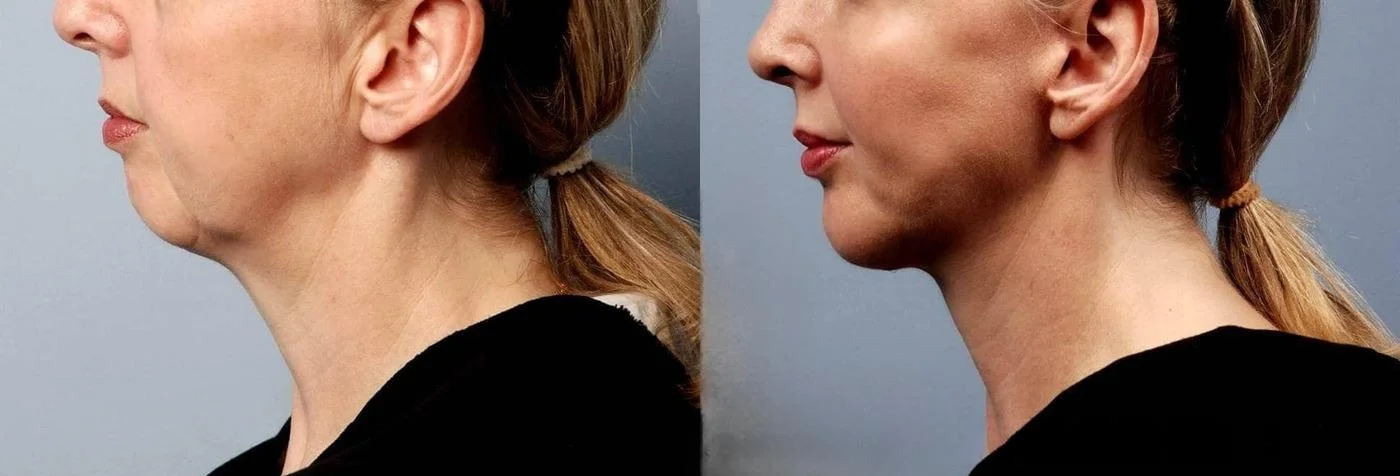
A major consideration when planning facial contouring is the total financial investment. Prospective patients routinely ask how much is a chin implant and compare the private chin implant cost across international healthcare hubs.
In the United States, Canada, the UK, and Western Europe, chin augmentation is performed as an elective plastic surgery involving separate surgeon fees, facility charges, implant device costs, and anesthesia bills. Total costs in Western private clinics range from $4,500 to $9,500+.
Selecting a chin implant Turkey package allows international patients to access board-certified facial plastic and maxillofacial surgeons within accredited hospital facilities through transparent, all-inclusive packages. The table below outlines structural pricing comparisons for 2026:
Healthcare Destination / Hub | Standalone Chin Implant Surgery Range | Combined Rhinoplasty + Chin Implant Range | Package Inclusions |
United States (USA) | $4,500 – $8,500 USD | $11,000 – $18,000 USD | Surgery Only (Facility & Anesthesia Extra) |
United Kingdom (UK) | £3,500 – £6,500 GBP | £8,500 – £14,000 GBP | Surgery Only (Consults & Checks Extra) |
Germany / Switzerland | €4,000 – €7,500 EUR | €9,000 – €15,000 EUR | Surgery Only (Hospital & Meds Extra) |
Stamboul (Turkey) | €1,850 – €2,750 EUR | €3,600 – €5,200 EUR | All-Inclusive (Hotel, VIP Transfers & Aftercare) |
Frequently Asked Questions (FAQ)
How should I care for my mouth and incisions if I choose the intraoral chin implant approach?
If your incision is placed inside the mouth beneath the lower lip, you must rinse with a prescribed chlorhexidine antiseptic mouthwash after every meal and snack for the first 10 days. Stick strictly to a soft, room-temperature diet (avoiding hot, spicy, acidic, or crunchy foods) and use a soft pediatric toothbrush, taking care not to disturb the lower gum suture line.
Will a chin implant feel unnatural, hard, or noticeable when touched?
No. Because the implant is surgically positioned sub-periosteally (directly against the lower jawbone beneath the thick chin muscle and soft tissue), it integrates securely into the skeletal structure. Once fully healed after 2 to 3 months, the implant feels like your natural jawbone and cannot be moved or felt as a separate object.
Can a chin implant shift or move out of place after surgery?
When placed within a precisely fitted sub-periosteal pocket by an experienced facial plastic surgeon, the risk of implant displacement is minimal. Surgeons often secure the implant with specialized micro-titanium screws or deep anchoring sutures to ensure stability while the body forms a natural, protective fibrous tissue capsule around it over the first 4 weeks.
What is the difference between a silicone chin implant and sliding genioplasty bone surgery?
A silicone chin implant adds an alloplastic medical-grade implant over the existing jawbone to augment volume and projection, involving a shorter 45-minute procedure and a fast 1-week recovery. A sliding genioplasty is an osseous surgical procedure where the surgeon cuts and moves the patient's actual chin bone forward with titanium plates, typically reserved for complex skeletal bite deformities.
When can I safely resume intense gym workouts, contact sports, and normal chewing?
You can safely resume light walking and desk work within 5 to 7 days. Normal chewing of solid foods resumes after 10 to 14 days as lower lip stiffness subsides. However, intense weightlifting, running, and heavy gym exercise must be avoided for 3 to 4 weeks, while high-impact contact sports (such as martial arts or boxing) must be avoided for at least 8 to 12 weeks to protect the healing jawline from direct trauma.
Über den Autor