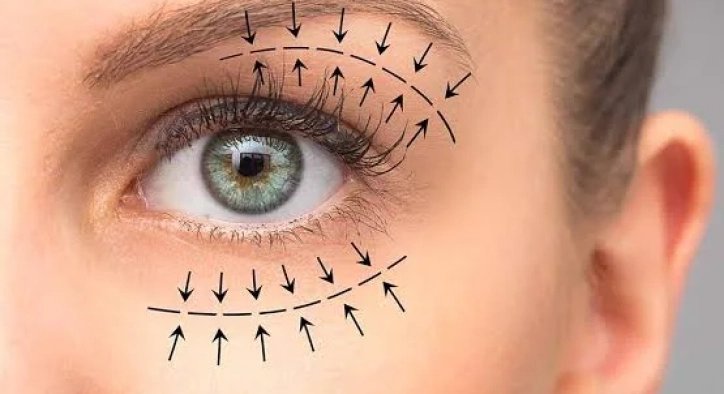
The delicate skin surrounding the eyes is among the thinnest and most expressive tissue on the human body. As time progresses, natural collagen depletion, gravity, and genetic predispositions can cause the upper eyelids to sag (dermatochalasis) and the lower eyelids to develop noticeable fat bags or dark hollows. Beyond making you appear perpetually tired or aged, heavy upper eyelid skin can physically obstruct your upper peripheral field of vision. In modern oculoplastic and facial plastic surgery, blepharoplasty represents the definitive solution for restoring both vibrant visual aesthetics and unhindered sight.
At Stamboul Clinic, we coordinate world-class facial plastic and oculoplastic surgeries within fully accredited, state-of-the-art surgical hospital settings. Whether you are evaluating options for an upper blepharoplasty, researching targeted lower blepharoplasty approaches, exploring non-surgical plasma or laser blepharoplasty alternatives, or calculating global blepharoplasty cost metrics, this clinical guide delivers deep medical insights and post-operative recovery parameters.
Table of Content
- What Is Blepharoplasty Surgery?
- Surgical Modalities: Upper vs. Lower Blepharoplasty
- Advanced & Non-Surgical Innovations: Laser & Non-Surgical Blepharoplasty
- Tracking Visual Milestones: Blepharoplasty Before and After Transformations
- Evaluating the Blepharoplasty Cost Globally
- Frequently Asked Questions (FAQ)
What Is Blepharoplasty Surgery?
To establish a clear medical foundation, let us examine the anatomical dynamics of periocular aging. Blepharoplasty surgery is a specialized procedure that reshapes the upper eyelids, lower eyelids, or both by addressing three distinct structural layers: skin, orbicularis oculi muscle, and retro-septal orbital fat pads.
THE PERIOCULAR RESTRUCTURING PATHWAY:
- Excess Skin Excision ➡️ Muscle Tightening / Suspension ➡️ Orbital Fat Resection or Transposition ➡️ Invisible Crease Closure
During surgery, precise micro-incisions are hidden within the eye's natural anatomical folds or inside the lower eyelid. By carefully removing redundant skin folds, repairing weakened muscular support, and removing or repositioning herniated fat pads, the surgeon smooths the eye contours without altering your natural eye shape or facial expression.
Surgical Modalities: Upper vs. Lower Blepharoplasty
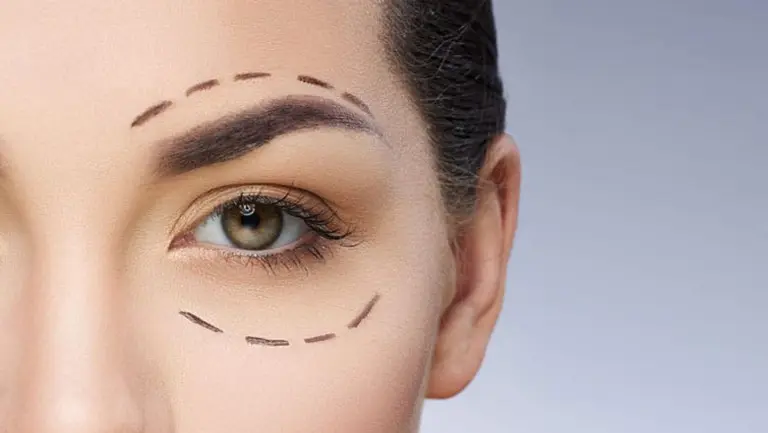
Restoring the upper and lower eye regions involves distinct surgical techniques designed for their specific anatomical structures.
EYELID REJUVENATION TECHNIQUES:
- Upper Blepharoplasty: Removes heavy, hooded upper lid skin; hides incision within the natural supratarsal crease.
- Lower Blepharoplasty: Eliminates under-eye bags; utilizes subciliary or transconjunctival (scarless) approaches.
1. Upper Eyelid Blepharoplasty
An upper eyelid blepharoplasty focuses on removing heavy, hooded skin and bulging medial fat pads that weigh down the upper lid. The surgeon marks the natural supratarsal fold while you are awake. Under local anesthesia with light sedation, an incision is made along this crease line, excess tissue is removed, and fine sutures are placed. Once healed, the surgical mark remains completely hidden within your natural eyelid crease when your eyes are open.
2. Lower Eyelid Blepharoplasty
A lower blepharoplasty addresses under-eye bags, puffiness, and deep tear-trough hollows. Depending on skin laxity, two surgical routes are used:
- Transconjunctival Approach: For patients with fat bulges but good skin elasticity, the incision is placed entirely inside the lower eyelid (conjunctiva). Fat pads are repositioned or reduced leaving zero external scars.
- Subciliary Approach: For patients with both excess fat and loose skin, a fine incision is placed just below the lower lash line, allowing skin trimming and muscle suspension.
Advanced & Non-Surgical Innovations: Laser & Non-Surgical Blepharoplasty
Technological advancements have introduced refined tools that minimize tissue trauma and provide non-surgical options for mild lid laxity.
Laser Blepharoplasty
In a laser blepharoplasty, a high-precision carbon dioxide (CO2) or erbium laser replaces traditional scalpels. The laser beam cuts skin and seals tiny blood vessels simultaneously, significantly reducing intraoperative bleeding, post-operative bruising, and tissue swelling. This approach leads to a cleaner surgical field and a faster initial recovery.
Non-Surgical Blepharoplasty
For individuals with mild skin excess who wish to avoid surgery, a non surgical blepharoplasty utilizes plasma sublimating devices (such as Plasma Pen or Plexr) or fractional radiofrequency micro-needling. These technologies create controlled micro-injuries on the skin surface, triggering immediate tissue contraction and collagen remodeling. While non-surgical options cannot remove large fat bags or heavy skin, they provide subtle tightening with minimal downtime.
Tracking Visual Milestones: Blepharoplasty Before and After Transformations
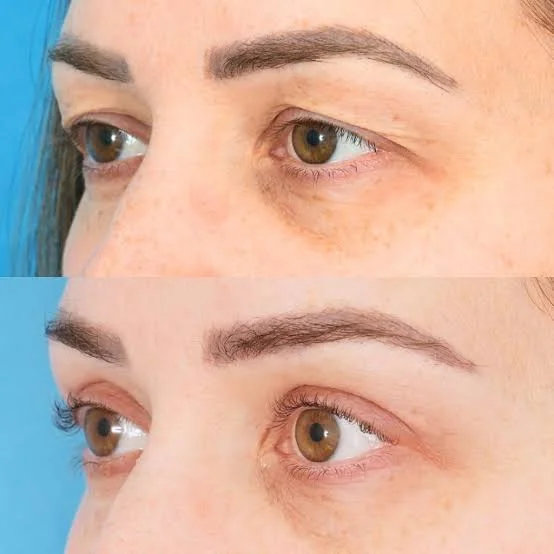
Evaluating genuine blepharoplasty before and after patient profiles illustrates the refreshed appearance achieved through precise surgical techniques:
THE CHRONOLOGICAL HEALING TIMELINE:
- Days 1 to 3: Acute Phase ➡️ Applying cold compresses; mild bruising and swelling around the orbits.
- Days 5 to 7: Suture Removal ➡️ Micro-stitches are removed; fine pink incision lines are easily concealed.
- Weeks 2 to 3: Social Recovery ➡️ Residual bruising clears completely; return to public routines and light makeup.
- Months 3 to 6: Final Tissue Maturation ➡️ Incisions fade into invisible skin lines; full visual rejuvenation.
Modern periocular surgery avoids the outdated "over-excised" or hollowed-out look. Instead, by preserving essential muscle structures and repositioning fat into tear-trough hollows, our partner surgeons create a smooth, natural transition between the lower eyelid and cheek.
Evaluating the Blepharoplasty Cost Globally
A major consideration before scheduling periocular surgery is the financial investment. Prospective patients routinely research the overall blepharoplasty cost across different healthcare hubs globally.
In the United States, Canada, the UK, and Western Europe, private facial plastic or oculoplastic surgery involves separate surgeon fees, facility charges, and anesthesia bills. The average surgical cost in these regions ranges from $3,500 to $8,500 depending on whether upper, lower, or combined quad-blepharoplasty is performed.
Selecting Stamboul Clinic in Istanbul allows international patients to access board-certified facial plastic surgeons and accredited hospital facilities through transparent, all-inclusive packages. The table below outlines structural pricing for 2026:
Surgical Scope & Region | Upper Blepharoplasty Range | Lower Blepharoplasty Range | Combined (Quad) Range | Included Package Amenities |
United States (USA) | $3,500 – $5,500 | $4,000 – $6,500 | $7,000 – $11,000 | Surgery Only (Facility extra) |
United Kingdom (UK) | £2,800 – £4,500 | £3,200 – £5,200 | £5,500 – £9,000 | Surgery Only (Consults extra) |
Germany / Switzerland | €3,000 – €4,800 | €3,500 – €5,500 | €6,000 – €9,800 | Surgery Only (Medications extra) |
Stamboul (Turkey) | €1,450 – €2,200 | €1,650 – €2,400 | €2,750 – €3,850 | Hotel, VIP Transfers & Aftercare |
Frequently Asked Questions (FAQ)
How much does blepharoplasty cost in Turkey?
In 2026, an upper blepharoplasty package in Turkey typically ranges from €1,450 to €2,200, a lower blepharoplasty ranges from €1,650 to €2,400, and a combined upper and lower (quad) procedure ranges from €2,750 to €3,850, covering hospital fees, luxury hotel stays, and private VIP transfers.
Will eyelid surgery leave visible scars?
Incision marks are exceptionally well-concealed. Upper eyelid incisions hide within your natural eyelid crease, while lower eyelid incisions are placed either inside the lid (transconjunctival) or just beneath your lower lash line.
What is the difference between upper and lower blepharoplasty?
Upper blepharoplasty removes heavy, drooping skin and fat from the upper lid to restore an open, rested look (and improve vision). Lower blepharoplasty targets under-eye bags, puffiness, and hollows beneath the eyes.
How long do I need to stay in Turkey for eyelid surgery?
A standard surgical itinerary requires a stay of 5 to 6 nights in Istanbul. This allows for your surgery, initial healing, and the safe removal of your fine micro-stitches on day 5 before your return flight.
Über den Autor