
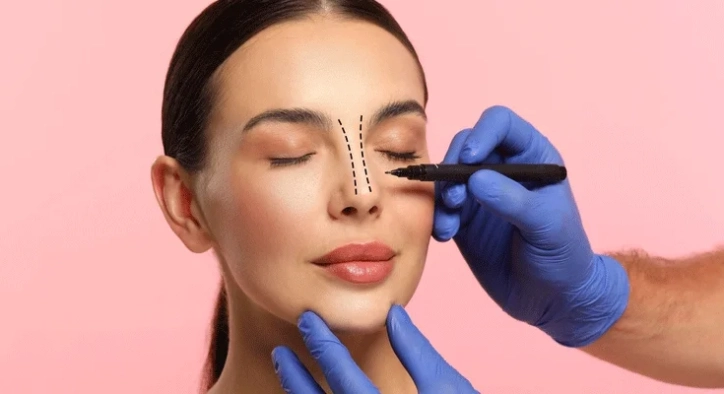
The central position of the nose on the human face makes it the primary anchor of visual symmetry, profile balance, and facial harmony. Whether addressing a congenital dorsal hump, a bulbous nasal tip, asymmetry from trauma, or chronic breathing difficulties caused by a deviated septum, choosing to undergo a structural refinement is a life-changing decision. In modern facial plastic surgery, rhinoplasty represents the ultimate fusion of delicate artistic customization and complex reconstructive engineering.
At Stamboul Clinic, we coordinate world-class facial plastic surgery within fully accredited, state-of-the-art hospital settings. If you are evaluating options for a rhinoplasty Turkey travel itinerary, researching what is rhinoplasty from a surgical perspective, comparing open versus closed rhinoplasty approaches, looking into non-surgical liquid rhinoplasty alternatives, or analyzing global rhinoplasty cost metrics, this comprehensive guide delivers deep clinical insights and recovery parameters.
Table of Content
- What Is Rhinoplasty Surgery?
- Comparing Surgical Techniques: Open vs. Closed Rhinoplasty
- Reconstructive Complexity: The Revision Rhinoplasty Protocol
- Non-Surgical Alternatives: Liquid Rhinoplasty (Dermal Fillers)
- Tracking Visual Progress: Rhinoplasty Before and After Transformations
- Analyzing How Much Is Rhinoplasty Globally?
- Frequently Asked Questions (FAQ)
What Is Rhinoplasty Surgery?
To establish a clear medical foundation, let us answer a primary question: what is rhinoplasty from a surgical perspective? Clinically defined as corrective nasal surgery, rhinoplasty surgery alters the structural framework of the nose (including bone, upper lateral cartilage, lower lateral cartilage, and the nasal septum) to improve external aesthetics, internal airway function, or both.
THE STRUCTURAL RESTORING PATHWAY:
- [Precision Incisions] ➡️ [Osteotomy & Cartilage Reshaping] ➡️ [Septal Airway Alignment] ➡️ [Refined Soft Tissue Coverage]
During a primary procedure, the surgeon carefully lifts the skin envelope to access the underlying scaffolding. High-precision ultrasonic tools (Piezo surgery) or delicate micro-instruments are used to recontour bone ridges without traumatic fracturing, graft autologous cartilage to support the nasal tip, and straighten internal blockages. This dual focus ensures that improving your profile goes hand-in-hand with optimal, unhindered nasal breathing.
Comparing Surgical Techniques: Open vs. Closed Rhinoplasty
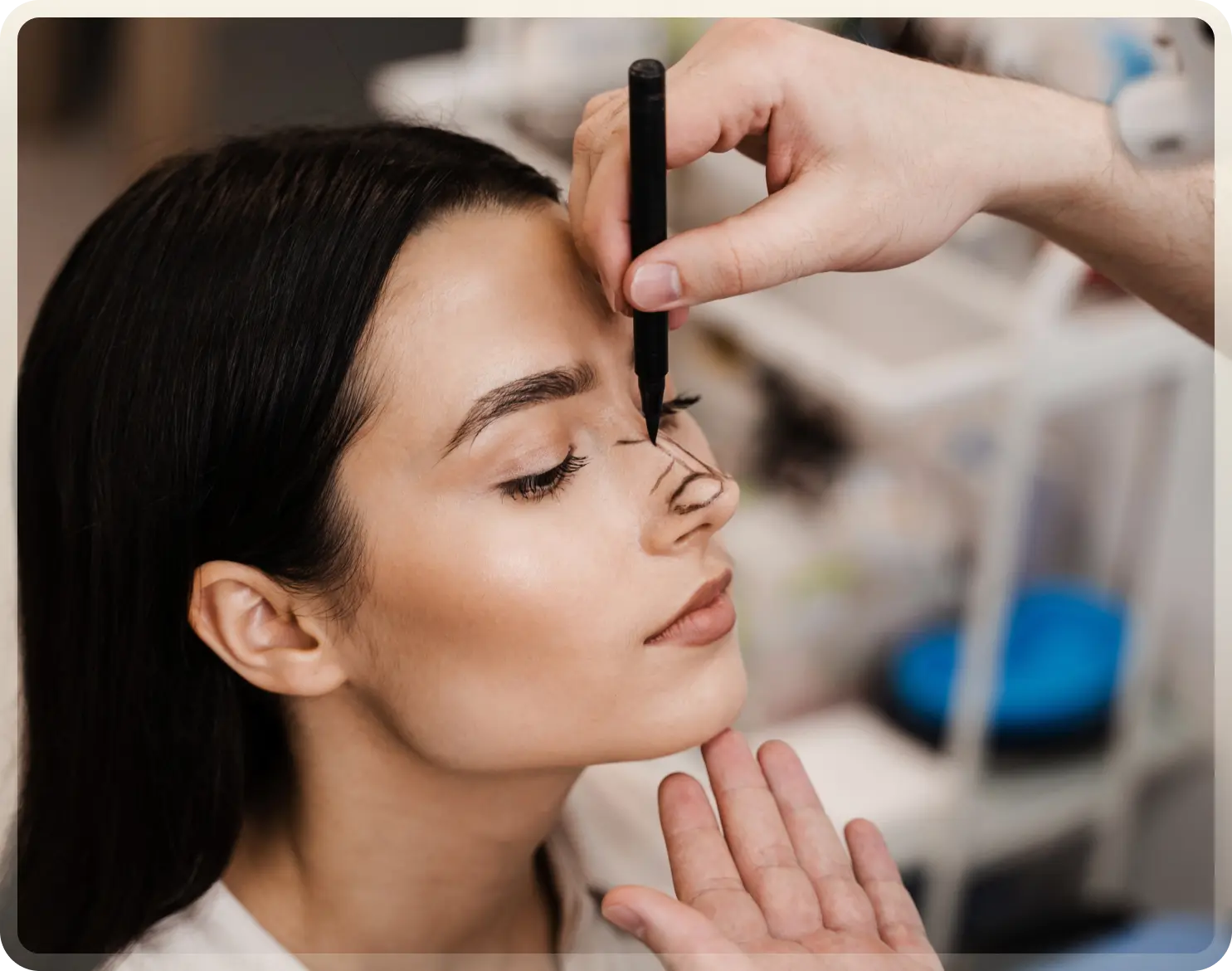
Selecting the appropriate surgical access route is critical for achieving optimal structural longevity while minimizing post-operative recovery times.
SURGICAL ACCESS METHODOLOGIES:
- Open Rhinoplasty: External columellar incision; provides complete visual access for complex structural grafting.
- Closed Rhinoplasty: Internal nasal incisions only; leaves zero visible external scarring with faster recovery.
1. Open Rhinoplasty Framework
In open surgery, a small inverted-V incision is made across the columella (the narrow strip of tissue separating the nostrils), connecting to internal marginal incisions. This allows the surgeon to fold back the nasal skin envelope, providing an unobstructed view of the cartilage architecture. It is the preferred technique for complex structural reconstructions, major tip reshaping, and revision rhinoplasty where prior scar tissue must be cleared.
2. Closed Rhinoplasty Mechanics
During a closed rhinoplasty, all surgical incisions are placed entirely inside the nostrils (endonasal route). Because the external skin remains intact, there is zero visible external scarring, reduced post-operative tip edema, and a faster overall recovery trajectory. Closed techniques are ideal for patients requiring moderate dorsal hump reductions or subtle bridge refinements.
Reconstructive Complexity: The Revision Rhinoplasty Protocol
For patients who have undergone a primary nose job elsewhere and experienced poor aesthetic results, structural asymmetry, or compromised airway breathing, a specialized revision rhinoplasty becomes necessary.
Correcting a previously operated nose is one of the most demanding tasks in facial plastic surgery due to dense internal scar tissue, depleted native cartilage, and altered anatomical planes. In these complex revision cases, our partner surgeons frequently harvest healthy autologous cartilage grafts from the patient's ear or rib to rebuild structural support, open collapsed nasal valves, and restore a soft, natural contour.
Non-Surgical Alternatives: Liquid Rhinoplasty (Dermal Fillers)
For individuals seeking subtle aesthetic refinements without undergoing invasive surgery or taking time off for recovery, a non surgical rhinoplasty (commonly referred to as a liquid rhinoplasty) offers a fast, non-invasive alternative.
THE NON-SURGICAL FILLER MECHANISM:
- Hyaluronic Acid Injection ➡️ Camouflages Dorsal Humps ➡️ Lifts Drooping Tips ➡️ Immediate 12-18 Month Refinement
Using precise micro-injections of high-viscosity hyaluronic acid (HA) dermal fillers, a qualified injector can smooth out dorsal bumps, refine minor asymmetries, and visually lift a drooping tip within 15 to 20 minutes. While a liquid nose job cannot make a physically large nose smaller, it provides immediate, 100% reversible results that last 12 to 18 months with zero surgical downtime.
Tracking Visual Progress: Rhinoplasty Before and After Transformations
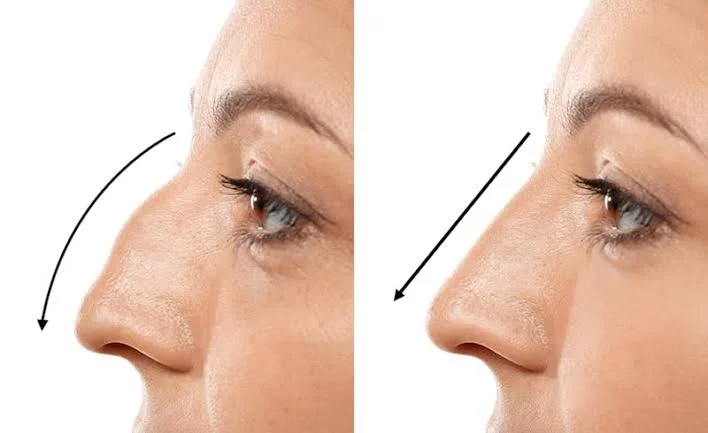
Reviewing unedited, genuine rhinoplasty before and after patient profiles showcases the subtle, natural balance achieved through modern surgical techniques.
THE CHRONOLOGICAL HEALING TRACK:
- Day 7: Cast and internal splints are removed; initial profile shape is visible.
- Weeks 2 to 4: Acute bruising and major swelling clear up completely; return to public routines.
- Months 3 to 6: Dorsal edema resolves; nasal tip tissue softens and settles.
- Month 12+: Final structural maturation; complete resolution of micro-swelling at the tip.
Modern facial plastic surgery avoids the outdated, overly turned-up "piggy nose" or heavily scooped look. Instead, by aligning the nasal bridge with your unique forehead slope, lip angle, and chin projection, our partner surgeons create a balanced profile that looks natural and fits your face seamlessly.
Analyzing How Much Is Rhinoplasty Globally?
A major consideration before choosing facial surgery is the financial investment. Prospective patients routinely research the overall rhinoplasty cost or ask how much is rhinoplasty across different international medical hubs.
In the United States, Canada, the UK, and Western Europe, private facial plastic surgery involves separate bills for surgeon fees, hospital facility usage, general anesthesia, and follow-up care. The average cost for a primary nose job in these regions ranges from $7,500 to $15,000+.
Choosing a rhinoplasty Turkey package allows international patients to access world-class facial plastic surgeons within accredited hospital settings at a fraction of Western costs. The table below outlines structural pricing for 2026:
Destination / Hub | Primary Surgery Range | Revision Surgery Range | Non-Surgical (Liquid) Range | Included Package Amenities |
United States (USA) | $8,500 – $15,000+ | $12,000 – $22,000+ | $800 – $2,500 | Surgery Only (Facility extra) |
United Kingdom (UK) | £6,500 – £11,500 | £9,000 – £16,000 | £400 – £1,200 | Surgery Only (Consults extra) |
Germany / Switzerland | €6,800 – €11,000 | €9,500 – €15,000 | €450 – €1,100 | Surgery Only (Medications extra) |
Stamboul (Turkey) | €2,200 – €3,800 | €3,500 – €6,500 | €300 – €650 | Hotel, VIP Transfers & Aftercare |
Frequently Asked Questions (FAQ)
How much does rhinoplasty cost in Turkey?
In 2026, a primary surgical rhinoplasty package in Turkey typically ranges from €2,200 to €3,800, while complex revision rhinoplasty ranges from €3,500 to €6,500, covering hospital stays, luxury hotel accommodations, and private VIP transfers.
What is the difference between open and closed rhinoplasty?
Open rhinoplasty uses a small external incision across the columella for complete structural visibility during complex reshaping. Closed rhinoplasty places all incisions inside the nostrils, leaving zero visible external scarring and allowing for a faster recovery.
What is a liquid non-surgical rhinoplasty?
It is a quick, 15-minute non-surgical procedure that uses hyaluronic acid dermal fillers to smooth humps, lift tips, and refine nasal symmetry with zero downtime, lasting 12 to 18 months.
How long do I need to stay in Turkey for rhinoplasty surgery?
A standard surgical itinerary requires a stay of 6 to 7 days in Istanbul. This allows for the surgery, initial healing, and the safe removal of your external nasal splint and tape on day 6 or 7 before your return flight.
Über den Autor