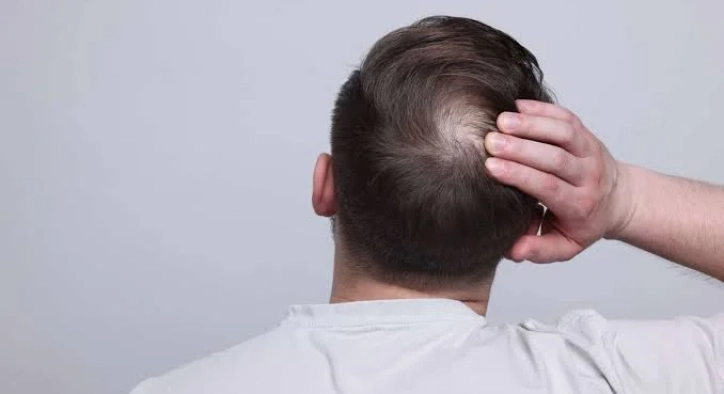
Treating extensive baldness across the top and back of the head requires a deep understanding of scalp anatomy and highly precise micro-surgical skills. While restoring a frontal hairline focuses on creating a clean frame for the face, a crown hair transplant targets the vertex the specific area at the back of the head where hair loss spreads in a circular pattern. The vertex presents distinct challenges because the skin tissue is thicker, the natural blood circulation is more limited, and the hair grows in a complex, circular swirl configuration.
At Stamboul Clinic, we treat vertex reconstruction as a balance of surgical precision and artistic design. If you are looking into a crown hair transplant turkey itinerary, comparing a standard crown hair transplant procedure with an unshaven crown hair transplant option, or evaluating how much does a crown hair transplant cost globally, this comprehensive guide delivers deep clinical insights into recovery phases, structural timelines, and pricing realities.
İçindekiler
- What Is the Crown Hair Transplant Procedure? The Swirl Architecture Challenge
- The Growth Calendar: Crown Hair Transplant Timeline Month by Month
- Unshaven Crown Hair Transplant: Maintaining Discretion During Recovery
- Evaluating Crown Hair Transplant Before and After Progress
- How Much Does a Crown Hair Transplant Cost?
- Frequently Asked Questions (FAQ)
What Is the Crown Hair Transplant Procedure? The Swirl Architecture Challenge
To build a foundation for treatment, let us analyze the mechanics of the crown hair transplant procedure. Rebuilding the vertex is fundamentally different from filling in thin temples.
The hair follicles across the crown naturally grow in a spiral pattern called the crown swirl. To achieve natural-looking crown hair transplant results, the surgeon must carefully adjust the angle, depth, and direction of every single incision to match this unique spiral layout.
SURGICAL SWIRL PLACEMENT METRICS:
- [The Center Point]: Grafts are placed at acute 15-degree angles to establish the spiral root pivot.
- [The Outer Radii]: Angles expand gradually to 30 and 45 degrees, matching your natural hair flow.
- [Density Distribution]: Strategic spacing maximizes visual volume across a broad surface area.
Because the crown is highly visible from behind and above, placing grafts in flat, straight rows creates an unnatural, artificial look. Our specialists utilize advanced Sapphire FUE crystal micro-blades and high-precision DHI Choi pens to open incisions in a true spiral shape, ensuring the new hair grows with an authentic, natural direction.
The Growth Calendar: Crown Hair Transplant Timeline Month by Month
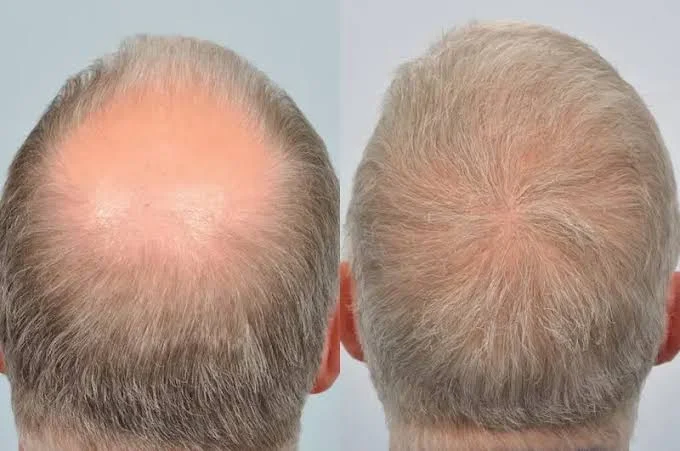
Managing your recovery expectations requires tracking a specialized biological calendar. A primary question we hear during our online consultations is: Why do the results of a vertex restoration develop at a different pace?
The answer lies in local blood circulation. The crown has fewer micro-vascular blood vessels compared to the frontal scalp, meaning the healing roots receive fewer nutrients early on. This makes tracking your crown hair transplant timeline over a full 18-month window essential for a stress-free recovery.
THE 18-MONTH VERTEX RESTORATION MATRIX:
- Month 1: The Shock Loss Stage ➡️ Placed hair shafts shed while healthy follicle roots anchor safely below.
- Months 2-3: The Dormant Window ➡️ Scalp tissue heals completely; hair roots rest beneath the surface.
- Months 4-5: The Sprouting Stage ➡️ Fine, soft "baby hairs" break through the surface of the crown.
- Month 6: The Halfway Threshold ➡️ Density approaches ~50%; hair shafts begin to thicken and darken.
- Months 7-12: Rapid Density Phase ➡️ Significant volume gains; the crown swirl fills out beautifully.
- Months 12-18: Final Maturation ➡️ Hair fibers reach full thickness and length, achieving complete coverage.
When reviewing progress at the crown hair transplant 6 months mark, the treated zone may still appear slightly sparse or thin. This is a normal stage in vertex healing. While a front hairline often looks complete at one year, the crown requires up to 15 to 18 months for the final texture, length, and mature density to be fully realized.
Unshaven Crown Hair Transplant: Maintaining Discretion During Recovery
For business professionals, public figures, and patients who prefer a subtle transformation, full scalp shaving can be an entry barrier. To resolve this concern, advanced clinics implement the unshaven crown hair transplant workflow.
Using specialized no-shave DHI mechanics, our specialists can harvest grafts from a small, hidden horizontal strip at the back of the head. These follicles are then placed directly into the thinning crown area between your existing long hairs using high-precision Choi implanter pens. This approach protects neighboring natural roots from accidental damage, eliminates the look of a shaved head, and allows you to return to public spaces immediately with total discretion.
Evaluating Crown Hair Transplant Before and After Progress
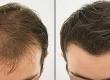
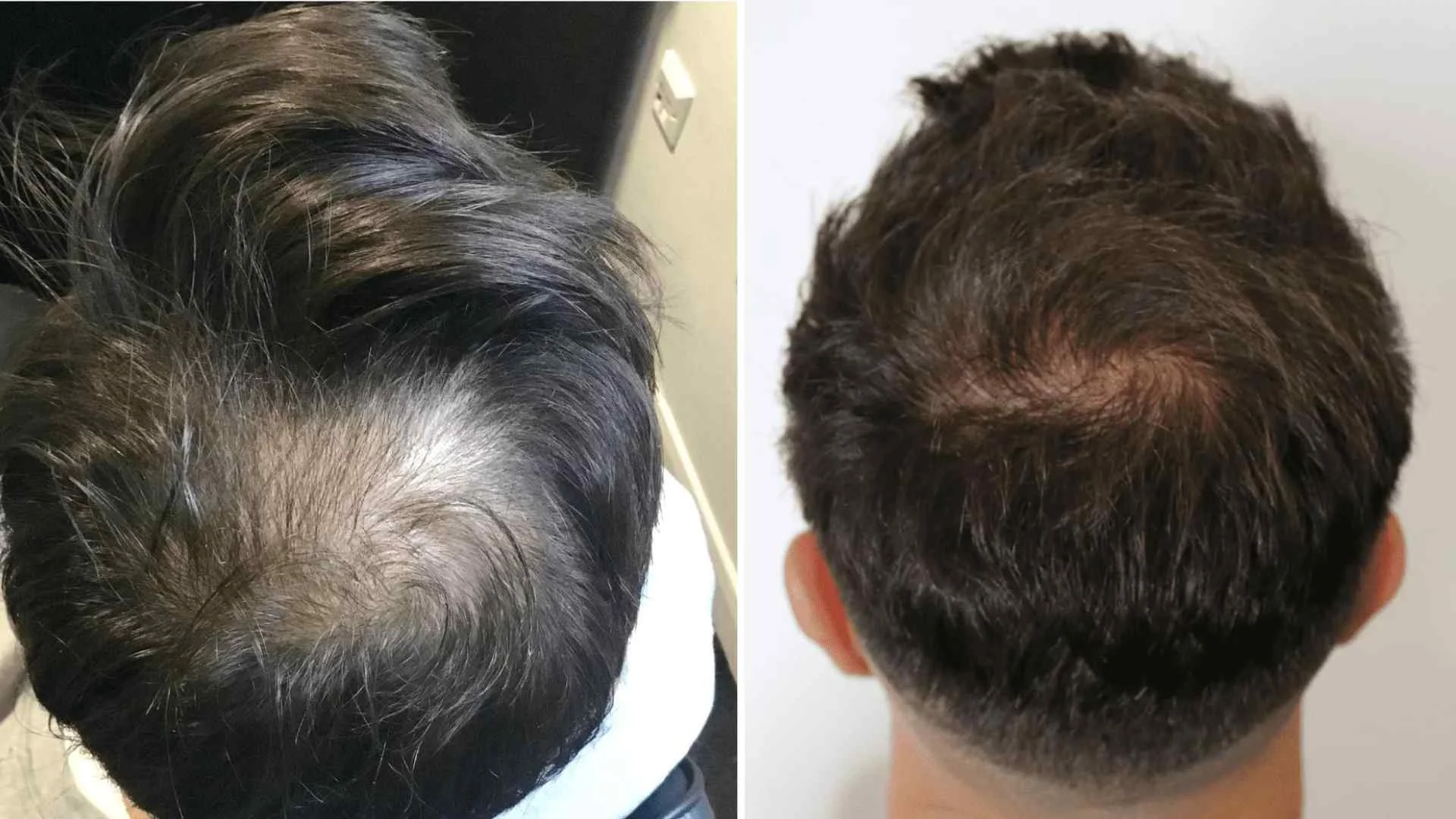
The ultimate measure of clinical success is visible in unedited, genuine crown hair transplant before and after results. Achieving a beautiful result requires a clear understanding of donor capacity and graft management.
Because the crown covers a broad surface area, it often requires a large volume of follicles (typically 2,500 to 4,000 grafts) to achieve full visual density. Our specialists use advanced digital trichoscopy to evaluate your donor zone beforehand, ensuring we harvest the needed graft load safely without causing visible thinning or over-harvesting at the back of the head.
How Much Does a Crown Hair Transplant Cost?
A significant consideration before choosing advanced surgery is the financial investment. Patients routinely look up information regarding the crown hair transplant cost framework, wondering how Turkey maintains its position as an international hub for affordable clinical care.
In countries like the United States, Canada, the UK, and Western Europe, a vertex restoration is priced using an expensive per-graft model, with additional fees for facilities, anesthesia, and consultations, often pushing the total bill to $10,000 to $22,000.
Choosing a crown hair transplant Turkey itinerary allows international patients to access world-class medical expertise within a transparent, fixed-price package model. The table below outlines the estimated cost structures across major destinations in 2026:
Treatment Framework & Scope | Average Cost in USA | Average Cost in UK / Germany | Average Cost at Stamboul (Turkey) |
Standard Session (Approx. 2,500 Grafts) | $9,000 – $15,000 | £5,500 – £9,000 / €6,000 – €9,500 | €2,400 – €2,900 (All-Inclusive Tier) |
Large-Scale Restoration (Approx. 4,000 Grafts) | $15,000 – $22,000+ | £9,500 – £14,000 / €10,000 – €15,000 | €2,900 – €3,800 (Premium Package Rate) |
Frequently Asked Questions (FAQ)
What is a crown hair transplant?
It is a specialized micro-surgical restoration procedure focused on placing hair grafts into the vertex area at the back of the head, requiring careful planning to reconstruct the natural circular growth swirl.
Why do crown hair transplants take longer to grow?
The crown naturally has a thicker skin layer and a more limited blood circulation compared to the front hairline. This reduces the early flow of nutrients to the healing roots, extending the final growth timeline up to 15 to 18 months.
How much does a crown hair transplant cost in Turkey?
In 2026, a premium all-inclusive vertex restoration package at an accredited clinic in Turkey typically ranges from €2,400 to €3,800, depending on the chosen methodology (Sapphire FUE or DHI) and the total graft requirement.
Can I get a crown hair transplant without shaving my entire head?
Yes, absolutely. An unshaven crown transplant utilizes advanced no-shave DHI techniques to harvest grafts from a small, hidden donor strip and place them directly between your long hair, maintaining total discretion throughout your recovery.
How many grafts are typically needed for a bald crown?
Because the vertex covers a broad, circular surface area, it generally requires a substantial volume of hair follicles, typically ranging from 2,500 to 4,000 grafts, to achieve natural-looking coverage and density.
Über den Autor