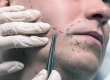
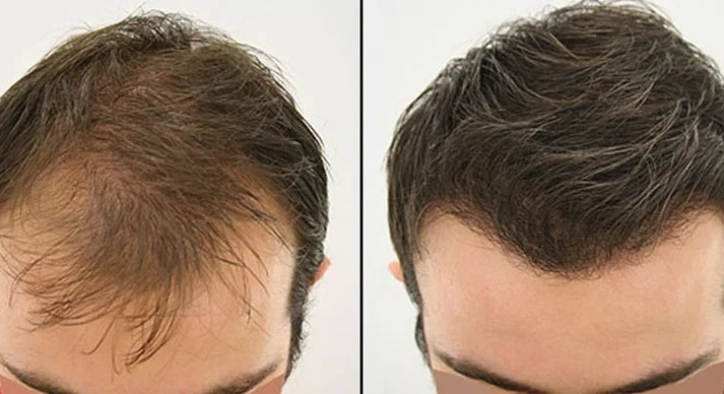
For anyone struggling with chronic hair loss, checking real visual case studies is the single most reliable way to assess clinical quality and build confidence before surgery. Seeing genuine hair transplant before and after images does more than show hair growth it provides a visual timeline of a patient's journey, illustrating the transition from balding or thin areas to a dense, natural-looking head of hair.
At Stamboul Clinic, we believe that showcasing honest, unedited patient journeys is essential for setting accurate medical expectations. Prospective patients researching their options online ask highly specific questions: what does a male hair transplant before and after look like at the one-year mark, how do advanced techniques alter a female hair transplant before and after profile, and what is the difference in density between a 3500 grafts hair transplant before and after and a 4500 grafts hair transplant before and after restoration? This comprehensive clinical guide breaks down the biological growth timeline month-by-month, examines procedural variations for both men and women, and explains what goes into building a successful hair transformation.
Table of Content
- How Does the Growth Timeline Unfold After Hair Restoration Surgery?
- How Do Men and Women Differ in Hair Transplant Before and After Transformations?
- Graft Scale Comparison: 3,500 Grafts vs. 4,500 Grafts Transformations
- How Do FUE and DHI Alter Your Final Before and After Results?
- Comprehensive Growth Ledger: Transformation Milestones
- Frequently Asked Questions (FAQ)
- What does a typical hair transplant before and after timeline look like?
- Is the hairline design different for men and women?
- What is the visual difference between 3,500 and 4,500 grafts?
- Will my hair transplant before and after turkey results look natural?
- When can I cut or style my new hair after the procedure?
How Does the Growth Timeline Unfold After Hair Restoration Surgery?
A common question we hear during our initial digital consultations is: How long does it take to see the final results of a hair transplant?
A successful hair restoration does not change your look overnight. It is a gradual, biological process that follows a set timeline over 12 to 18 months. Understanding each stage of your turkey hair transplant before and after journey is essential for tracking your progress with confidence.
THE 12-MONTH RECOVERY AND GROWING MATRIX:
- Month 1: The Shedding Phase ➡️ Transplanted hair shafts fall out (shock loss) while live roots stay safe.
- Month 2-3: The Dormant Phase ➡️ Follicles rest beneath the surface; skin tissue returns to its normal tone.
- Month 4-5: The Emerging Phase ➡️ Fresh, fine hair fibers begin to break through the surface of the scalp.
- Month 6-9: The Density Phase ➡️ New hair grows longer, becomes significantly thicker, and adds visible coverage.
- Month 12+: The Mature Phase ➡️ The full thickness, length, and natural texture of your hair are completely realized.
By month 12, the new hair strands blend seamlessly with your natural hair, matching the surrounding direction and flow. This permanent density allows for versatile styling options and delivers a long-lasting, transformative boost to your self-confidence.
How Do Men and Women Differ in Hair Transplant Before and After Transformations?
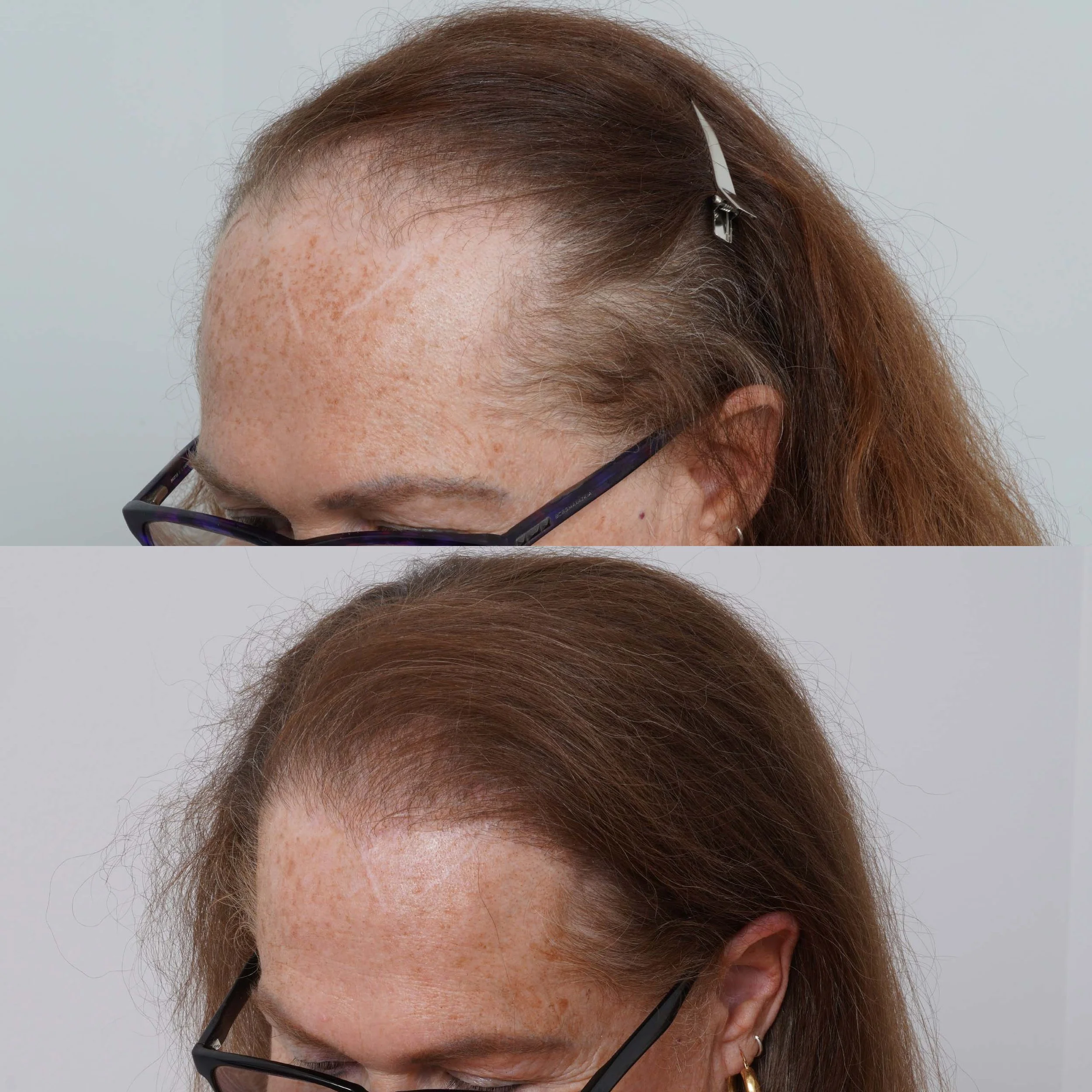
While both men and women experience excellent results from hair restoration, the aesthetic goals, pattern considerations, and surgical techniques differ significantly between genders.
What to Expect from a Hair Transplant Before and After Men Protocol?
When evaluating a hair transplant before and after men journey, the clinical focus is typically on correcting a receding hairline, restoring empty temples, or filling in a bald spot on the crown. A critical element of a successful male restoration is a well-designed hair transplant before and after hairline architecture.
Our specialists avoid drawing a straight, artificial line across the forehead. Instead, we create a soft, slightly irregular boundary that matches your age and facial structure, placing delicate single-hair grafts at the very front to ensure a natural-looking transition.
What to Expect from a Hair Transplant Before and After Women Protocol?
Conversely, analyzing a female hair transplant before and after transformation requires a completely different approach to density. Women rarely experience localized bald spots; instead, they face diffuse hair thinning along their typical parting lines or a naturally high forehead.
Furthermore, our female patients usually prefer a hair transplant before and after women journey that uses advanced "no-shave" DHI methods. This allows our surgeons to harvest grafts from a small, hidden strip at the back of the head and place them directly between existing long hairs, keeping the procedure discreet and allowing the patient to return to her daily professional routine with total confidence.
Graft Scale Comparison: 3,500 Grafts vs. 4,500 Grafts Transformations
The total volume of hair follicles harvested during your surgery determines the level of coverage and density that can be achieved. Let us compare two of the most common large-scale restoration thresholds:
GRAFT LOAD ARCHITECTURE COMPARISON:
- [3500 Grafts Threshold]: Ideal for filling a receding hairline and restoring early thinning across the top or crown.
- [4500 Grafts Threshold]: Designed for advanced baldness, providing comprehensive coverage from the front to the crown.
What Does a 3500 Grafts Hair Transplant Before and After Look Like?
A 3500 grafts hair transplant before and after case study represents an excellent solution for moderate hair loss (Norwood Scale 3 to 4). This graft load allows the surgical team to rebuild a solid, dense front hairline and add significant volume throughout the mid-scalp zone, creating a full and youthful look.
What Does a 4500 Grafts Hair Transplant Before and After Look Like?
For advanced hair loss stages (Norwood Scale 5 to 6), a 4500 grafts hair transplant before and after session is the correct clinical path. This comprehensive approach requires harvesting a substantial volume of hair follicles. It allows our specialists to completely cover a bare crown while simultaneously rebuilding a strong front hairline, resulting in a dramatic transformation across the entire scalp.
How Do FUE and DHI Alter Your Final Before and After Results?
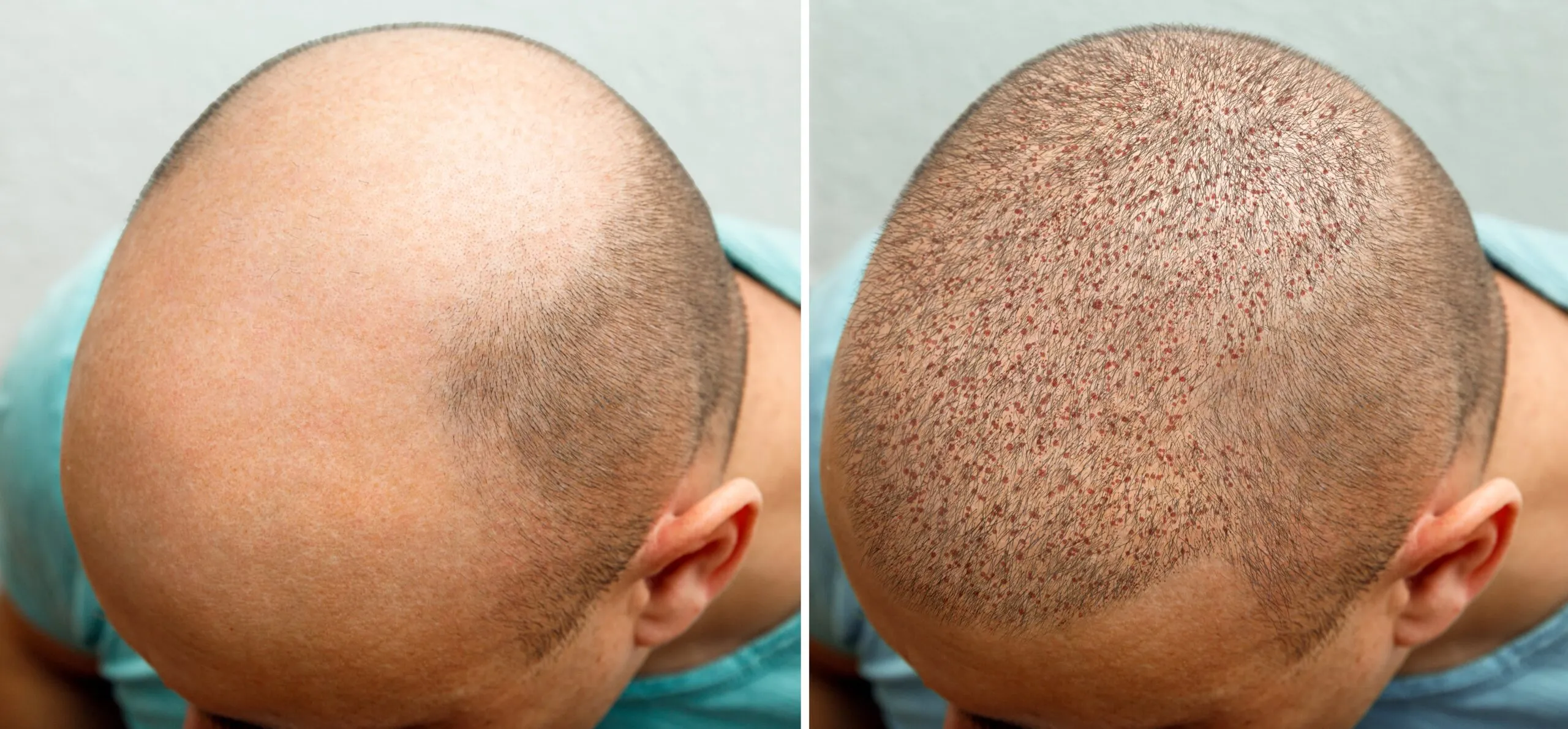
The choice of surgical technique leaves a distinct mark on your early recovery timeline and the way your new hair density blends with your natural growth.
SURGICAL METHOD SELECTION MATRIX:
- [Sapphire FUE]: Micro-sapphire blades open reception canals before placement ➡️ Maximizes maximizes overall surface coverage.
- [DHI Choi Pen]: Simultaneous canal creation and graft placement ➡️ Maximizes targeted density and angulation.
When reviewing a fue hair transplant before and after gallery, the results show consistent, even coverage across large balding areas. This method is highly effective for placing large graft volumes efficiently.
On the other hand, checking a dhi hair transplant before and after portfolio highlights the high-precision results achieved with the Choi Implanter Pen. Because the pen allows the surgeon to control the exact angle, depth, and direction of each graft between existing long hairs, it is the premier choice for lowering a feminine hairline or thickening specific thinning zones without disrupting surrounding roots.
Comprehensive Growth Ledger: Transformation Milestones
The following table outlines the key structural milestones and expected visual transformations during your hair restoration journey:
Timeline Stage | Visual Scalp Appearance | Growth Activity Beneath Skin | Required Care Focus |
Month 1 | Thin appearance, temporary shedding (shock loss) | Follicles enter a resting phase, shedding old hair shafts | Use gentle foam shampoos, protect scalp from sun |
Months 2 – 3 | Scalp looks smooth, hair returns to pre-op baseline | Live roots anchor into the deep dermal tissue layer | Maintain a balanced diet, avoid harsh chemicals |
Months 4 – 5 | Fine, soft "baby hairs" begin to emerge | Active growth phase activates; blood flow to grafts increases | Protect new growth from physical friction |
Months 6 – 9 | Rapidly increasing length, thickness, and coverage | Hair strands mature, darken, and thicken across treated zones | Style hair gently, continue tracking growth progress |
Month 12+ | Maximum hair density, full length, natural texture | Full maturation of the transplanted follicle network | Enjoy your permanent, natural-looking transformation |
Frequently Asked Questions (FAQ)
What does a typical hair transplant before and after timeline look like?
The initial recovery takes about 10 to 14 days for the micro-scabs to clear. Fresh hair growth begins to emerge around months 4 to 5, visible thickness and density develop by months 6 to 9, and the final results are achieved at the 12-to-18-month mark.
Is the hairline design different for men and women?
Yes, absolutely. Male hairline restorations focus on creating a soft, age-appropriate frame that fixes receding temples, whereas female hairline designs focus on lowering a high forehead or thickening diffuse thinning without a full head shave.
What is the visual difference between 3,500 and 4,500 grafts?
A 3,500-graft session is ideal for filling a receding front hairline and adding moderate volume across the mid-scalp, while a 4,500-graft session provides the high volume needed to cover advanced baldness from the front all the way to the crown.
Will my hair transplant before and after turkey results look natural?
Yes, when performed at an accredited clinic like Stamboul Clinic. Our specialists carefully place single-hair grafts along the front hairline at natural growth angles and directions, ensuring your new hair blends seamlessly with your natural growth.
When can I cut or style my new hair after the procedure?
You can safely have a gentle haircut using scissors around month 3. However, you should avoid using electric clippers or razors on the recipient area for at least 6 months to protect the healing scalp tissue.
Über den Autor