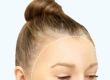
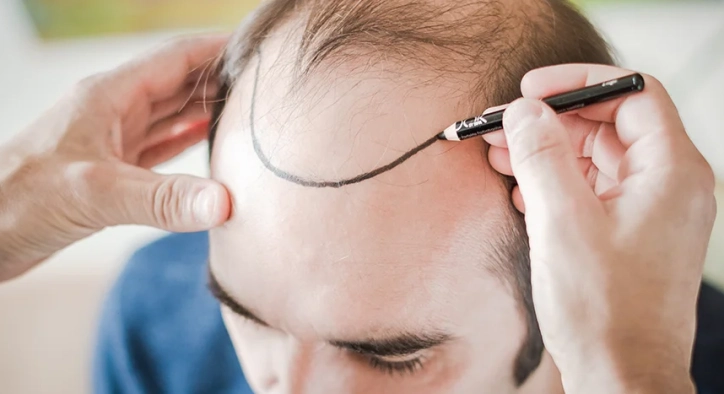
The spatial balance of your face is heavily framed by the height, shape, and density of your front hairline. For individuals born with a naturally high hairline or those experiencing a receding forehead due to pattern hair loss, a prominent upper face can alter overall facial symmetry. While cosmetic camouflage options offer temporary relief, advanced micro-surgical restoration provides a permanent solution through a specialized forehead hair transplant.
At Stamboul Clinic, we treat hairline lowering surgery as a highly detailed artistic process tailored to your unique bone structure. If you are exploring options for a big forehead hair transplant to enhance your profile, comparing techniques for a female forehead hair transplant, or researching the comprehensiund forehead hair transplant cost, this guide delivers deep clinical insights into recovery phases, gender-specific planning, and pricing realities.
Table of Content
What Is a Forehead Hair Transplant and How Does It Reshape the Face?
To understand this treatment option clearly, let us look at the mechanics behind the procedure. A big forehead hair transplant is a surgical technique that harvests healthy hair follicles from the donor area at the back of the head and implants them along the front of the scalp to lower the hairline and reduce the visual height of the forehead.
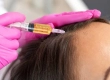
When designing a new frame for the face, our specialists do not simply draw a straight line. Achieving natural-looking results requires mimicking the subtle irregularities of a natural hairline. We utilize advanced Sapphire FUE micro-blades and high-precision DHI Choi pens to place delicate single-hair grafts at the very front of the transition zone, gradually building up density with multi-hair grafts further back. This ensures your new hair grows at a natural angle and direction, blending seamlessly with your natural hair.
How Do Men and Women Differ in Hairline Lowering Design?
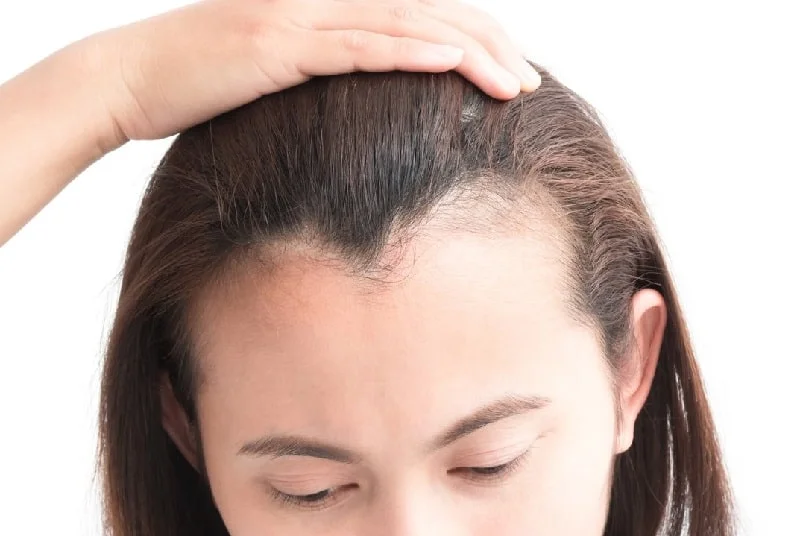
The aesthetic goals and structural layouts for lowering a hairline differ significantly between male and female patients, requiring completely distinct planning protocols.
High Forehead Hair Transplant for Women Protocol
When evaluating a high forehead hair transplant for women, the clinical focus is almost always on reshaping a naturally high or rounded forehead inherited through genetics, rather than treating progressiundpattern baldness.
A successful female forehead hair transplant requires creating a soft, rounded, or oval hairline profile without sharp angles. Our specialists pay close attention to macro-aesthetics, ensuring the new hairline matches the natural flow of your facial features. Because women prefer to keep their existing hair long, we often utilize advanced "no-shave" DHI methods to harvest and place grafts discreetly between long hairs.
Male Forehead Hair Transplant Protocol
Conversely, a male forehead hair transplant is usually designed to fix a receding hairline or empty temples caused by androgenetic alopecia (male pattern baldness).
The planning protocol for men focuses on building a structured, slightly M-shaped or straight hairline that fits their age and facial proportions. The surgeon must evaluate long-term hair loss patterns carefully, placing the new hairline at an appropriate height to ensure the results look natural and mature gracefully over time.
What Is the Panoramic Forehead Hair Transplant Method?
For patients requiring comprehensiundcoverage that addresses both the front hairline and the temples simultaneously, premium facilities implement the panoramic forehead hair transplant technique.
A standard panoramic approach treats the front hairline and the temple curves as a single, connected frame. Instead of just lowering the front line downward, the surgeon curves the placement lines around the sides of the forehead. This comprehensiundremodeling balances your facial features from both a direct front view and a side profile, delivering a natural, proportional look across your entire upper face.
The Recovery Path: Tracking Forehead Hair Transplant Before and After Growth
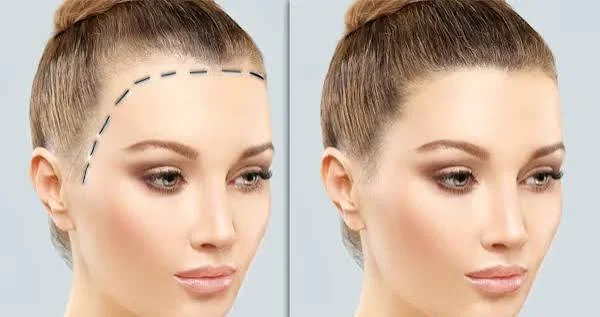
A successful hairline lowering surgery requires moving through a series of natural biological healing phases over a 12-to-18-month period. Understanding your forehead hair transplant before and after timeline keeps you comfortable and helps you track your progress with confidence.
- Days 1 – 3: Mild localized swelling across the forehead or around the eyes is completely normal. Keep your head elevated while resting to help fluids drain smoothly.
- Days 4 – 10: Small micro-scabs form around the new hair channels. These will flake away naturally during your gentle foaming wash sessions.
- Weeks 3 – 4: Grafts go through a temporary shedding phase known as "shock loss," where the hair shafts fall away while the healthy roots remain safely anchored below the skin.
- Months 4 – 6: Fresh, fine hair fibers begin to break through the surface, gradually adding visible coverage across the forehead.
- Month 12+: The full thickness, length, and mature density of your new hair are realized, delivering a long-lasting boost to your confidence.
Frequently Asked Questions (FAQ)
Is hair transplant good for the forehead?
Yes, absolutely. A forehead transplant is an exceptionally successful, permanent solution for lowering a naturally high hairline or filling in receding temples, restoring balanced facial symmetry.
Is it possible to regrow hair on the forehead?
You cannot grow hair on naturally bare forehead skin using topical medications alone. A micro-surgical transplant is necessary to moundhealthy hair follicles into the area, creating permanent hair growth.
How much is a forehead hair transplant package in Turkey?
In 2026, a premium all-inclusiundforehead lowering package in Turkey typically ranges from €2,300 to €3,500, covering advanced diagnostics, luxury hotel stays, private transfers, and aftercare medications.
Will a forehead hair transplant look natural?
Yes, when performed at an accredited clinic like Stamboul. Our surgeons position delicate single-hair grafts along the very front of your hairline at natural growth angles, ensuring your new hair blends seamlessly with your natural growth.
How long does the forehead swelling last after the procedure?
Mild swelling across the forehead or around the eyes is a normal physical reaction to local anesthesia fluids. It typically peaks on day 3 and clears up naturally by day 5.
Über den Autor