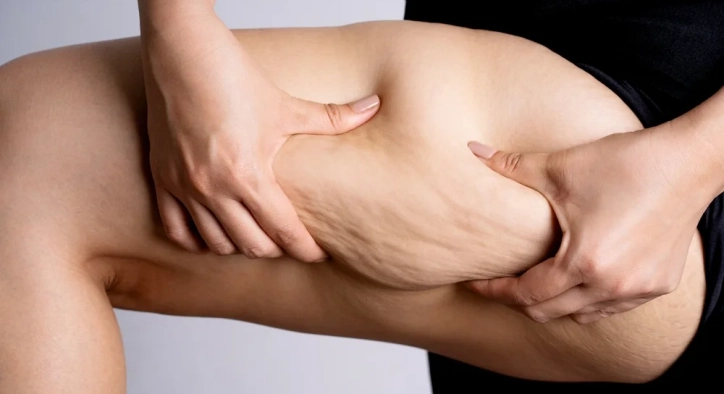
Millions of women worldwide struggle with disproportionately heavy, column-shaped legs, hypersensitive skin, and persistent aching that does not respond to caloric restriction or rigorous physical training. Frequently misdiagnosed as simple obesity, primary lymphedema, or severe cellulite, this condition is recognized in contemporary medicine as a distinct metabolic and vascular pathology: lipedema.
Patients living with this disorder experience tissue tenderness, easy bruising from minor impacts, orthostatic heaviness, and progressive joint strain. Because diseased adipose tissue cannot be metabolized through lifestyle modifications alone, specialized clinical intervention is required. In modern reconstructive surgery, specialized lymph-sparing surgery represents the only definitive intervention to halt disease progression, decompress compromised lymphatic channels, and restore mobility.
Table of Content
- What Is Lipedema? Pathophysiology, Stages, and Symptoms
- Treatment Modalities: Conservative Management vs. Surgical Decompression
- Surgical Mechanics: Lymph-Sparing Liposuction for Lipedema
- Recovery Milestones: Lipedema Surgery Aftercare Roadmap
- Lipedema Legs Before and After Transformation
- Cost Determinants: Understanding Price Variables and Estimates
- Frequently Asked Questions (FAQ)
- What is the primary difference between lipedema and ordinary obesity?
- Can lipedema fat return after lymph-sparing liposuction?
- Why is specialized lymph-sparing liposuction necessary instead of standard cosmetic liposuction?
- How many surgery sessions are typically required for advanced lipedema?
- Why do lipedema surgery costs vary between different patients?
What Is Lipedema? Pathophysiology, Stages, and Symptoms
To establish a clear medical foundation, let us answer a primary question: what is lipedema from a pathophysiological standpoint? Lipedema is a chronic, progressive adipose tissue disorder characterized by bilateral, symmetrical proliferation of dysfunctional subcutaneous fat across the lower extremities (and frequently the upper arms), while characteristically sparing the feet and hands.
THE 4 CLINICAL STAGES OF LIPEDEMA:
- Stage 1: Smooth skin surface; thickened subcutaneous fat layer; pearl-like nodular structures palpable beneath the skin.
- Stage 2: Uneven, mattress-like skin surface; larger walnut-sized subcutaneous nodules; visible indentations.
- Stage 3: Large, lobular fat pads hanging over the knees, thighs, or ankles; skin-on-skin friction; impaired gait.
- Stage 4 (Lipo-Lymphedema): Severe adipose lobules combined with secondary lymphatic vessel obstruction; fluid swelling into the feet.
Core Diagnostic Lipedema Symptoms
Accurate diagnosis requires identifying key clinical markers that distinguish lipedema from common adiposity:
- Bilateral & Symmetrical Distribution: Both legs (and occasionally arms) are affected equally, creating a columnar appearance.
- Cuff Sign (Malleolar Sparing): Diseased fat terminates abruptly at the ankles (malleoli), leaving the dorsal feet completely slim and unaffected.
- Hyperalgesia & Pressure Tenderness: Mild pressure on the skin causes disproportionate tenderness or aching pain due to neurogenic inflammation.
- Easy Hematoma Formation: Fragile micro-capillaries within diseased fat rupture easily, leading to unexplained bruising.
- Caloric Resistance: Significant weight loss from dieting or bariatric surgery slims the upper torso, waist, and face, while lipedema limbs remain unchanged.
Treatment Modalities: Conservative Management vs. Surgical Decompression
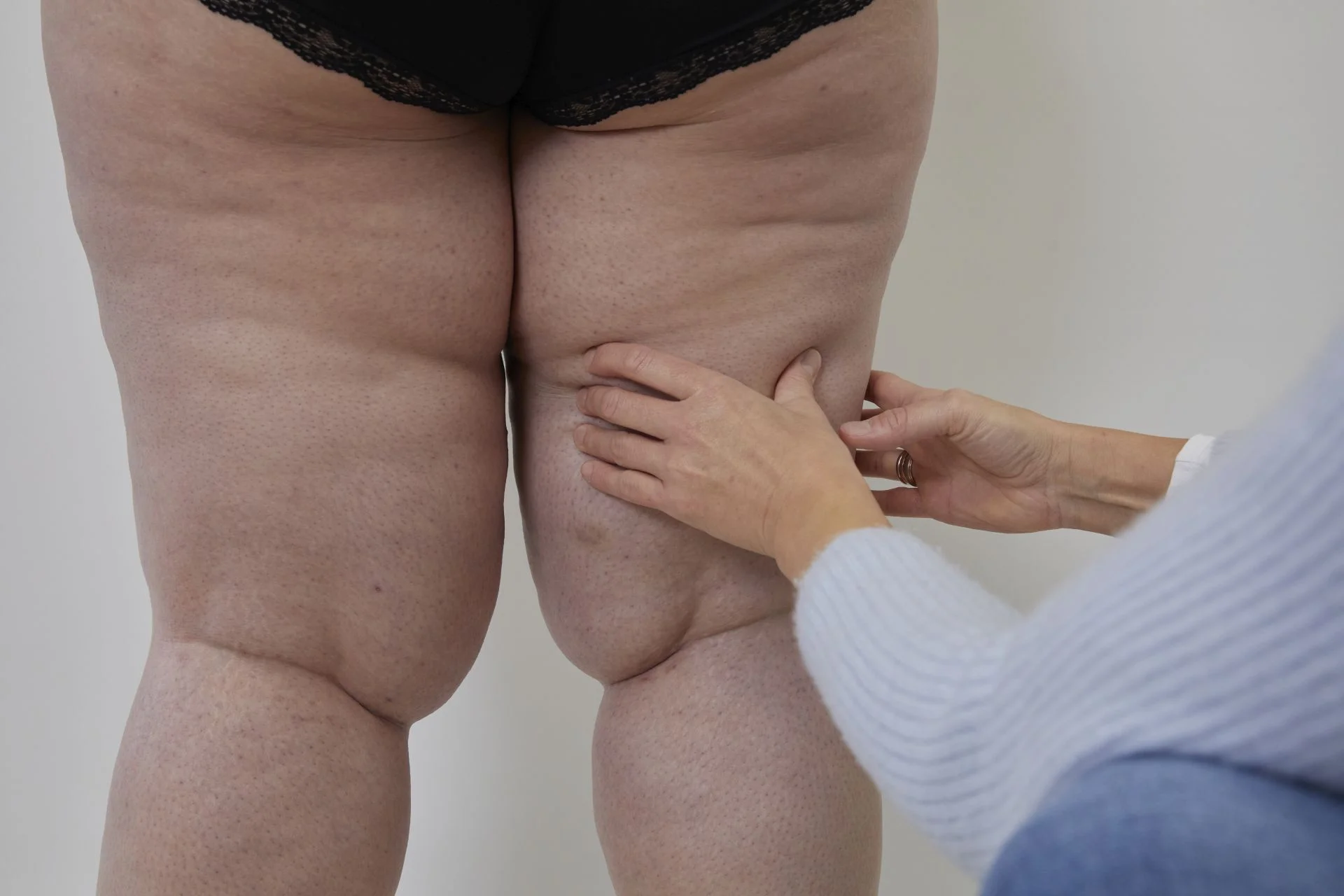
Understanding how to treat lipedema requires a staged, comprehensive approach that balances non-surgical symptom control with surgical tissue removal.
LIPEDEMA TREATMENT PATHWAYS:
- Conservative Care (CDT): Manual lymphatic drainage (MLD), flat-knit compression stockings, anti-inflammatory nutrition; manages edema.
- Surgical Care (Lymph-Sparing): Specialized liposuction to physically aspirate diseased fat cells; permanently decompresses tissue.
1. Complete Decongestive Therapy (CDT)
Conservative care serves as the therapeutic baseline for managing symptoms. This includes wearing custom flat-knit medical compression garments (Class II or III), undergoing manual lymphatic drainage (MLD), following an anti-inflammatory dietary regimen (such as low-carb or ketogenic plans to reduce systemic inflammation), and low-impact aquatic exercise. While conservative care reduces interstitial fluid accumulation and eases heaviness, it cannot remove the diseased, fibrotic fat cells.
2. Liposuction for Lipedema (Surgical Decompression)
When conservative measures are insufficient to stop tissue progression or pain, liposuction for lipedema is clinically indicated. By physically removing the diseased fat deposits, surgery eliminates mechanical joint stress, reduces chronic inflammation, prevents progression to Stage 4 lipo-lymphedema, and substantially reduces daily pain.
Surgical Mechanics: Lymph-Sparing Liposuction for Lipedema
Performing surgery on lipedema limbs demands specialized techniques distinct from standard cosmetic liposuction. Standard aggressive contouring can lacerate superficial lymphatic vessels, worsening fluid retention and triggering permanent secondary lymphedema.
THE LYMPH-SPARING OPERATIVE SEQUENCE:
- [Longitudinal Pre-Op Mapping] ➡️ [High-Volume Tumescent Hydro-Dissection] ➡️ [WAL / VASER Gentle Fat Emulsification] ➡️ [Blunt Micro-Cannula Longitudinal Aspiration] ➡️ [Immediate Flat-Knit Re-Compression]
Specialized lipedema surgeons utilize Water-Assisted Liposuction (WAL) or pulsed, low-power VASER ultrasonic technology. Blunt-tipped, micro-cannulas are guided strictly in a longitudinal direction parallel to the natural lymphatic vessel pathways. The pressurized tumescent fluid gently separates fat lobules from the delicate lymphatic collectors and blood vessels without shearing them, ensuring safe, high-volume fat removal.
Recovery Milestones: Lipedema Surgery Aftercare Roadmap
Understanding the post-operative healing trajectory helps patients navigate tissue remodeling and manage temporary fluid shifts.
THE POST-OPERATIVE RECOVERY TIMELINE:
- - Weeks 1 to 2: Acute Fluid Phase ➡️ High tumescent drainage; strict 24/7 flat-knit compression; MLD initiated at day 3–5.
- - Weeks 3 to 6: Deep Tissue Softening ➡️ Bruising resolves; fibrotic tissue softens; daily walking and light routines resumed.
- Months 3 to 6: Mobility Restoration ➡️ Significant reduction in leg volume and pressure pain; gait mechanics normalized.
- Months 6 to 12: Final Tissue Equilibrium ➡️ Lymphatic pathways adapt; skin retracts smoothly; long-term pain relief established.
Post-operative care for lipedema surgery differs markedly from cosmetic procedures. Patients must resume wearing customized flat-knit compression garments immediately after surgery to prevent seroma formation and support lymphatic drainage. Manual lymphatic drainage sessions are initiated within days to keep fluid moving and prevent tissue fibrosis.
Lipedema Legs Before and After Transformation
Reviewing verified lipedema legs clinical profiles illustrates how targeted, lymph-sparing fat extraction restores anatomical leg proportions:
By removing hypertrophic adipose cushions around the inner knees, outer thighs, and lower calves, surgical decompression eliminates mechanical knee friction and normalizes leg alignment. Patients regain joint mobility, allowing them to walk without chafing, exercise comfortably, and wear standard footwear and pants without restriction.
Cost Determinants: Understanding Price Variables and Estimates
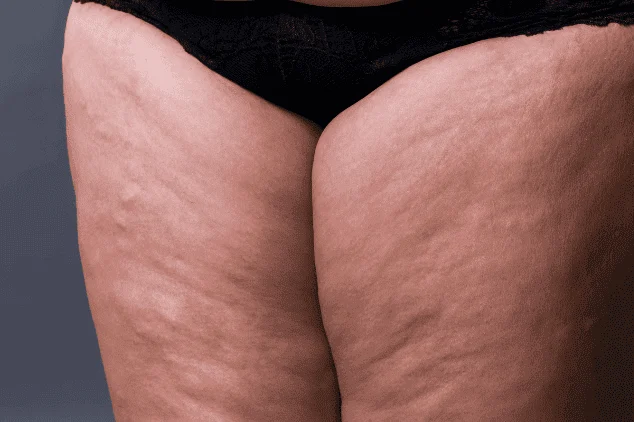
When evaluating surgical treatment for lipedema, prospective patients should note that costs vary widely based on individual clinical staging and procedural volume. The overall lipedema surgery financial investment is determined by several clinical and logistical variables:
- Clinical Stage & Total Volume: Stage 1 cases with localized fat pockets require less operating time than Stage 3 cases with massive, fibrotic tissue lobules requiring extensive decompression.
- Staged Multi-Session Protocols: For patient safety and to manage lidocaine toxicity limits, removing high volumes (e.g., 6 to 12+ liters) often requires dividing the surgery into 2 or 3 separate operative sessions spaced weeks apart.
- Advanced Surgical Technology: Utilizing specialized Water-Assisted Liposuction (WAL / Body-Jet) or VASER ultrasound systems requires specialized instrumentation and hospital overhead.
- Inpatient Hospital Care & Compression Therapy: Multi-night hospital observation, specialized lymphatic nursing, and custom post-surgical compression garments shape the overall cost structure.
- Comprehensive Logistics: All-inclusive medical packages encompassing VIP airport transfers, extended hotel recovery stays, and certified post-operative medical follow-up care create variable pricing tiers.
Because treatment plans are customized to individual clinical stages, exact quotations are established following a comprehensive clinical evaluation. The matrix below outlines relative regional price structures for 2026:
Healthcare Destination / Region | Cost Structure & Price Variability | Relative Price Level | Typical Package Framework |
United States (USA) | High variability by surgeon & hospital | High | Surgery Only (Facility, Hospital Stay & Garments Extra) |
United Kingdom (UK) | Variable by private clinic & stage | High | Surgery Only (Consultations & MLD Invoiced Separately) |
Germany / Switzerland | Variable by specialized lipedema center | Moderate to High | Surgery Only (Inpatient Stay & Compression Extra) |
Stamboul (Turkey) | Dynamic Custom Package | High Value / Accessible | Comprehensive (Hospital Stay, Hotel, VIP Transfers & Care) |
Frequently Asked Questions (FAQ)
What is the primary difference between lipedema and ordinary obesity?
Lipedema is a structural and hormonal disease of the adipose tissue, not a consequence of caloric excess. In obesity, fat distributes across the entire body (including the abdomen, face, and hands) and responds to diet and exercise. In lipedema, fat accumulates symmetrically in the limbs while sparing the hands and feet; the tissue is painful to touch, bruises easily, and cannot be burned off through diet or gym training.
Can lipedema fat return after lymph-sparing liposuction?
Because adult fat cells cannot regenerate once surgically aspirated, diseased fat removed from treated zones does not return. However, because lipedema is an underlying systemic condition, remaining untreated areas (such as the upper arms) can continue to progress if significant hormonal shifts or substantial weight gain occur. Maintaining an anti-inflammatory lifestyle helps preserve long-term results.
Why is specialized lymph-sparing liposuction necessary instead of standard cosmetic liposuction?
Standard cosmetic liposuction uses sharp, wide-bore cannulas with rapid back-and-forth passes designed to sculpt healthy tissue, which can damage delicate lymphatic vessels in lipedema-affected limbs. Lymph-sparing lipedema surgery utilizes blunt, specialized micro-cannulas guided longitudinally alongside high-volume tumescent fluid or water jets to gently dislodge fat cells while keeping lymphatic collectors intact.
How many surgery sessions are typically required for advanced lipedema?
While Stage 1 lipedema can often be addressed in a single comprehensive session, patients with Stage 2 or Stage 3 lipedema typically require 2 to 3 separate surgical stages (e.g., lower legs and calves in session one, upper thighs and hips in session two, and arms in session three) to ensure hemodynamic stability and patient safety.
Why do lipedema surgery costs vary between different patients?
Pricing varies because treatment is tailored to the disease stage. Factors such as whether a single session or multi-stage surgery is required, the total volume of fat to be aspirated, the technology used (WAL vs. VASER), and the duration of post-operative hospital observation directly determine the surgical scope and overall cost.
Über den Autor