

The cervicomental angle, the defined anatomical transition where the horizontal line under the chin meets the vertical contour of the neck, serves as one of the most prominent markers of facial definition, vitality, and physical youthfulness. However, the cervical region often displays signs of biological aging earlier than the midface. Over time, thin delicate skin loses its dermal collagen network, superficial and deep sub-platysmal fat pads expand, and the bilateral sheets of the platysma neck muscle separate along the midline.
This creates vertical cord-like bands, a heavy double chin, or a hanging "turkey neck" that blurs the mandibular jawline. While non-invasive energy devices provide modest skin tightening for early elasticity loss, structural muscle laxity requires surgical repositioning. In contemporary facial plastic surgery, a neck lift represents the definitive surgical standard to reconstruct the muscular framework of the neck and sculpt a sharp, natural jawline.
At Stamboul Clinic, we coordinate specialized deep plane facial rejuvenation and cervical contouring surgeries within accredited, state-of-the-art hospital facilities in Istanbul. Whether you are exploring an all-inclusive neck lift Turkey medical trip, evaluating the structural depth of a deep plane neck lift, comparing recovery protocols for a mini neck lift, analyzing the biological limits of a non surgical neck lift, reviewing verified neck lift before and after milestones, or assessing variable neck lift cost and mini neck lift cost determinants, this clinical guide delivers comprehensive surgical data and recovery protocols.
Table of Content
- What Is a Neck Lift? The Dual Muscular & Dermal Mechanism
- Surgical Techniques: Deep Plane Neck Lift vs. Mini Neck Lift
- Incisions and Scars: Are Neck Lift Scars Visible?
- Recovery Timeline: Navigating Healing Milestones
- Visual Proof: Neck Lift Before and After Transformations
- Cost Determinants: Understanding Price Variables and Estimates
- Frequently Asked Questions (FAQ)
- What is the primary difference between a neck lift and a lower facelift?
- How long do the results of a surgical neck lift typically last?
- Why can't liposuction alone fix a sagging neck in mature patients?
- How should I sleep during the first month following neck lift surgery?
- Why do neck lift costs vary between different patients?
What Is a Neck Lift? The Dual Muscular & Dermal Mechanism
To establish a clear medical foundation, let us examine what happens during modern neck lift surgery. Clinically defined as a cervicoplasty combined with a platysmaplasty, the operation addresses both the superficial cutaneous envelope and the deep muscular infrastructure.
THE CERVICOPLASTY & CORSET PLATYSMAPLASTY SEQUENCE:
[Submental & Retroauricular Hidden Access] ➡️ [Superficial Liposuction / Conservative Fat Sculpting] ➡️ [Deep Sub-Platysmal Fat Management] ➡️ [Midline Corset Platysmaplasty Suturing] ➡️ [Lateral SMAS-Platysma Suspension] ➡️ [Tension-Free Skin Redraping]
1. Corset Platysmaplasty (Midline Muscle Repair)
The platysma muscle functions as a paired muscular sheet covering the anterior neck. With aging, its inner borders split apart, hanging down in two prominent vertical strings known as platysmal bands. Through a small, hidden horizontal incision placed in the natural submental crease under the chin, the surgeon brings the split muscle edges together, suturing them in a central midline seam. This acts as an internal anatomical corset, flattening vertical bands and creating a firm foundation.
2. Lateral Suspension and Excess Skin Excision
Through discrete incisions curving around and behind the earlobes (retroauricular sulcus), the lateral edges of the platysma and the superficial musculoaponeurotic system (SMAS) are suspended upward and backward toward the mastoid fascia. Once the internal muscular support is secured, redundant stretched skin is redraped without tension and conservatively excised, ensuring a natural jaw-neck contour without a tight "wind-tunnel" appearance.
Surgical Techniques: Deep Plane Neck Lift vs. Mini Neck Lift

Surgical customization depends on whether tissue aging involves deep sub-muscular structures or is limited to early skin and superficial fat laxity.
SURGICAL METHODOLOGIES OVERVIEW:
- Deep Plane Neck Lift: Operates beneath the platysma; refines sub-platysmal fat and sagging digastric muscles; 10–15 year longevity.
- Mini Neck Lift: Shorter incisions behind ears; targets localized superficial fat and mild skin laxity; shorter recovery.
- Non-Surgical Neck Lift: Energy devices (Ultherapy, RF microneedling, Botox); mild dermal stimulation; temporary results.
1. Deep Plane Neck Lift
Unlike superficial skin-tightening methods, a deep plane neck lift addresses structural aging beneath the platysma muscle layer. The surgeon works in the deep cervical plane to release retaining ligaments, conservatively trim hypertrophic sub-platysmal fat, and suspend the deep fascial layer. This technique is ideal for patients with significant jawline heaviness, thick obtuse neck profiles, or prominent lower facial sagging, delivering results that typically last 10 to 15 years.
2. Mini Neck Lift
For younger patients or individuals with mild-to-moderate skin laxity localized strictly beneath the jawline, a mini neck lift offers a less invasive alternative. Utilising smaller incisions behind the ears and under the chin, the procedure focuses on micro-liposuction and limited lateral platysma suspension without deep plane dissection, allowing patients to resume social activities within 7 to 10 days.
3. Non-Surgical Neck Lift: Clinical Realities
Non-invasive procedures, such as micro-focused ultrasound (HIFU), radiofrequency microneedling, thread lifts, or "Nefertiti" botox injections, are marketed as a non surgical neck lift. While these modalities temporarily stimulate collagen or relax dynamic bands, they cannot remove heavy submental fat, excise loose excess skin, or repair divided platysma muscles. Non-surgical methods serve well for early maintenance in patients in their 30s, but cannot match the anatomical definition of surgical repair.
Incisions and Scars: Are Neck Lift Scars Visible?
Managing patient expectations regarding surgical incision lines is a vital component of pre-operative planning.
THE CERVICAL SCAR PLACEMENT PROTOCOL:
- Submental Crease Incision: 2.5 to 3 cm horizontal line hidden in the natural shadow beneath the chin.
- Retroauricular Incision: Curves around the front of the earlobe, ascends behind the ear, and terminates within the hairline.
- Deep Tension Distribution: Tension is borne entirely by internal muscular sutures; skin edges heal as thin, faint lines.
Because surgical cuts follow the natural anatomical contours around the ear and under the chin, visible scarring is minimized. The anterior skin can heal without stretching because the mechanical load is anchored to deep muscular structures. Within 3 to 6 months, incisions typically fade into thin, pale white lines hidden within natural skin creases or the hairline.
Recovery Timeline: Navigating Healing Milestones
Understanding the biological milestones of surgical recovery ensures smooth healing and helps patients plan their return to active routines.
THE POST-OPERATIVE RECOVERY TIMELINE:
- Days 1 to 3: Acute Bandage Phase ➡️ Supportive head-neck compression wrap worn; mild tightness managed with prescribed pain medication.
- Days 7 to 10: Suture Clearance ➡️ Submental and ear sutures removed; initial bruising fades; return to light desk work.
- Weeks 2 to 3: Tissue Settlement ➡️ 70% of swelling clears; neck tightness subsides; comfortable public social appearance.
- Months 3 to 6: Final Jawline Definition ➡️ Residual deep tissue remodeling complete; crisp 90° cervicomental angle stabilized.
Patients must wear an elastic neck-chin compression garment continuously for the first week to minimize fluid accumulation and support tissue re-adherence. Sleeping on your back with the head elevated on 2 to 3 pillows for the first 2 to 3 weeks prevents nocturnal edema and protects healing suture lines.
Visual Proof: Neck Lift Before and After Transformations
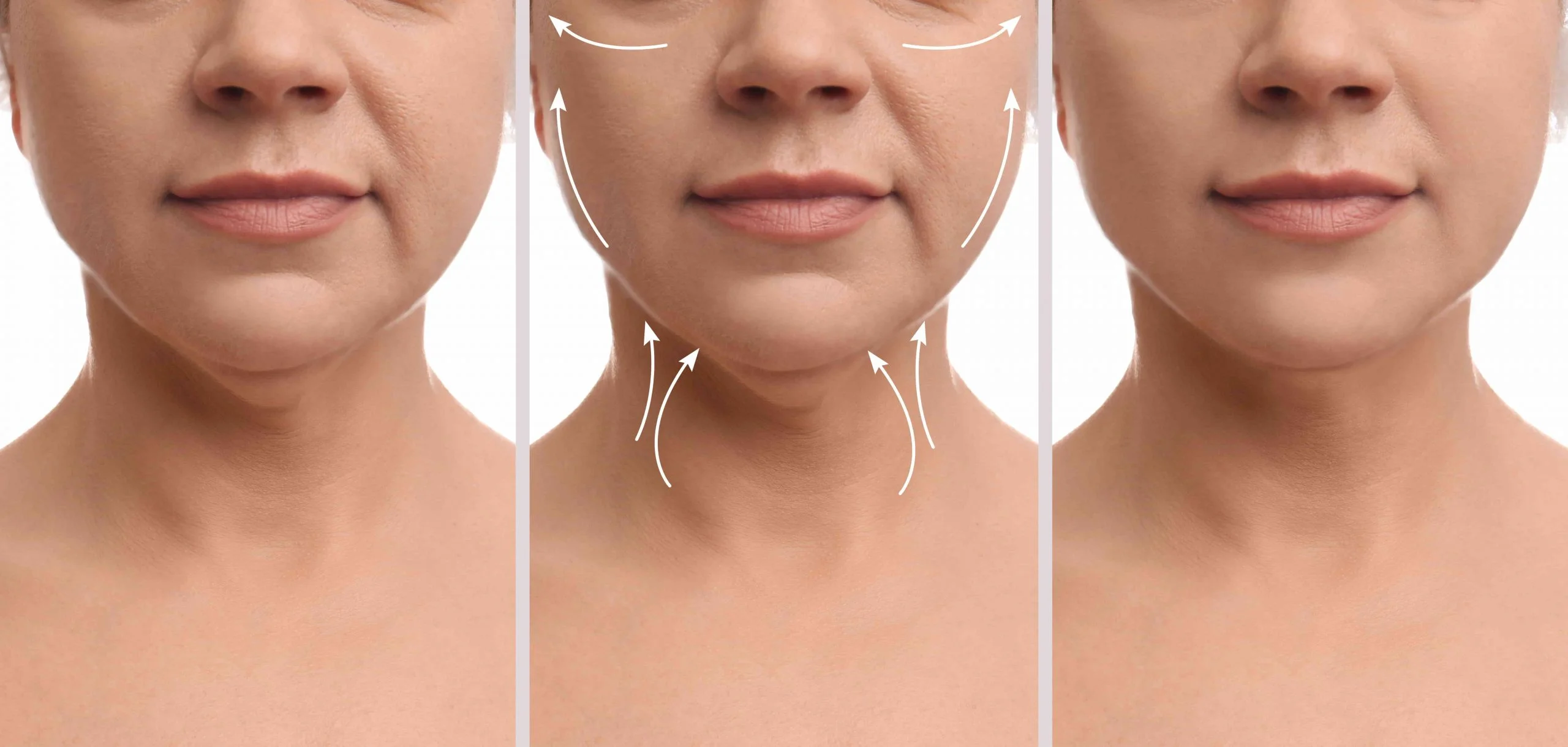
Reviewing unedited neck lift before and after patient profiles illustrates how restoring deep muscular support and redraping loose cervical skin sharpens the entire profile:
The transformation demonstrates a defined jawline, smooth neck contours free of vertical cords, and a restored transition between the lower chin and the neck.
Cost Determinants: Understanding Price Variables and Estimates
When evaluating cervical rejuvenation, prospective patients should note that surgical fees are customized rather than based on a single fixed rate. The overall neck lift cost and mini neck lift cost are influenced by several clinical and logistical variables:
- Surgical Depth & Technique: A complex deep plane neck lift involving sub-platysmal fat reduction and digastric muscle contouring requires longer operative theater time and advanced surgical expertise compared to a mini lift.
- Combined Procedures: Neck lifting is frequently combined with a deep plane facelift, lower blepharoplasty, or chin implant to ensure aesthetic balance across the lower face.
- Anesthesia and Hospital Infrastructure: Operations conducted under general anesthesia in a fully accredited surgical hospital with overnight medical monitoring involve different facility costs compared to local outpatient suites.
- Extent of Muscular Separation & Skin Excess: Severe platysmal banding requiring extensive midline plication and significant dermal excision influences the surgical plan.
- Comprehensive Logistics: All-inclusive medical packages in Turkey incorporating VIP airport transfers, hotel accommodations, and certified post-operative medical follow-up care create variable pricing tiers.
Because surgical plans are tailored to individual cervical anatomy, exact quotations are established following a personalized clinical evaluation. The matrix below outlines relative regional price structures for 2026:
Healthcare Destination / Region | Cost Structure & Price Variability | Relative Price Level | Typical Package Framework |
United States (USA) | High variability by surgeon & state | High | Surgery Only (Facility, Anesthesia & Garments Extra) |
United Kingdom (UK) | Variable by private clinic & hospital | High | Surgery Only (Consultations & Aftercare Invoiced Separately) |
Germany / Switzerland | Variable by medical fee scale (GOÄ) | Moderate to High | Surgery Only (Hospitalization & Meds Invoiced Separately) |
Stamboul (Turkey) | Dynamic Custom Package | High Value / Accessible | Comprehensive (Hospital Stay, Hotel, VIP Transfers & Care) |
Frequently Asked Questions (FAQ)
What is the primary difference between a neck lift and a lower facelift?
A neck lift focuses on the area beneath the mandibular border, addressing platysma muscle bands, submental fat, and hanging skin below the chin. A lower facelift addresses the lower third of the face, specifically targeting jowls along the jawline, marionette lines around the mouth, and sagging cheek fat pads. In many mature patients, both procedures are performed together to create a smooth, unified transition from cheeks to collarbones.
How long do the results of a surgical neck lift typically last?
A comprehensive neck lift incorporating deep corset platysmaplasty delivers long-lasting results, typically remaining stable for 10 to 15 years. While the surgery resets structural aging by removing excess tissue and tightening internal muscles, normal chronological aging continues. Maintaining a stable body weight, practicing daily sun protection, and avoiding smoking help preserve results over the long term.
Why can't liposuction alone fix a sagging neck in mature patients?
Liposuction removes excess fat cells, but relies entirely on the skin's ability to bounce back. In patients with poor skin elasticity or separated platysma muscle bands, aspirating fat without tightening the underlying muscle or excising loose skin can leave the neck looking hollow, loose, or crepey. A formal neck lift is required to repair the muscle wall and remove the redundant skin envelope.
How should I sleep during the first month following neck lift surgery?
You must sleep strictly on your back with your head and neck elevated at a 30-to-45-degree angle using 2 to 3 pillows for the first 3 to 4 weeks. Avoid turning your head sharply from side to side; instead, turn your entire upper torso when looking around. Keeping the head aligned and elevated reduces post-operative edema and prevents tension on healing internal sutures.
Why do neck lift costs vary between different patients?
Pricing varies because every neck presents unique anatomical challenges. Factors such as whether a mini lift or deep plane approach is required, the severity of platysmal muscle separation, whether deep sub-platysmal fat must be excised, and whether complementary treatments like a facelift or chin augmentation are performed all directly shape the operative time and personalized care plan.
Über den Autor