Hair thinning and pattern baldness are often discussed as predominantly male concerns, but millions of women worldwide experience progressive alopecia that impacts their self-confidence and identity. Unlike male hair loss, which typically shows up as a receding hairline or a bald spot on the crown, female hair thinning usually presents as a diffuse pattern across the top and vertex of the scalp, or a high forehead. For years, women relied on temporary cosmetic fixes, but modern surgical techniques have made a female hair transplant a preferred long-term solution for restoring natural density.
At Stamboul Clinic, we recognize that female hair biology requires a distinct approach compared to male restoration. If you are researching choices to restore a thinning part or seeking information on a female hair transplant Turkey, this comprehensive guide covers everything you need to know. We discuss extraction mechanics, examine the female hair transplant success rate, break down the overall female hair transplant cost, and outline what to expect during post-operative recovery.
Table of Content
- Clinical Efficacy: Is Hair Transplant Successful in Females?
- Structural Approaches: The Female Hair Transplant Procedure Unpacked
- The Healing Timeline: Navigating Female Hair Transplant Recovery
- Global Price Comparison: Financial Framework in 2026
- Medical Tourism: Does Turkey Do Female Hair Transplants?
- Real Transformations: Female Hair Transplant Before and After
- The Stamboul Advantage: Premium Female Hair Restoration in Istanbul
- Frequently Asked Questions (FAQ)
Clinical Efficacy: Is Hair Transplant Successful in Females?
When considering surgical restoration, the most vital question patients ask is basic: Is hair transplant successful in females?
The clinical answer is a clear yes, provided the patient undergoes a thorough medical evaluation beforehand. According to international clinical registries from 2025 and 2026, the verified female hair transplant success rate ranges between 85% and 95% at accredited, surgeon-led institutions.
SUCCESS METRICS ANALYSIS (2026 CLINICAL BENCHMARKS):
- [Graft Survival Rate]: 92% - 97% achieved via advanced DHI no-shave delivery systems.
- [Patient Satisfaction]: Over 94% recorded at the 12-month post-operative follow-up window.
- [Long-Term Viability]: Transplanted follicles remain structurally resilient permanently.
The key to a successful outcome lies in identifying the underlying cause of hair loss. Women who have diffuse unpatterned alopecia (DUPA) where hair thins equally across the entire scalp, including the back and sides may not have a stable donor zone for harvesting.
Conversely, excellent candidates include women experiencing female pattern hair loss (androgenetic alopecia with a stable donor area), traction alopecia caused by tight hairstyles, or structural hair thinning near the temples following facial surgeries. For these individuals, the transplanted hair follicles grow naturally, match the surrounding hair texture, and remain viable for life.
Structural Approaches: The Female Hair Transplant Procedure Unpacked
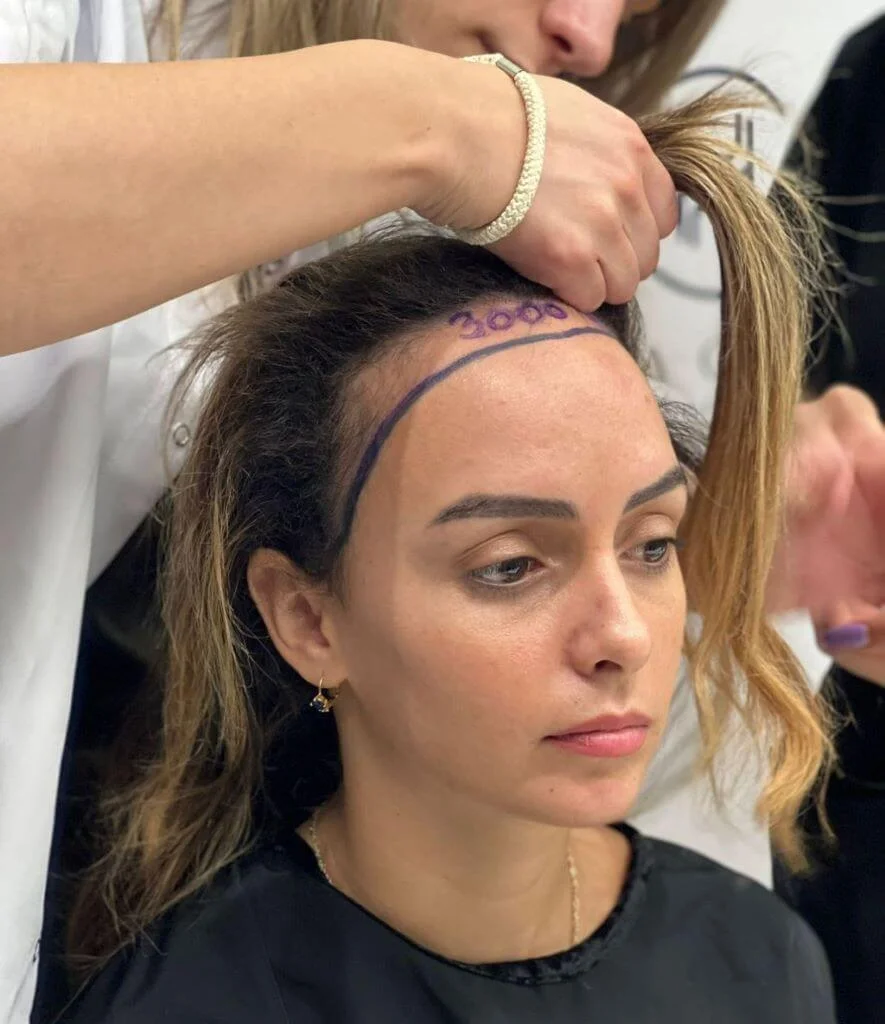
The primary concern for most female patients considering surgery is social visibility. Most women do not want to shave their heads for the procedure. Fortunately, modern advancements in female hair transplant istanbul workflows utilize advanced "no-shave" protocols.
The specialized female hair transplant procedure typically follows a detailed clinical sequence:
1. The Pre-Surgical Design and Mapping Phase
The surgeon maps out the areas requiring treatment and calculates the needed graft count. If the patient is undergoing a frontal restoration to lower a high forehead or fill in thin temples, the hairline is drawn using precise geometric metrics to match her facial features.
2. The Micro-Harvesting Protocol
The donor area at the back of the head is prepared. In an unshaven or partial-shave procedure, the team clips only small, hidden horizontal strips of hair in the donor zone. The surrounding long hair falls over these sections, keeping the area completely concealed after surgery. Individual follicular grafts are then extracted using a fine, motorized micro-punch tool.
3. The Specialized Implantation Phase
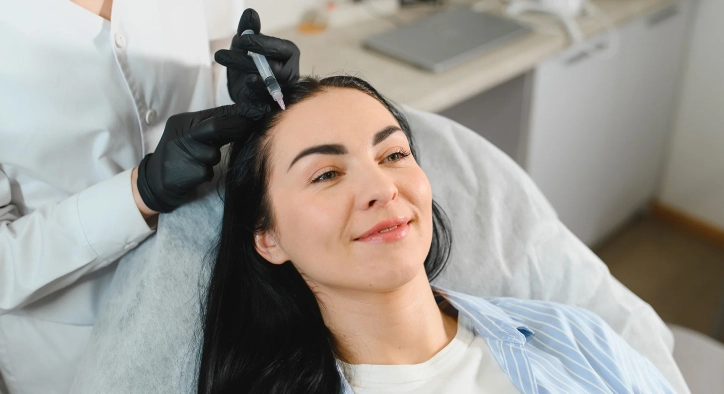
For female hair restoration, the Direct Hair Implantation (DHI) method using a Choi Implanter Pen is often preferred over standard FUE. The harvested hair follicles are loaded into the pen, allowing the surgeon to insert the grafts directly between existing hairs without a separate channel-opening step. This minimizes trauma to surrounding hair roots and allows for highly precise control over the angle, depth, and direction of the new hair growth.
Comfort and Patient Experience: How Painful is a FUE Hair Transplant?
Fear of discomfort during surgery can cause some patients to hesitate. When exploring options, individuals often ask: How painful is a FUE hair transplant?
From a patient comfort perspective, the procedure is remarkably well-tolerated. The scalp is thoroughly numbed before the extraction or implantation begins using advanced local anesthesia delivery systems, such as needle-free high-pressure comfort injectors.
While patients may feel a mild pressure or a pinching sensation during the initial numbing phase, the rest of the surgery is entirely painless. Most patients spend the session listening to music, watching a film, or resting comfortably while the surgical team works diligently.
The Healing Timeline: Navigating Female Hair Transplant Recovery
Understanding the female hair transplant recovery timeline helps international patients plan their professional and social schedules with confidence.
POST-OPERATIVE RECOVERY MATRIX:
- Day 1 - 3: Localized pinkness and mild forehead swelling may occur; sleep with your head elevated.
- Day 4 - 7: Micro-scabs form around the placed hairs; begin gentle washing sessions.
- Day 10 - 14: Incision sites in both zones close completely; micro-scabs detach naturally.
- Month 1 - 3: The "shock loss" phase occurs, where transplanted hair shafts shed while roots stay safe.
- Month 4 - 6: Fresh, healthy hair growth begins to emerge from the surface of the scalp.
- Month 12+: The full density and length of your new hair transformation are realized.
During the initial 7 to 10 days, patients should expect a brief period of adjusted routines. It is vital to avoid touching or scratching the recipient area to prevent dislodging the fragile grafts. Mild temporary swelling can occasionally move down toward the forehead or brow area, but this resolves quickly with proper care, cold compresses on the forehead, and adequate rest.
Global Price Comparison: Financial Framework in 2026
The overall cost of hair restoration depends heavily on the chosen surgical method, the required graft count, and the location of the clinic. When reviewing choices for a frontal female hair transplant cost or a full density restoration, the financial differences between regions are substantial.
A common baseline question for international patients is: How much do 3,000 hair grafts cost in Turkey?
In Western European nations and the United States, hair restoration is typically priced per individual graft, with additional fees for facilities, anesthesia, and consultations. In Turkey, the sector operates on an all-inclusive package system, offering significant savings without compromising clinical quality.
The table below provides an estimated cost comparison for female hair restoration across major global regions in 2026:
Treatment Scope | Average Cost in USA | Average Cost in UK / Germany | Average Cost at Stamboul (Turkey) |
Frontal Hairline Filling (1,500 – 2,000 Grafts) | $6,500 – $9,500 | £4,500 – £7,000 / €5,000 – €7,500 | €2,200 – €2,900 |
Comprehensive Session (Approx. 3,000 Grafts) | $12,000 – $18,000 | £7,500 – £12,000 / €8,000 – €13,000 | €2,800 – €3,800 |
Note: The competitive pricing structures in Turkey are driven by lower local operational costs, favorable currency exchange rates, and a well-established medical infrastructure designed specifically for international patients.
Medical Tourism: Does Turkey Do Female Hair Transplants?
Given that most online marketing focus areas showcase male baldness transformations, women frequently ask: Does Turkey do female hair transplants?
Yes, absolutely. Turkey is a leading destination for specialized female hair restoration. Top-tier clinics in Istanbul perform thousands of successful procedures for women each year, catering to an international patient base from the UK, Germany, North America, and the Middle East.
When researching choices, evaluating female hair transplant turkey reviews highlights the value of choosing a clinic that prioritizes the specialized needs of female hair design. High-quality reviews consistently emphasize the importance of surgeon-led care, natural hairline design, and professional support during recovery to achieve optimal results.
Real Transformations: Female Hair Transplant Before and After
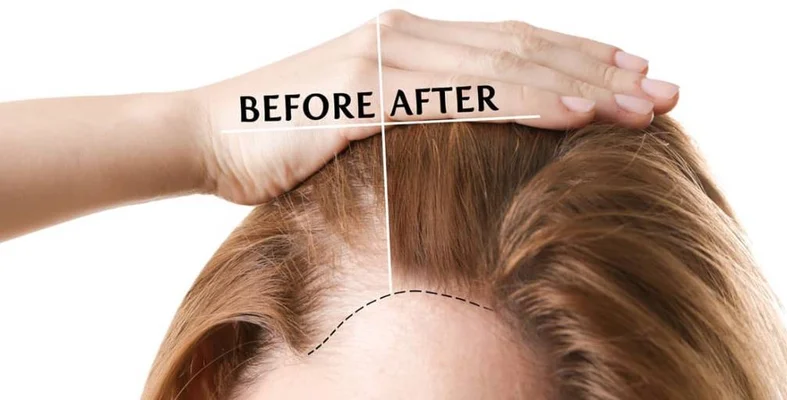
The true measure of a successful procedure is reflected in genuine patient transformations. When examining a female hair transplant before and after progression, the goal is to achieve an unnoticeable result where the new hair blends seamlessly with your natural growth.
At the 12-to-18-month mark, patients see a noticeable change in density along their typical parting lines or a beautifully framed face from a restored frontal hairline. This long-lasting density allows for versatile hairstyling choices and delivers a renewed sense of confidence.
The Stamboul Advantage: Premium Female Hair Restoration in Istanbul
Managing the subtle nuances of female hair loss requires an expert eye and precise clinical execution. At Stamboul Clinic in Istanbul, our hair restoration team provides personalized care tailored to the distinct needs of our female patients.
We utilize advanced, non-shaving DHI techniques and premium sapphire instruments within state-of-the-art surgical suites, ensuring minimal tissue disturbance and gentle recovery. Our surgeons carefully plan each graft placement to mirror your natural hair direction and growth angles, creating an authentic, seamless blend.
For international patients traveling to Istanbul, Stamboul offers comprehensive care packages, including premium hotel accommodation, private airport transfers, and dedicated multilingual coordination, ensuring your path to renewed hair density is safe, supportive, and stress-free.
Frequently Asked Questions (FAQ)
Is hair transplant successful in females?
Yes, female hair transplants are highly successful, achieving verified success rates between 85% and 95% at accredited clinics, provided the patient has a stable donor zone and an appropriate hair loss diagnosis.
Does Turkey do female hair transplants?
Yes, Turkey is a global leader in specialized female hair restoration, offering advanced no-shave techniques performed by experienced surgeons within high-tech clinical environments.
How much do 3,000 hair grafts cost in Turkey?
In 2026, a comprehensive 3,000-graft all-inclusive package in Turkey typically ranges from €2,800 to €3,800, covering the procedure, hotel stays, private transfers, and post-operative medications.
How painful is a FUE hair transplant?
The procedure is virtually painless. Advanced local anesthesia is applied before the surgery starts, meaning you will only feel mild pressure or a pinching sensation during the initial numbing phase.
Will I have to shave my entire head for a female hair transplant?
No, top-tier clinics utilize advanced no-shave methods for female patients. Only a small, hidden strip at the back of the head is clipped for extraction, which is easily covered by your remaining long hair.
Über den Autor