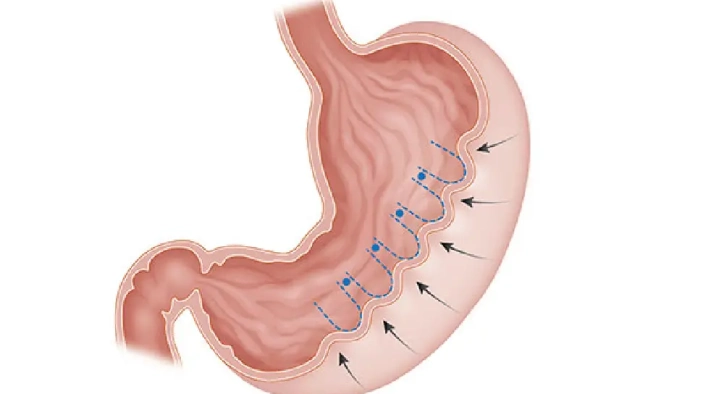
For individuals struggling with a body mass index (BMI) between 27 and 35 who cannot lose weight through diet and exercise alone, traditional bariatric surgery can feel disproportionately invasive. Conventional procedures such as laparoscopic sleeve gastrectomy or gastric bypass require external abdominal incisions, general surgical organ dissection, permanent stomach tissue removal, and irreversible gastrointestinal rewiring. Many patients seeking meaningful metabolic weight loss fear abdominal scars, long hospital recoveries, and permanent anatomical alterations. In modern bariatric gastroenterology and minimally invasive metabolic medicine, endoscopic sleeve gastroplasty (ESG) represents the premier, incisionless alternative to permanently reshape the stomach without a single skin cut.
At Stamboul Clinic, we coordinate advanced endoscopic bariatric procedures within fully accredited tertiary hospital facilities in Istanbul. Whether you are researching an all-inclusive endoscopic sleeve gastroplasty Turkey medical trip, analyzing patient experiences and verified endoscopic sleeve gastroplasty reviews, comparing clinical milestones in endoscopic sleeve gastroplasty before and after patient profiles, or evaluating variable determinants behind endoscopic sleeve gastroplasty cost, this comprehensive guide delivers evidence-based clinical insights and recovery protocols.
Table of Content
- What Is Endoscopic Sleeve Gastroplasty?
- ESG vs. Laparoscopic Sleeve Gastrectomy: The Structural Difference
- Weight Loss Trajectory and Metabolic Health
- Recovery Protocol: Dietary Phases and Healing Milestones
- Endoscopic Sleeve Gastroplasty Before and After Results
- Endoscopic Sleeve Gastroplasty Reviews
- Cost Determinants: Understanding ESG Pricing Variables
- Frequently Asked Questions (FAQ)
- Can the internal sutures in an endoscopic sleeve gastroplasty break or dissolve?
- What happens if I overeat after having an endoscopic sleeve gastroplasty?
- Is an endoscopic sleeve gastroplasty reversible?
- What is the primary difference between ESG and an intragastric balloon?
- Why do endoscopic sleeve gastroplasty prices vary between different patients?
What Is Endoscopic Sleeve Gastroplasty?
To establish a clear medical foundation, let us examine what happens during an ESG procedure. Clinically recognized as an incisionless endoluminal sleeve, this procedure is performed under general anesthesia in an advanced endoscopy suite using the Apollo OverStitch endoscopic suturing system.
THE ENDOSCOPIC SUTURING SEQUENCE:
[Trans-Oral Endoscope Insertion] ➡️ [Gastric Mapping & Suture Anchoring] ➡️ [Full-Thickness Plication (Accordion Folding)] ➡️ [70% Volumetric Restriction] ➡️ [Suture Tightening & T-Tag Locking]
The 3 Core Anatomic Mechanisms of ESG
Rather than cutting through the abdominal wall with trocars and surgical scalpels, the endoscopist accesses the stomach through the mouth and esophagus. The procedure delivers three distinct physiological transformations:
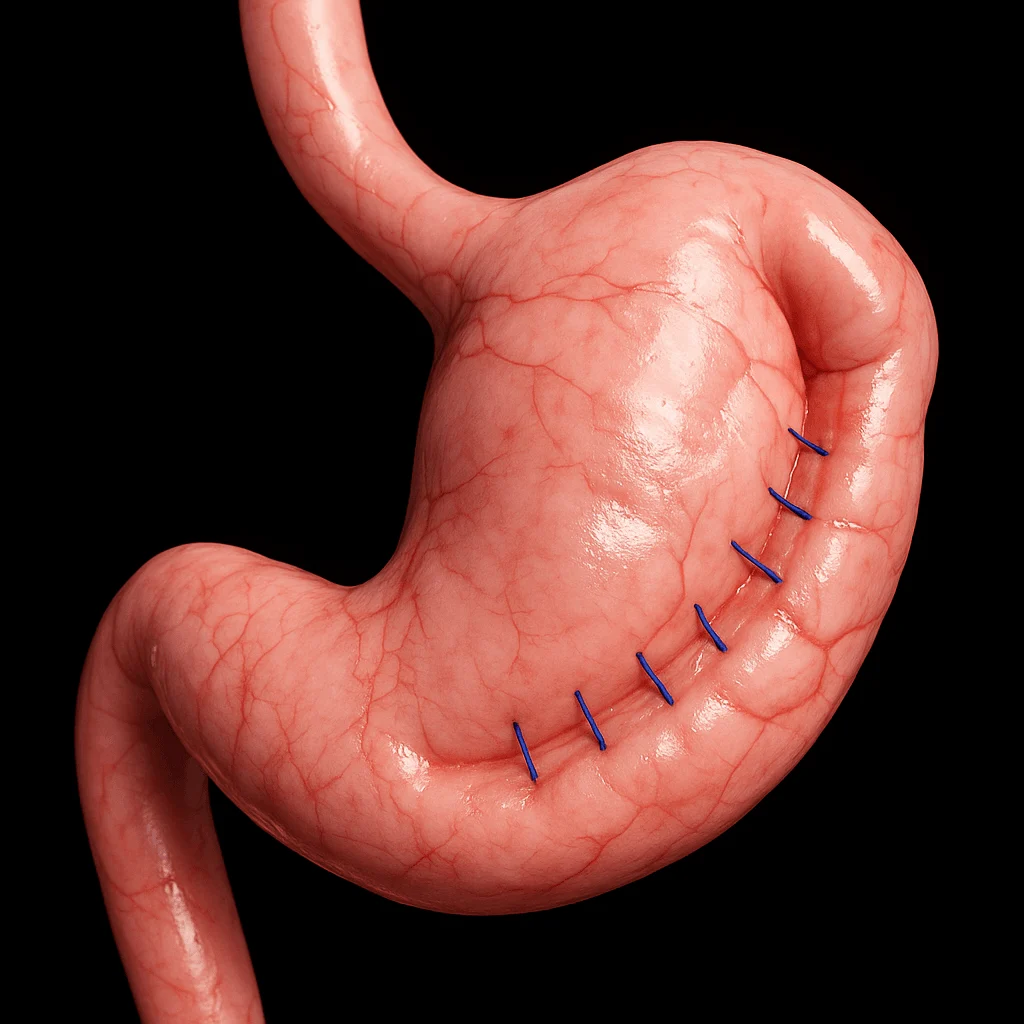
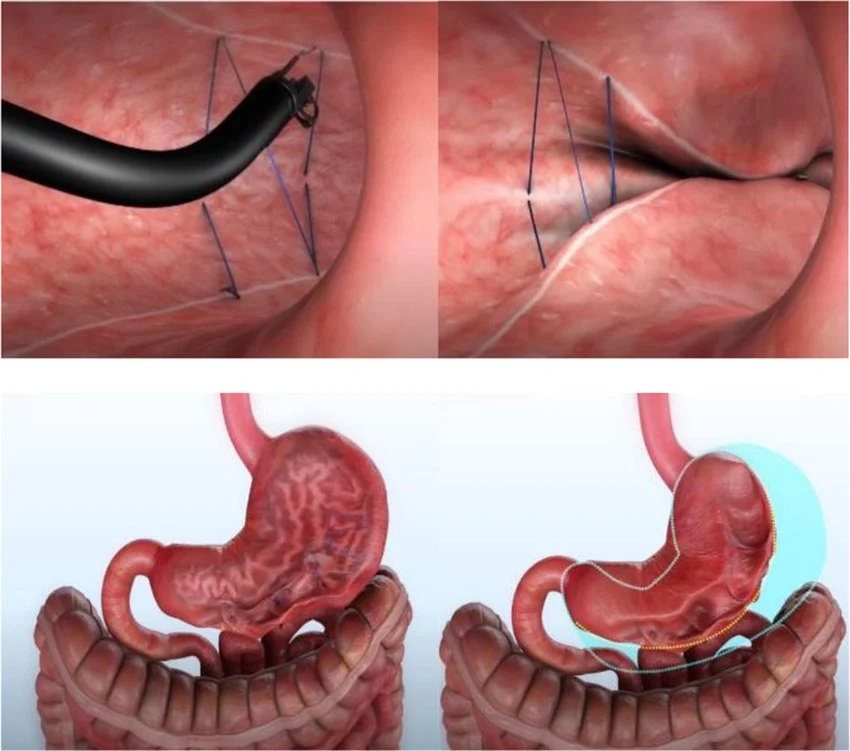
- Full-Thickness Plication: The surgeon places 4 to 6 running, full-thickness polypropylene sutures through the interior stomach wall, drawing the anterior, posterior, and greater curvature walls together like an accordion.
- Volumetric Restriction: The gastric lumen is reduced from a large pouch into a narrow, tubular sleeve, decreasing functional stomach volume by roughly 70% to 80% without excising any tissue.
- Delayed Gastric Emptying: Because the stomach's neuro-hormonal framework remains intact, food stays in the narrowed stomach tube significantly longer, prolonging post-meal satiety and suppressing hunger cravings.
ESG vs. Laparoscopic Sleeve Gastrectomy: The Structural Difference
Understanding the clinical differences between incisionless endoluminal plication and traditional surgical resection clarifies which approach matches your BMI and metabolic profile.
PROCEDURAL CONTRASTS:
- Endoscopic Sleeve (ESG): No skin cuts; zero tissue removed; reversible/tightenable sutures; 1–2 day recovery; ideal for BMI 27–35+.
- Laparoscopic Sleeve (LSG): 4–5 abdominal incisions; 80% stomach permanently cut out; irreversible; 2–3 week recovery; ideal for BMI 35–50+.
Clinical Parameter | Endoscopic Sleeve Gastroplasty (ESG) | Laparoscopic Sleeve Gastrectomy (LSG) |
Incision Type | Zero skin incisions (Trans-oral entry) | 4 to 5 laparoscopic abdominal puncture cuts |
Stomach Tissue Removal | None (Folded & sutured internally) | ~80% of stomach permanently excised |
Procedural Reversibility | Potentially reversible or re-tightenable | Completely irreversible |
Typical Target BMI Range | BMI 27 to 35+ (Class I/II Obesity) | BMI 35 to 50+ (Severe/Morbid Obesity) |
Expected Total Body Weight Loss (TBWL) | ~15% to 20% total body weight | ~25% to 30% total body weight |
Average Hospital Stay | Day surgery or 1 night observation | 2 to 3 nights inpatient observation |
Return to Desk Work | 2 to 4 days | 10 to 14 days |
Weight Loss Trajectory and Metabolic Health
Evaluating documented clinical data demonstrates reliable, durable weight loss and metabolic improvement following ESG.
THE POST-ESG WEIGHT LOSS TIMELINE:
- Month 1: Rapid Reset ➡️ ~5% to 7% TBWL; liquid-to-purée dietary transition; appetite suppression.
- Month 3: Steady Depletion ➡️ ~10% to 12% TBWL; active fat oxidation; regular cardiovascular exercise resumed.
- Month 6: Major Milestone ➡️ ~15% TBWL; significant improvement in blood pressure, fasting glucose, and joint strain.
- Months 12 to 24: Stable Maintenance ➡️ ~18% to 20% sustained TBWL; long-term portion control established.
Major multi-center clinical trials, including the landmark MERIT study, confirmed that patients undergoing ESG combined with moderate lifestyle guidance maintain approximately 15% to 20% total body weight loss (TBWL) and over 50% excess weight loss (EWL) at two years. Furthermore, patients experience notable improvements in obesity-related co-morbidities, including non-alcoholic fatty liver disease (NAFLD), insulin resistance, obstructive sleep apnea, and hypertension.
Recovery Protocol: Dietary Phases and Healing Milestones
Because ESG creates multiple internal full-thickness mucosal folds without external skin wounds, recovery focuses entirely on protecting internal sutures as stomach tissues heal.
THE STRUCTURED POST-OPERATIVE DIET PHASES:
- Days 1 to 7: Clear Liquids Only ➡️ Water, electrolyte broths, sugar-free protein water; prevents gastric strain.
- Weeks 2 to 3: Full Liquid & Protein Shakes ➡️ Smooth bariatric protein shakes, skim milk, strained soups.
- Weeks 4 to 5: Puréed & Soft Foods ➡️ Soft scrambled eggs, blended fish, Greek yogurt, soft cottage cheese.
- Week 6+: Lifelong Solid Diet ➡️ Lean dense proteins, vegetables, whole grains; strict chewing protocols.
Post-operative discomfort is generally limited to mild abdominal cramping, nausea, and a feeling of fullness for the first 24 to 72 hours, which is effectively managed with anti-spasmodic and antiemetic medications. Most patients return to light desk work and daily walking within 3 to 5 days, while heavy lifting and strenuous abdominal workouts can be safely resumed after 4 weeks.
Endoscopic Sleeve Gastroplasty Before and After Results
Reviewing authentic endoscopic sleeve gastroplasty before and after patient profiles illustrates how non-surgical stomach reduction supports significant physical transformations:
Beyond external body slimming, clinical reviews show marked improvements in posture, mobility, and daily vitality, without the visible abdominal scarring associated with laparoscopic trocars.
Endoscopic Sleeve Gastroplasty Reviews
Analyzing patient-reported experiences across verified endoscopic sleeve gastroplasty reviews highlights several consistent themes:
Patients frequently highlight the psychological comfort of avoiding surgical cutting and organ removal. Reviews emphasize how quickly natural portion sizes shrink, eating just a few bites produces a full sensation without nausea. Patients who struggled with plateaus on GLP-1 medications or feared surgical complications report that ESG provided the physical satiety barrier they needed to establish lasting nutritional discipline.
Cost Determinants: Understanding ESG Pricing Variables
When evaluating incisionless stomach reduction, prospective patients should note that pricing varies based on individualized clinical requirements rather than a single fixed rate. The overall endoscopic sleeve gastroplasty cost is influenced by several clinical and logistical variables:
- Endoscopic Suturing Hardware: ESG utilizes single-use, specialized Apollo OverStitch endoscopic suturing systems and catheter devices, which represent a significant consumable cost in advanced endoscopy.
- Medical Team Expertise: The procedure must be performed by a specialized bariatric endoscopist or laparoscopic bariatric surgeon with certified endoluminal training, supported by a specialized anesthesia team.
- Hospital Infrastructure & Overnight Observation: Conducting the procedure in an internationally accredited hospital with modern endoscopy suites and dedicated post-procedural recovery wards shapes clinical overhead.
- Comprehensive Nutritional Aftercare: Multi-disciplinary support programs incorporating 12 months of structured bariatric dietitian consultations and medical follow-up directly influence long-term success and package pricing.
- International Travel Logistics: All-inclusive medical packages in Turkey encompassing VIP airport transfers, luxury hotel accommodations, hospital inpatient stays, and post-procedure medication kits create variable pricing tiers.
Because clinical requirements are tailored to individual health baselines, exact quotations are established following a comprehensive clinical evaluation. The matrix below outlines relative regional price structures for 2026:
Healthcare Destination / Region | Cost Structure & Price Variability | Relative Price Level | Typical Package Framework |
United States (USA) | High variability by clinic & state | Very High | Procedure Only (Facility, Device & Dietitian Invoiced Separately) |
United Kingdom (UK) | Variable by private hospital | High | Procedure Only (Consultations & Nutritional Follow-Up Extra) |
Germany / Switzerland | Variable by specialized endoscopy center | High | Procedure Only (Hospital Stay & Meds Invoiced Separately) |
Stamboul (Turkey) | Dynamic Custom Package | High Value / Accessible | Comprehensive (Hospital Stay, Hotel, VIP Transfers & Dietitian) |
Frequently Asked Questions (FAQ)
Can the internal sutures in an endoscopic sleeve gastroplasty break or dissolve?
No. The sutures placed during an ESG are made of durable, non-absorbable polypropylene and are locked in place with specialized titanium T-tags. Over the initial 6 to 12 weeks, the folded stomach walls form dense biological adhesions and scar tissue along the plication lines, meaning the stomach maintains its narrowed shape even as the sutures experience long-term mechanical stress.
What happens if I overeat after having an endoscopic sleeve gastroplasty?
If you eat too quickly or consume portions larger than your narrowed stomach can accommodate, you will experience sudden pressure, nausea, regurgitation, or mild upper abdominal cramping. Adhering to bariatric eating rules, taking small bites, chewing each bite thoroughly, and separating solid food from liquids by at least 30 minutes, prevents discomfort and preserves the longevity of your internal plication.
Is an endoscopic sleeve gastroplasty reversible?
Yes. Because no stomach tissue is cut out or removed during an ESG, the procedure is theoretically reversible during the early healing period by cutting and removing the internal sutures endoscopically. However, reversal is rarely performed; if a patient requires further weight loss or revisional care years later, an ESG can be converted into a traditional laparoscopic sleeve gastrectomy or gastric bypass.
What is the primary difference between ESG and an intragastric balloon?
An intragastric balloon is a temporary, non-surgical silicone bubble placed in the stomach that must be removed after 6 to 12 months, after which weight regain is common. An endoscopic sleeve gastroplasty permanently folds and sutures the stomach wall, providing a durable structural reduction that supports long-term portion control without foreign-body implant expiration dates.
Why do endoscopic sleeve gastroplasty prices vary between different patients?
Pricing varies based on individual clinical factors. Elements such as baseline medical conditions requiring extended hospital observation, whether additional diagnostic endoscopies are needed to treat a hiatal hernia, the length of the included multi-disciplinary dietitian coaching program, and the selection of international accommodation packages all directly shape the overall cost.
Über den Autor