A radiant smile is a cornerstone of facial aesthetics, personal confidence, and interpersonal connection. However, for individuals experiencing excessive gingival display (clinically known as a gummy smile) smiling broadly reveals a disproportionate band of pink gum tissue above the upper teeth. This aesthetic imbalance often causes people to feel self-conscious, leading them to cover their mouths when laughing or suppress their natural facial expressions. Whether caused by hyperactive upper lip elevator muscles, altered passive dental eruption, or vertical maxillary excess, modern cosmetic dentistry and facial aesthetics offer precise, evidence-based solutions.
At Stamboul Clinic, we coordinate advanced dental aesthetics, periodontology, and medical aesthetic treatments in modern, fully accredited clinical facilities in Istanbul. Whether you are seeking clarity on what is a gummy smile from an anatomical standpoint, researching non-surgical gummy smile botox protocols, analyzing comprehensive gummy smile treatment pathways, checking verified gummy smile before and after transformations, or discovering how to fix gummy smile concerns permanently, this guide provides deep medical insights.
Table of Content
- What Is a Gummy Smile? The 4 Anatomical Root Causes
- Non-Surgical Correction: How Botox for Gummy Smile Works?
- Permanent Solutions: How to Fix Gummy Smile Surgically & Dentally
- Gummy Smile Before and After Transformations
- Frequently Asked Questions (FAQ)
- How many units of Botox are required to fix a gummy smile, and will it make my face look frozen?
- Is laser gingivectomy painful, and how long does gum healing take?
- Can gummy smile Botox be combined with lip fillers or porcelain veneers?
- What should I avoid immediately after receiving Botox for a gummy smile?
- How do I know if I need a gingivectomy or surgical lip repositioning?
What Is a Gummy Smile? The 4 Anatomical Root Causes
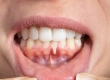
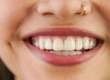
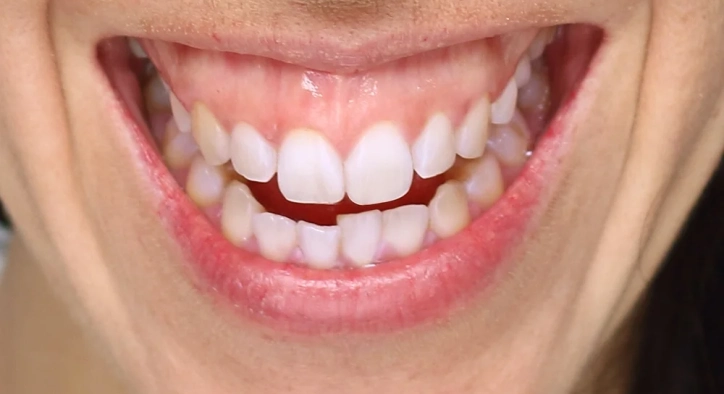
To establish a clear medical foundation, let us answer a primary question: what is a gummy smile from a clinical perspective? In aesthetic dentistry, a smile is classified as "gummy" when more than 3 to 4 millimeters of gingival tissue is visible between the upper lip and the top of the teeth during a natural, full smile.
THE 4 ETIOLOGICAL PATHWAYS OF EXCESSIVE GINGIVAL DISPLAY:
- Hyperactive LLSAN Muscle ➡️ Upper lip elevates excessively high when smiling.
- Altered Passive Eruption ➡️ Gum tissue fails to recede during childhood, covering healthy tooth enamel.
- Vertical Maxillary Excess (VME) ➡️ Overgrowth of the upper jawbone pushing the dental arch downward.
- Short / Thin Upper Lip ➡️ Anatomically insufficient vertical lip height to drape over normal gingiva.
Accurately diagnosing which of these four structural components causes your gingival display determines whether non-surgical neuromodulation, laser dental contouring, or surgical lip repositioning is the ideal corrective pathway.
Non-Surgical Correction: How Botox for Gummy Smile Works?
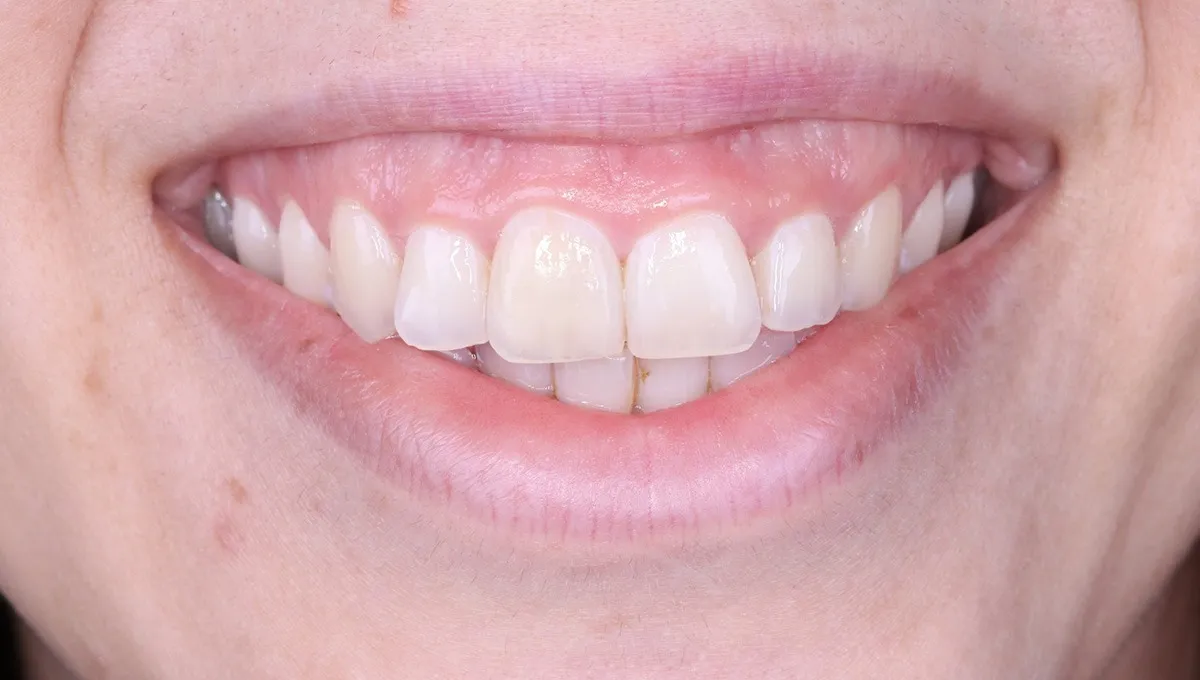
When excessive gum show is caused by a hyperactive upper lip, non-surgical neuromodulation with botox for gummy smile provides a fast, painless solution.
THE NEUROMUSCULAR TARGETING SEQUENCE:
- [Clinical Mapping of LLSAN Muscle] ➡️ [Micro-Injection at Yonsei Point] ➡️ [Selective Acetylcholine Blockade] ➡️ [Controlled Lip Draping (10–14 Days)]
The Yonsei Point Injection Technique
The primary muscle responsible for pulling the upper lip too high is the Levator Labii Superioris Alaeque Nasi (LLSAN). Using the standardized Yonsei Point technique, the practitioner injects 2 to 4 units of Botulinum Toxin Type A into a precise anatomical convergence point located 1 cm lateral to the nasal ala on each side. The toxin relaxes the hyperactive muscle fibers, preventing the upper lip from retracting excessively while maintaining a natural, symmetrical smile with zero surgical downtime. Results emerge within 5 to 10 days and last 3 to 6 months.
Permanent Solutions: How to Fix Gummy Smile Surgically & Dentally
If you are exploring how to fix gummy smile concerns permanently rather than repeating periodic injections, several structural treatments are available depending on your underlying anatomy:
PERMANENT TREATMENT MODALITIES:
- Laser Gingivectomy (Gingivoplasty): Trims excess gum tissue to lengthen short teeth; ideal for altered passive eruption.
- Surgical Lip Repositioning: Excises a mucosal strip inside the upper lip to restrict vertical elevation permanently.
- Crown Lengthening + Veneers: Combines bone recontouring with porcelain veneers for full smile design.
1. Laser Gingivectomy & Crown Lengthening
When teeth appear short, square, or buried under thick gum tissue, a diode or Erbium laser gingivectomy gently vaporizes excess gum margins with microscopic precision. If necessary, minor aesthetic bone recontouring (crown lengthening) is performed to establish a proper biological width, exposing the natural crown of the tooth and delivering an instant, permanent smile transformation without bleeding or stitches.
2. Surgical Lip Repositioning
For patients with hyperactive lip elevation or mild skeletal excess who desire a permanent alternative to Botox, surgical lip repositioning is an in-office procedure under local anesthesia. The surgeon removes a thin horizontal strip of mucosa from the inner, hidden aspect of the upper lip and sutures it in a lower position. This permanently limits how high the lip can travel when laughing, reducing gingival show by 3 to 5 millimeters with zero external facial scarring.
Gummy Smile Before and After Transformations
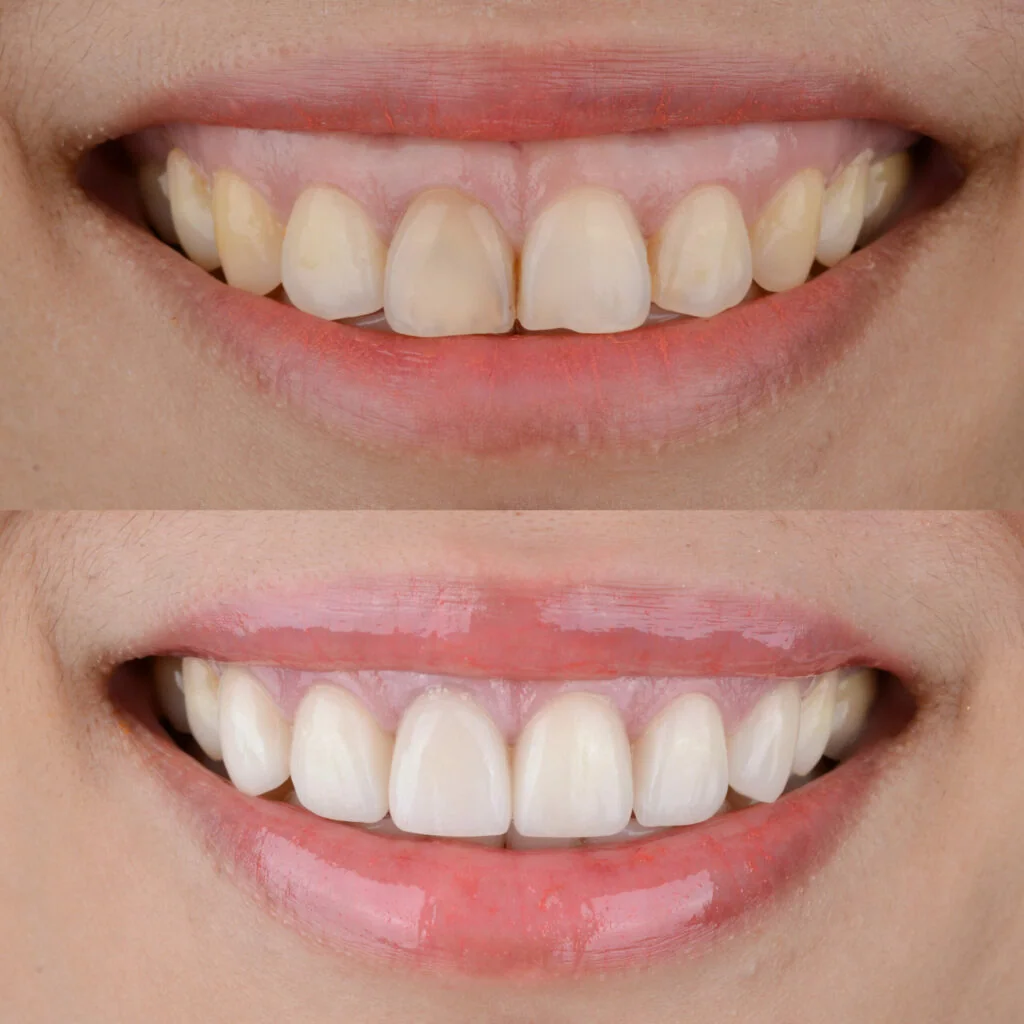
Evaluating genuine gummy smile before and after patient profiles demonstrates how balancing tooth exposure, gum contour, and lip dynamics restores facial harmony:
By carefully matching the treatment modality to the patient's individual etiology, whether through precision Botox, laser gum contouring, or lip repositioning, patients achieve a balanced, natural smile line where teeth are the focal point rather than excess gum tissue.
Frequently Asked Questions (FAQ)
How many units of Botox are required to fix a gummy smile, and will it make my face look frozen?
Correcting a gummy smile typically requires only 2 to 4 units of Botox per side (4 to 8 units total) injected precisely at the Yonsei Point. Because the dose is very small and specifically targets the Levator Labii Superioris Alaeque Nasi muscle, your face will not look frozen. Your normal speech, chewing, and natural smile expressions remain completely fluid and mobile.
Is laser gingivectomy painful, and how long does gum healing take?
Laser gingivectomy is virtually painless because it is performed under local topical anesthesia. The dental laser seals nerve endings and blood vessels instantly as it sculpts the gum line, resulting in minimal bleeding and no need for sutures. Mild gum tenderness lasts only 24 to 48 hours, and the gingival tissues heal fully within 7 to 10 days.
Can gummy smile Botox be combined with lip fillers or porcelain veneers?
Yes. Combining gummy smile Botox or laser gingivectomy with lip filler (to add volume to a thin upper lip) or porcelain veneers (to optimize tooth proportions and brightness) is a common protocol in comprehensive "Hollywood Smile" smile design. Addressing the gum tissue first ensures that dental veneers are framed symmetrically.
What should I avoid immediately after receiving Botox for a gummy smile?
For the first 4 to 6 hours, you must remain upright and avoid lying down, touching, or massaging the injection sites around your nose to prevent product migration. Avoid strenuous workouts, saunas, hot showers, and alcohol consumption for 24 hours. Normal gentle face washing and light skincare can be resumed immediately.
How do I know if I need a gingivectomy or surgical lip repositioning?
If your teeth look short and square because excess gum covers them, a laser gingivectomy is the correct choice to expose your natural enamel. If your teeth are already properly proportioned but your upper lip pulls too high when laughing, surgical lip repositioning or Botox is the appropriate treatment to control lip mobility.
Über den Autor