The front aesthetic zone of a smile heavily influences facial harmony, social confidence, and youthful expression. However, intrinsic tetracycline stains, deep fluorosis, age-related enamel attrition, micro-cracks, and minor tooth rotations often resist professional chemical teeth whitening or conservative resin restorations. Patients seeking a long-term smile transformation frequently fear over-aggressive tooth preparation, such as having their teeth shaved into small pegs for full crowns. In contemporary aesthetic and biomimetic dentistry, custom porcelain veneers provide the gold-standard restorative solution. By bonding ultra-thin, highly translucent ceramic laminates strictly to the outer facial enamel, clinicians can reshape tooth geometry, close diastemas, and brighten shades while preserving over eighty to ninety percent of natural tooth structure.
At Stamboul Clinic, we coordinate specialized digital smile design protocols and advanced ceramic aesthetic rehabilitations in accredited dental facilities in Istanbul. Whether you are planning an all-inclusive porcelain veneers Turkey dental trip, seeking clarity on what are porcelain veneers from a biomimetic perspective, researching how long do porcelain veneers last under regular masticatory loads, analyzing verified porcelain veneers before and after patient profiles, or evaluating dynamic variables behind porcelain veneers cost, this clinical guide provides comprehensive restorative data.
Table of Content
- What Are Porcelain Veneers? Biomimetic Smile Reconstruction
- Material Science: E-Max Lithium Disilicate vs. Feldspathic Porcelain
- Durability and Longevity: How Long Do Porcelain Veneers Last?
- Clinical Comparison: Porcelain Veneers vs. Composite Bonding vs. Crowns
- Porcelain Veneers Before and After Transformations
- Cost Determinants: Understanding Veneer Pricing Variables
- Frequently Asked Questions (FAQ)
What Are Porcelain Veneers? Biomimetic Smile Reconstruction
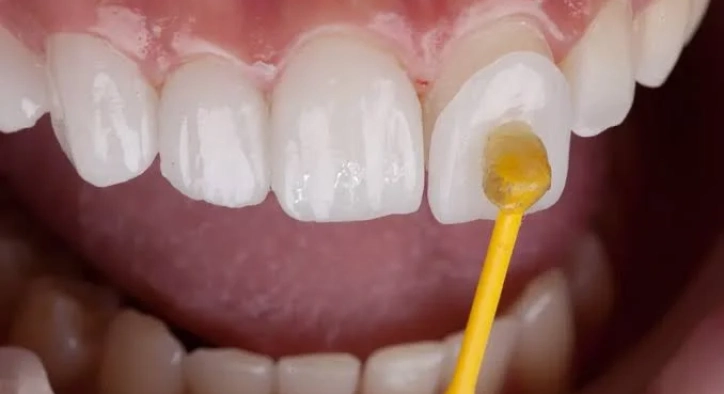
To establish a clear medical foundation, let us examine the primary question: what are porcelain veneers from a dental materials perspective? Clinically recognized as ceramic dental laminates, tooth porcelain veneers are ultra-thin shells of biocompatible, high-strength dental ceramic custom-crafted to cover the facial (front) surfaces and incisal edges of teeth within the smile zone.
THE DIGITAL SMILE DESIGN & VENEER FABRICATION SEQUENCE:
- [3D Intraoral Scanning & Digital Smile Design] ➡️ [Micro-Enamel Prep (0.3 to 0.7 mm)] ➡️ [Precision Digital Optical Impression] ➡️ [CAD/CAM Milling or Hand-Layered E-Max Fabrication] ➡️ [Adhesive Resin Bonding & Polymerization]
Unlike dental crowns that require removing thirty to sixty percent of healthy tooth structure in a 360-degree circumferential reduction, modern porcelain veneers dental preparations operate on biomimetic conservation principles. The aesthetic dentist removes only a conservative 0.3 to 0.7 millimeters of outer enamel on the front surface. This micro-reduction creates space for the ceramic shell, preventing a bulky, fake appearance while ensuring the ceramic bonds firmly to enamel rather than the softer underlying dentin.
Material Science: E-Max Lithium Disilicate vs. Feldspathic Porcelain
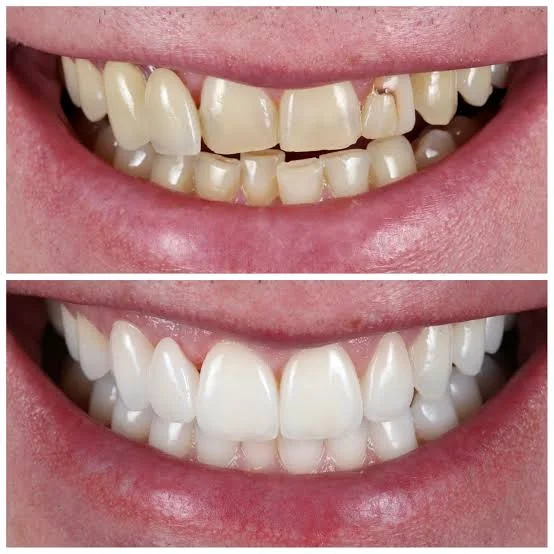
Selecting the ideal ceramic material determines light transmission, marginal adaptation, and fracture resistance.
CERAMIC MATERIAL COMPARISON:
- Lithium Disilicate (IPS e.max): Monolithic or cut-back press ceramic; 400–500 MPa strength; ideal for masking minor stains.
- - Layered Feldspathic Porcelain: Hand-stacked on refractory dies; exceptional natural translucency and depth; ultra-conservative prep.
- - Zirconia Laminates: Very high flexural strength (900+ MPa); slightly higher opacity; chosen for deep dark tetracycline stains.
1. Lithium Disilicate (E-Max)
IPS e.max represents the most widely utilized ceramic standard in aesthetic dentistry worldwide. With a flexural strength exceeding 400 to 500 megapascals (MPa), it offers high fracture resistance while mimicking the natural opalescence, incisal translucency, and light refraction of human tooth enamel. E-Max can be pressed or digitally milled using computer-aided design and computer-aided manufacturing (CAD/CAM) systems with micrometer-level marginal precision.
2. Hand-Layered Feldspathic Ceramics
Feldspathic porcelain is hand-built layer by layer by a master dental ceramist using silica-based porcelain powders on a refractory die. While slightly more delicate prior to adhesive bonding (around 100 to 120 MPa), feldspathic veneers can be crafted exceptionally thin (down to 0.2 to 0.3 mm) for no-prep or minimal-prep designs. They provide unmatched color depth, natural fluorescence, and lifelike incisal halos.
Durability and Longevity: How Long Do Porcelain Veneers Last?
A fundamental question for patients investing in cosmetic smile makeovers is: how long do porcelain veneers last in daily clinical practice?
BIOMECHANICAL DURABILITY METRICS:
- 10-Year Clinical Survival Rate: Over 93% to 96% when bonded entirely within healthy enamel margins.
- 15 to 20-Year Lifespan: Common with routine dental hygiene, nightguard protection, and regular scaling.
- Total Stain Resistance: High-gloss glazed ceramic surface is impervious to coffee, red wine, nicotine, and dietary acids.
Porcelain itself does not decay, stain, or degrade over time. The longevity of a veneer depends largely on the quality of the adhesive bond between the ceramic and the tooth enamel, gingival health, and bite forces. Veneers fail primarily due to marginal leakage around natural margins, underlying secondary tooth decay if oral hygiene lapses, or fracture caused by severe nocturnal teeth grinding (bruxism) without a protective nightguard.
Clinical Comparison: Porcelain Veneers vs. Composite Bonding vs. Crowns
Evaluating clinical alternatives clarifies which treatment fits your aesthetic desires, biological tooth health, and lifestyle.
RESTORATIVE TREATMENT COMPARISON:
- Porcelain Veneers: 10–20 year lifespan; laboratory ceramic; stain-proof; ultra-conservative front prep; high color stability.
- Composite Bonding: 4–7 year lifespan; chairside resin; porous and prone to staining; zero prep; requires frequent repolishing.
- Full Dental Crowns: 10–15 year lifespan; 360-degree heavy tooth reduction; indicated for structurally damaged or root-treated teeth.
Clinical Parameter | Porcelain Veneers (E-Max / Feldspathic) | Direct Composite Bonding | Full Dental Crowns (Zirconia / Porcelain) |
Enamel Reduction Required | Minimal (0.3 to 0.7 mm on facial surface) | None to minimal (Additive resin) | Significant (1.5 to 2.0 mm circumferential reduction) |
Stain Resistance | 100% stain-proof (Glazed ceramic) | Moderate (Porous resin absorbs pigments) | 100% stain-proof (Glazed surface) |
Typical Lifespan | 10 to 20+ years | 4 to 7 years (Requires repolishing) | 10 to 15+ years |
Material Strength | 400 to 500 MPa (Lithium disilicate) | 120 to 160 MPa (Microhybrid composite) | 900 to 1200 MPa (Zirconia substructure) |
Fabrication Process | Custom laboratory milling & glazing | Direct freehand chairside layering | Custom laboratory milling & firing |
Porcelain Veneers Before and After Transformations
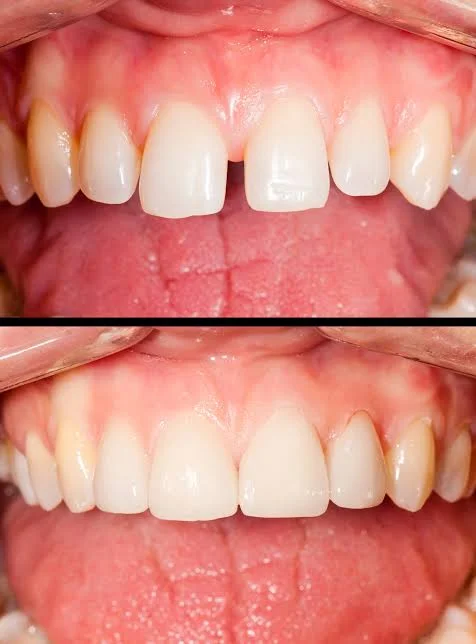
Reviewing verified porcelain veneers before and after patient profiles illustrates how custom ceramic laminates harmonize smile width, tooth proportions, and shade:
THE CLINICAL APPOINTMENT ROADMAP IN TURKEY:
- Day 1: Digital Smile Design ➡️ 3D intraoral scans; facial proportion photography; aesthetic mockup test in the mouth.
- Day 2: Conservative Enamel Prep ➡️ Micro-reduction under magnification; final digital scans; custom temporary veneers fitted.
- Day 3 to 4: Laboratory Artistry ➡️ Master ceramist mills and hand-layers E-Max ceramic shells; individual characterization.
- Day 5 to 6: Try-in & Adhesive Cementation ➡️ Color verification with try-in pastes; resin cement bonding; bite balancing.
Cost Determinants: Understanding Veneer Pricing Variables
When exploring restorative smile makeovers, prospective patients should note that fees are structured per tooth or within customized smile sets rather than as a single fixed package rate. The overall porcelain veneers cost is influenced by several clinical and logistical variables:
- Total Number of Veneered Teeth: A focused treatment addressing the four upper incisors involves different laboratory fabrication and clinical time than a comprehensive full-smile makeover covering eight to ten teeth per arch across both the upper and lower aesthetic zones.
- Ceramic Material & Artistry: High-translucency, hand-layered E-Max pressed ceramic crafted by a dedicated master ceramist incurs specialized laboratory artistry fees compared to standard monolithic machine-milled ceramic blocks.
- Preparatory Periodontal & Alignment Needs: If gums are uneven, a minor laser gingivectomy to correct the gumline or pre-treatment clear aligner therapy to align crowded teeth alters the overall clinical plan.
- Laboratory Technology & Cementation Systems: Utilizing high-magnification dental loupes, rubber dam isolation protocols, and light-cured resin cementation systems ensures clinical longevity, influencing specialized clinic fees.
- Comprehensive Logistics: All-inclusive dental tourism packages in Turkey incorporating VIP airport transfers, luxury hotel accommodations, panoramic X-rays, 3D tomographies, and custom nightguards shape variable package pricing.
Because smile designs are tailored to individual dental arch architecture, exact quotations are established following a personalized clinical and radiographic evaluation. The matrix below outlines relative regional price structures for 2026:
Healthcare Destination / Region | Cost Structure & Price Variability | Relative Price Level | Typical Package Framework |
United States (USA) | High variability per tooth by city | Very High | Per-Tooth Treatment Only (Consultations & Temporaries Extra) |
United Kingdom (UK) | High variability per tooth by private clinic | High | Per-Tooth Treatment Only (Mockups & Scans Invoiced Separately) |
Germany / Switzerland | Variable by dental fee scale (GOZ) | High | Per-Tooth Treatment Only (Lab Fees & Follow-Ups Invoiced Separately) |
Stamboul (Turkey) | Dynamic Custom Package | High Value / Accessible | Comprehensive (Full Set, Hotel, VIP Transfers & Nightguard) |
Frequently Asked Questions (FAQ)
Will my natural teeth be ruined or ground down to pegs for porcelain veneers?
No. High-quality porcelain veneers follow conservative biomimetic principles. Only a minimal layer of 0.3 to 0.7 mm of front enamel is shaved away under dental magnification roughly the thickness of a contact lens. The aggressive shaving of teeth into tiny stumps or pegs is associated with full dental crowns, which are clinically unnecessary for purely cosmetic smile enhancements.
Can porcelain veneers get cavities or decay after placement?
While the ceramic veneer itself is completely impervious to bacterial decay, the natural tooth structure behind and underneath the veneer can still develop cavities if oral hygiene is neglected. Maintaining daily flossing, twice-daily brushing with non-abrasive fluoride toothpaste, and attending regular professional dental cleanings preserves the underlying tooth and the margins of the veneer.
What happens if a porcelain veneer chips, cracks, or debonds?
If a porcelain veneer debonds cleanly without breaking, an aesthetic dentist can clean the underlying tooth surface, re-etch the ceramic, and rebond it securely using adhesive resin cement. However, if a veneer chips or fractures due to biting into hard objects (such as ice, olive pits, or unpopped popcorn kernels), the ceramic cannot be patched with composite resin; a new custom ceramic veneer must be fabricated by the dental laboratory.
Can I choose an extremely bright white Hollywood shade for my veneers?
Yes. Ceramic shades range from natural dentin tones (such as A1, B1) to extra-bright bleached Hollywood shades (such as BL1, BL2, BL3, and BL4). During the Digital Smile Design consultation, your cosmetic dentist will help you select a shade that balances your aesthetic preferences with your skin tone, lip shade, and sclera (the white of your eyes) to prevent an artificial look.
Über den Autor