Healthy gums are the silent foundation of a functional and beautiful smile. While we often focus on the whiteness and alignment of our teeth, the soft tissue surrounding them plays a protective role that is just as vital. When that tissue becomes tender, red, or swollen, it is more than just an inconvenience; it is a signal from your body that an inflammatory process is underway. Finding the right gums hurt treatment is the first step toward restoring your comfort and protecting your dental health.
Many patients avoid seeking help because they wonder, "does gum treatment hurt?" or because they feel the discomfort might go away on its own. However, untreated gum pain can evolve from a simple irritation into a complex infection that threatens the stability of your teeth.
This guide explores the diverse causes of gum pain, the best home-based relief methods, and the high-tech clinical solutions available in 2026 to ensure your "pink frame" is as healthy as your "white smile."
Table of Content
- Why Do Your Gums Hurt? Understanding the Source of Discomfort
- Immediate Relief: How to Treat Sore Gums at Home
- When Home Remedies Aren’t Enough: Signs You Need Professional Help
- Clinical Gums Hurt Treatment Options
- Gums Hurt in One Spot: Possible Causes Like Abscess or Impaction
- The Link Between Gum Health and Cosmetic Dentistry
- Prevention: How to Keep Your Gums from Hurting Again
- Traveling to Turkey for Gum Treatment: 2026 Costs and Benefits
Why Do Your Gums Hurt? Understanding the Source of Discomfort
Gum pain rarely occurs without a catalyst. To find an effective gum hurts treatment, you must first understand what is triggering the nerves in your soft tissue. The causes can be broadly categorized into mechanical, hormonal, and bacterial factors.
Swollen gums causes often include:
- Bacterial Biofilm (Plaque): The most common culprit. When plaque is not removed, it hardens into tartar, irritating the gums and causing gingivitis.
- Mechanical Trauma: Brushing too hard or using a hard-bristled brush can physically damage the delicate gingival fibers.
- Hormonal Changes: Pregnancy, menstruation, or menopause can increase blood flow to the gums, making them hyper-sensitive to bacteria.
- Nutritional Deficiencies: A lack of Vitamin C or B vitamins can impair the body's ability to maintain and repair oral tissues.
- Ill-fitting Dental Appliances: Braces or dentures that rub against the tissue can cause localized sores.
If your gums hurt when i eat treatment may be as simple as adjusting your diet or as complex as treating a deep-seated infection. Understanding the "why" allows for a more targeted "how" when it comes to recovery.
Immediate Relief: How to Treat Sore Gums at Home
If you cannot reach a specialist immediately, certain "first-aid" steps can provide temporary comfort. These methods act as a bridge until a professional gums hurt treatment can be performed.
- Saltwater Rinses: This is a classic for a reason. Salt acts as a natural disinfectant and helps draw out excess fluid from swollen tissues, reducing pressure.
- Cold and Warm Compresses: A cold compress on the outside of the cheek can numb sharp pain and reduce swelling. Conversely, a warm compress can help soothe a dull, throbbing ache.
- Topical Gels: Over-the-counter benzocaine gels can provide a temporary numbing effect on a specific sore spot.
- Hydrogen Peroxide Rinse: A diluted solution (half water, half 3% peroxide) can help kill surface bacteria and oxygenate the tissue, though it should be used sparingly.
While these steps help, they are palliative. They mask the symptoms without removing the bacterial cause of the pain.
When Home Remedies Aren’t Enough: Signs You Need Professional Help
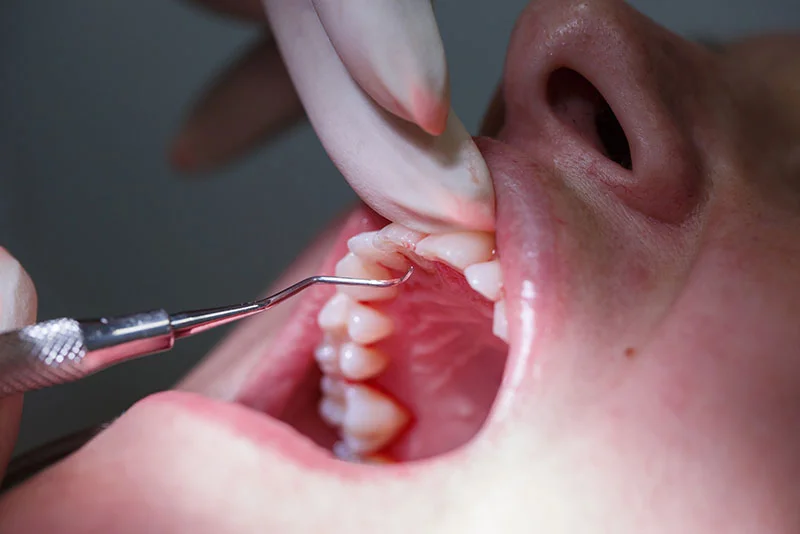
Self-care has its limits. If you find yourself asking, "why do my gums hurt in one spot treatment" or noticing that your bleeding gums when brushing aren't improving, it is time for a clinical evaluation.
Warning signs requiring urgent attention include:
- Persistent Bleeding: Gums that bleed during normal activities like eating or brushing are in a state of active inflammation.
- Receding Gumline: If your teeth appear longer or you feel a "notch" near the root, your gums are pulling away.
- Pus or Discharge: The presence of yellow or white fluid indicates a localized abscess or advanced infection.
- Persistent Halitosis: Bad breath that doesn't go away with brushing often signals bacteria hiding deep in periodontal pockets.
- Tooth Mobility: If your teeth feel loose or shift when you bite down, the supporting structures are compromised.
Clinical Gums Hurt Treatment Options
Modern periodontics focuses on minimally invasive ways to eliminate bacteria and restore tissue attachment. We utilize the latest diagnostic tools to determine how deep the infection has traveled before recommending a specific gums hurt treatment.
Professional Deep Cleaning
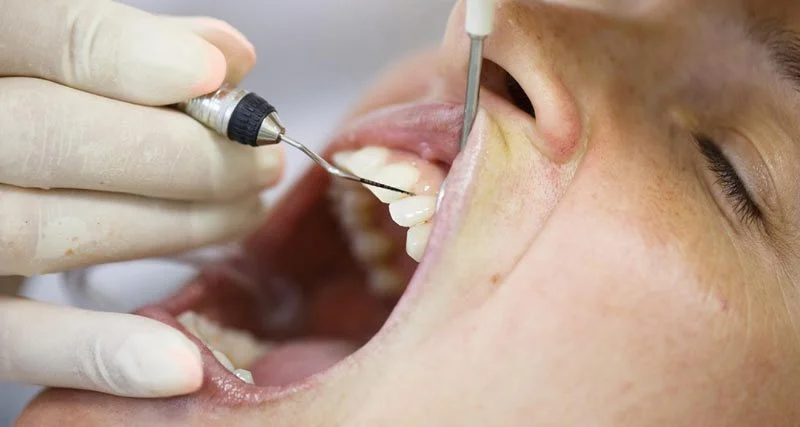
Unlike a standard dental cleaning, deep scaling and root planing reach below the gumline. Using specialized ultrasonic instruments, the hygienist or periodontist removes tartar from the roots of the teeth. Following this, the "root planing" phase smooths out the root surfaces, making it much harder for bacteria to re-attach. This is the foundational gum hurts treatment for most patients dealing with chronic soreness.
Laser Gum Therapy: The Painless Tech-Forward Approach
One of the most common fears among patients is: "does gum disease treatment hurt?" In the past, treating deep pockets required scalpels and sutures. Today, we utilize advanced dental lasers.
The laser identifies and vaporizes only the infected tissue while leaving healthy tissue untouched. Because the laser also cauterizes and sterilizes the area as it works, there is significantly less bleeding and almost no post-operative pain. If you are wondering, "does laser gum treatment hurt?" the answer for most patients is a resounding "no"—most report only a slight warm sensation.
Gums Hurt in One Spot: Possible Causes Like Abscess or Impaction
General soreness is one thing, but localized pain is another. Many patients ask, "why do my gums hurt in one spot treatment?" This specific discomfort usually points to a few distinct possibilities:
- Dental Abscess: A pocket of infection at the root of a tooth or between the gum and the tooth. This usually requires drainage and antibiotics.
- Food Impaction: A piece of fibrous food (like a popcorn kernel) trapped deep in the gum pocket can cause sudden, intense pain and swelling.
- Pericoronitis: Inflammation of the gum tissue over a partially erupted tooth, most commonly a wisdom tooth.
- Canker Sore: A small, shallow lesion that is painful but usually harmless, though it requires a different approach than an infection.
Condition | Primary Symptom | Clinical Solution |
Gingivitis | General bleeding/swelling | Professional scaling |
Abscess | Throbbing, localized bump | Drainage and antibiotics |
Trauma | Sharp pain, visible cut | Time and antiseptic rinse |
Periodontitis | Deep aching, tooth mobility | Laser therapy or surgery |
The Link Between Gum Health and Cosmetic Dentistry
At Stamboul, we are famous for our "smile makeovers." However, a world-class smile cannot be built on a shaky foundation. If a patient requests veneers or crowns while their gums hurt when i eat treatment for the gums must come first.
Inflamed gums are swollen, meaning their "line" is not accurate. If we place a veneer on a swollen gum, once the inflammation goes down, a gap will appear between the veneer and the gumline. Furthermore, active gum disease can lead to bone loss, which may eventually cause expensive cosmetic work to fail. We treat the gums first to ensure that your aesthetic results are beautiful, symmetrical and permanent.
Prevention: How to Keep Your Gums from Hurting Again
Once you have completed your gums hurt treatment, the goal is to never need it again. Prevention is about disrupting the bacterial biofilm before it can calcify into tartar.
- The 2-2 Rule: Brush for two minutes, twice a day, using a soft-bristled brush at a 45-degree angle to the gumline.
- Interdental Cleaning: Brushing only cleans 60% of the tooth surface. Floss or interdental brushes are mandatory to reach the other 40% where most gum pain starts.
- Stay Hydrated: Water helps wash away food particles and maintains saliva flow, which is your mouth's natural defense against acid.
- Regular Check-ups: A professional cleaning every six months removes the tartar that your toothbrush cannot touch.
Traveling to Turkey for Gum Treatment: 2026 Costs and Benefits
Istanbul has become a global center for advanced periodontics and oral surgery. Patients traveling for gums hurt treatment in 2026 often find that the level of technology and specialist care at Stamboul exceeds what is available locally, often at a much more accessible price point.
The benefits of coordinating your care in Turkey include:
- Access to Specialists: Periodontists who specialize exclusively in the health of the supporting tissues.
- Advanced Technology: Widespread use of dental lasers and 3D imaging that may be prohibitively expensive in other countries.
- Luxury Coordination: VIP transfers and boutique hotel stays that turn a medical necessity into a comfortable retreat.
- Efficiency: Multiple treatments that might take months to schedule elsewhere can often be completed in a single week.
FAQ
How do I get rid of painful gums?
The fastest way to get rid of pain is to identify the cause. While saltwater rinses provide temporary relief, a professional cleaning is usually required to remove the bacteria or foreign objects causing the inflammation.
How to stop gums hurting?
Switch to a soft-bristled brush, avoid acidic/spicy foods that irritate the tissue, and maintain meticulous hygiene. If the pain lasts more than 48 hours, consult a dentist for a clinical gums hurt treatment.
What is the fastest way to heal gums?
Laser gum therapy is currently the fastest way to heal infected gums. It removes bacteria instantly and biostimulates the tissue to speed up the natural regeneration process.
What is the best gum pain relief?
For immediate relief, a combination of a saltwater rinse and an over-the-counter anti-inflammatory (like ibuprofen) is effective. For long-term relief, professional scaling and root planing is the "gold standard."
Can a salt water rinse fix a gum infection?
A salt water rinse can help manage symptoms and slow bacterial growth, but it cannot "fix" a deep gum infection or remove hardened tartar. It is a supportive tool, not a standalone cure.
How do dentists treat gum disease?
Dentists treat gum disease by removing the source of infection through scaling, root planing, and sometimes laser therapy. In advanced cases, they may perform gum grafts or flap surgery to repair lost tissue and bone.
Über den Autor