When a tooth suffers from extensive decay, a fracture, or structural wear, a standard dental filling may no longer provide adequate support. In such situations, restorative dentistry offers advanced solutions designed to return full function and aesthetics to your mouth. The decision frequently comes down to a choice between an onlay vs crown. Both methods are long-lasting, lab-made fabrications that offer superior durability compared to chairside composite resins, yet they differ considerably in their structural mechanics and biological impact.
Preserving your natural tooth tissue is fundamental to maintaining long-term oral health and jaw stability. Understanding the differences between an onlay vs crown dental application allows you to make an informed decision alongside your specialist. This comprehensive guide covers everything from tissue preservation to performance and structural value, helping you identify which path best suits your dental needs.
İçindekiler
- The Core Difference: Defining Onlays and Crowns
- What is a Dental Onlay?
- What is a Full Dental Crown?
- Onlay vs Crown: Head-to-Head Comparison
- Clinical Scenarios: When Does a Dentist Choose an Onlay Over a Crown?
- The Materials Matter: Zirconia, E-Max and Porcelain Options
- Step-by-Step Treatment: What to Expect During the Procedure
- Onlay vs Crown Cost in Turkey: 2026 Value Analysis
- How to Maintain Your Restoration: Long-Term Success Tips
- FAQ
- When is an onlay preferred over a dental crown?
- Is an onlay more painful than a crown procedure?
- Can an onlay replace an old large amalgam filling?
- How long does a porcelain onlay last compared to a crown?
- Is an onlay better than a full crown?
- Why would a dentist choose an onlay instead of a crown?
- What happens if an onlay fails?
- How much tooth structure is saved with a dental onlay?
The Core Difference: Defining Onlays and Crowns
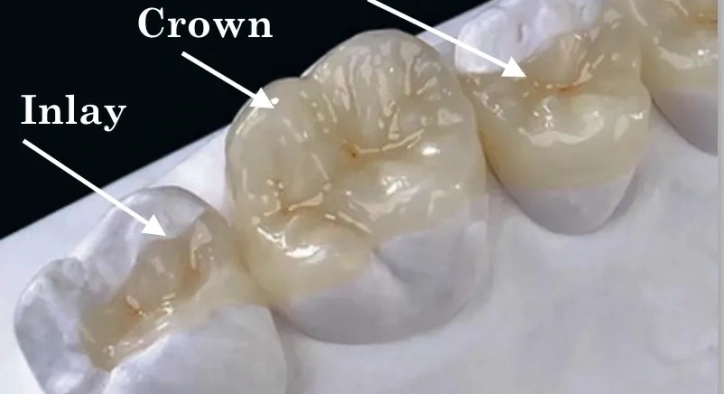
The structural distinction between a crown vs onlay lies in the coverage area and the volume of natural tooth structure that must be removed. A dental crown is a full circumferential cover, enclosing the entire visible portion of the tooth above the gumline. An onlay, often referred to as a partial crown vs full crown alternative, addresses only the damaged portion of the tooth, leaving the healthy sections completely intact.
To visualize the difference, consider the chewing surface of a molar, which features elevated peaks known as cusps. When an infection or crack damages these cusps, an inlay onlay vs crown discussion becomes necessary. An inlay fills the space between the cusps, an onlay drapes over one or more of the cusps, and a full crown replaces the entire external surface of the tooth. The decision rests on evaluating the remaining wall thickness to ensure the tooth can withstand the daily forces of chewing without splitting.
What is a Dental Onlay?
A porcelain dental onlay is a custom-made restoration engineered to fit precisely into a prepared cavity while covering the vulnerable chewing surfaces of a tooth. This option represents one of the most effective conservative dentistry treatments available today. Instead of filing the healthy walls of the tooth into a small peg, the dentist only eliminates the decayed or structurally compromised tissue.
The custom fabrication process happens in a specialized laboratory or through computer-aided milling machines. Once prepared, the onlay is chemically bonded to the remaining enamel. This bonding process creates a cohesive unit that redistributes stress across the tooth surface, reinforcing its natural resistance to fractures. Because the margins of an onlay usually stay well above the gumline, keeping the area clean is much easier, reducing the long-term risk of gum irritation.
What is a Full Dental Crown?
A full dental crown is a custom-made prosthetic cap designed to fully restore a tooth that has lost its structural integrity. When a tooth experiences deep fractures, advanced decay, or has undergone a root canal procedure, its walls can become brittle and highly prone to vertical splitting. Under these conditions, choosing a crown vs onlay dental treatment offers total reinforcement.
The installation of a crown requires a 360-degree reduction of the tooth structure. The dentist carefully shaves down the outer layer of enamel to create a stable foundation for the restoration to slide over. Once permanently cemented, the crown absorbs all chewing forces, acting as a shield that holds the remaining underlying structure together. While this process requires sacrificing a larger percentage of healthy enamel, it provides complete security for teeth that would otherwise face extraction.
Onlay vs Crown: Head-to-Head Comparison
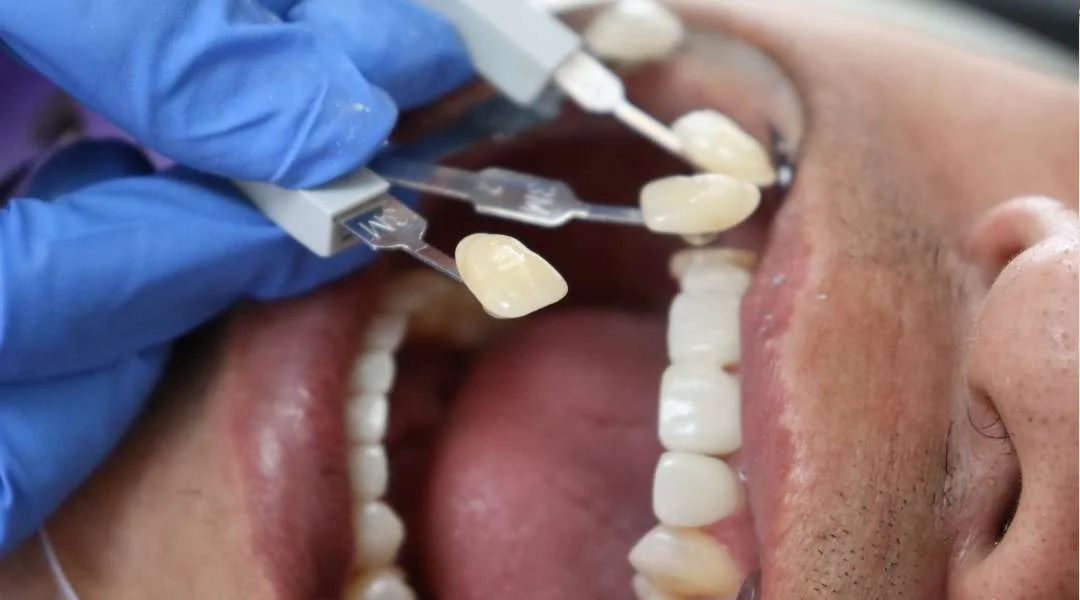
Choosing between these treatments requires balancing preservation with protection. Below is a structural comparison evaluating the daily clinical factors that distinguish a ceramic onlay vs crown.
- Enamel Preservation: An onlay preserves approximately 50% to 75% more natural tooth structure than a standard crown.
- Periodontal Health: Onlay margins are typically placed further away from the gumline, lowering plaque accumulation risks. Full crowns often terminate near or below the gumline, demanding meticulous hygiene to avoid tissue inflammation.
- Structural Integration: An onlay relies heavily on modern adhesive bonding chemistry to secure its position, whereas a full crown gains its stability from both mechanical retention and dental cement.
- Procedure Complexity: Fabricating a partial crown requires high technical precision from both the dentist and the laboratory technician to match the natural slopes and contours of the remaining tooth structure.
Structural Criteria | Dental Onlay | Full Dental Crown |
Healthy Tissue Removal | Minimal (Only damaged areas) | Substantial (360-degree reduction) |
Gumline Interaction | Above the gums (Supragingival) | Often at or below the gumline |
Primary Retention Method | Chemical adhesive bonding | Mechanical friction and cement |
Ideal for Root Canals | Occasionally (If tooth walls are thick) | Highly recommended (Protects brittle teeth) |
Clinical Scenarios: When Does a Dentist Choose an Onlay Over a Crown?
A dentist evaluates several diagnostic criteria before recommending an onlay vs crown dental pathway. The decision is not arbitrary; it relies on clear structural engineering principles.
When an Onlay is Chosen
If a tooth presents with a very large old filling that has failed, but the surrounding natural walls remain thick and supportive, an inlay onlay restoration is preferred. Similarly, if a single cusp has broken off due to biting a hard object, but the rest of the tooth is healthy, an onlay can replace that specific cusp, avoiding the need for a full crown.
When a Full Crown is Mandatory
If a tooth has multiple fracture lines extending below the gumline, an onlay cannot safely support it. Additionally, teeth that have undergone extensive root canal therapy lose their internal blood supply and hydration, making them brittle. In these situations, a full crown is the most reliable way to prevent the tooth from cracking under heavy chewing loads.
The Materials Matter: Zirconia, E-Max and Porcelain Options
The material used to craft your restoration impacts its longevity, strength, and overall appearance. At Stamboul, we utilize premium, metal-free materials that mimic the light-reflecting properties of natural teeth.
E-Max (Lithium Disilicate)
E-Max is widely considered the peak of cosmetic dentistry. It offers high translucency, making it the perfect choice for a porcelain dental onlay in visible areas of the mouth. The material blends into the surrounding enamel, making the margins virtually invisible.
Zirconia (Zirconium Dioxide)
Zirconia is known for its incredible fracture resistance. It can withstand intense chewing forces, making it the ideal material for a full crown or an onlay on the rear molars. Modern monolithic zirconia combines this strength with improved shade matching, avoiding the chalky look of older dental ceramics.
Porcelain-Fused-to-Metal (PFM)
While older generation restorations relied on a metal core covered by porcelain, modern cosmetic practices have largely transitioned away from them. PFM crowns can leave a dark grey line near the gums over time, which is why metal-free options like E-Max and Zirconia are preferred for long-term health and aesthetics.
Step-by-Step Treatment: What to Expect During the Procedure
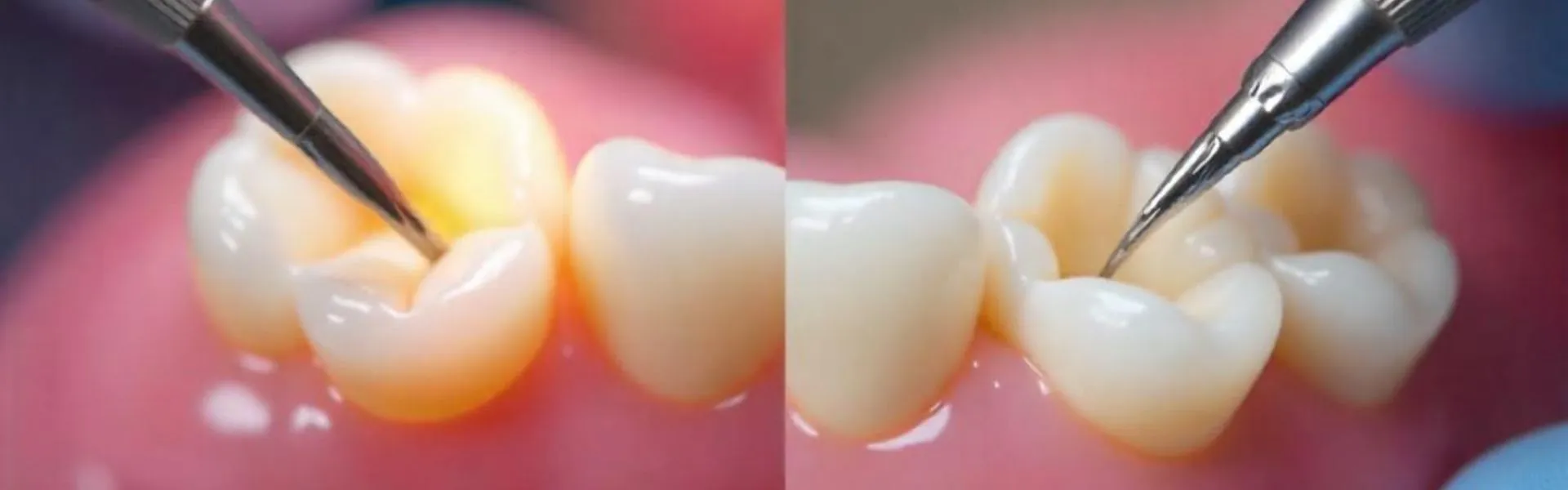
Whether you are receiving an onlay or a crown, the treatment workflow follows a precise protocol designed to maximize comfort and accuracy.
1. Preparation and Digital Scanning
The first step involves numbing the area with a local anesthetic. The dentist removes any active decay or old filling material, shaping the tooth to receive the specific restoration. Instead of uncomfortable traditional impression putties, high-precision intraoral digital scanners are used to create a 3D model of your mouth.
2. Temporary Restoration
While the laboratory crafts your final restoration, a temporary acrylic cover is placed over the tooth. This temporary piece protects the exposed dentin from temperature sensitivity and keeps the tooth from shifting positions.
3. Final Bonding and Polish
Once the final piece arrives from the lab, the temporary cover is removed. The dentist checks the fit, margins, and bite alignment. If everything matches, the tooth surface is prepared with a mild etching gel, and the ceramic onlay vs crown is permanently bonded or cemented into place.
Onlay vs Crown Cost in Turkey: 2026 Value Analysis
Financial considerations play a major role when planning restorative dental work. Evaluating the onlay vs crown cost reveals that partial restorations often require similar laboratory precision and material costs as full coverage options, meaning their prices can be close.
Choosing to travel for care allows patients to review an onlay vs crown cost comparison in Turkey 2026 that provides significant value. Due to optimized operating costs and advanced in-house dental laboratories in Istanbul, international patients can access premium European and American dental materials at a fraction of the cost found in countries like Canada, the UK, or the USA.
- UK/USA Average Cost: A single ceramic crown or onlay can range between $900 and $1,500.
- Turkey Average Cost: The same high-grade Zirconia or E-Max restoration generally ranges between $250 and $450.
Many international travelers choose a customized package that combines multiple restorations or couples a necessary treatment with professional dental cleanings and whitening procedures. These packages often feature private VIP transfers and accommodation near the historic sites of Istanbul, making the entire journey smooth and stress-free.
How to Maintain Your Restoration: Long-Term Success Tips
Protecting your investment involves maintaining excellent oral hygiene habits. Both onlays and crowns are built to be highly durable, but the underlying tooth remains vulnerable to plaque buildup along the margins.
- Commit to Daily Flossing: Use dental floss or an oral irrigator every day to clear away debris from the edges of your restoration, especially near the gumline.
- Pick a Gentle Toothpaste: Avoid high-abrasion toothpastes containing charcoal or harsh whitening crystals, which can create micro-scratches on ceramic surfaces over time.
- Protect Against Night Grinding: If you grind your teeth while sleeping, using a custom night guard is crucial to prevent the ceramic material from chipping under excessive pressure.
- Keep Regular Cleanings: Visiting your local hygienist twice a year allows for professional monitoring, catching any signs of secondary decay before they compromise the tooth.
FAQ
When is an onlay preferred over a dental crown?
An onlay is preferred when a tooth has suffered structural damage to its chewing surfaces or cusps, but still retains healthy, thick external walls. It allows the dentist to preserve the remaining natural enamel rather than shaping the entire tooth down.
Is an onlay more painful than a crown procedure?
Neither procedure should be painful, as local anesthesia completely numbs the area before preparation begins. Because an onlay involves less removal of deep tooth structure near the nerve pulp, post-operative sensitivity is often lower than that of a full crown.
Can an onlay replace an old large amalgam filling?
Yes, this is one of the most common uses for an onlay. When large silver amalgam fillings expand and contract over time, they often create micro-cracks in the surrounding tooth walls. Replacing the filling with a bonded porcelain onlay reinforces the tooth structure.
How long does a porcelain onlay last compared to a crown?
Both restorations have similar lifespans, typically lasting between 10 to 15 years, and often longer with excellent oral care. While a crown provides total physical coverage, a properly bonded onlay is highly stable because it integrates directly with the remaining natural enamel.
Is an onlay better than a full crown?
An onlay is not inherently better, but it is a more conservative option when appropriate. If your tooth has enough healthy structure left, an onlay is the better choice because it saves enamel. However, if the tooth is severely broken or has had a root canal, a full crown provides better long-term protection.
Why would a dentist choose an onlay instead of a crown?
A dentist will choose an onlay to preserve as much natural tooth structure as possible. Saving natural enamel helps maintain the natural flexibility of the tooth and protects the health of the surrounding gum tissues over time.
What happens if an onlay fails?
If an onlay fails it can usually be transitioned into a full dental crown. The dentist will evaluate the remaining tissue and prepare the tooth for complete coverage.
How much tooth structure is saved with a dental onlay?
An onlay can preserve up to 50% to 75% more of the natural tooth structure compared to a full crown, which requires a complete 360-degree reduction of the enamel walls.
Über den Autor