

Clear, unaided vision represents an essential pillar of daily independence and quality of life. However, millions of individuals diagnosed with severe refractive errors, ranging from negative six to negative eighteen diopters of myopia, accompanied by moderate to high astigmatism, face significant clinical hurdles when seeking refractive freedom. When evaluated for corneal laser vision correction such as LASIK, PRK, or ReLEx SMILE, these patients are routinely turned away due to insufficient corneal thickness, steep corneal curvature, severe dry eye syndrome, or early keratoconus risks. In modern refractive and anterior segment ophthalmology, ICL surgery (Implantable Collamer Lens) serves as the gold-standard alternative to laser eye ablation. Rather than permanently vaporizing corneal stromal tissue, an implantable lens is gently positioned inside the eye, working harmoniously with your natural crystalline lens to deliver high-definition visual acuity while preserving the cornea completely untouched.
Table of Content
- What Is ICL Surgery?
- Clinical Candidacy: ICL Surgery Requirements
- Procedural Timeline: How Long Does ICL Surgery Take?
- Head-to-Head Comparison: ICL Surgery vs. LASIK Laser Correction
- Safety Profile and Flying Protocols: Is ICL Surgery Safe and Can You Fly After?
- Cost Determinants: Understanding Global ICL Pricing Variables
- Frequently Asked Questions (FAQ)
- Can I feel the ICL lens inside my eye or can other people see it?
- What is the difference between ICL surgery and cataract surgery or RLE?
- Can an ICL be removed or replaced in the future?
- What activities must I avoid during the first month after ICL surgery?
- Why do ICL surgery prices vary between different patients?
What Is ICL Surgery?
To establish a clear medical foundation, let us examine the primary question: what is icl surgery from an anatomical and material science perspective? Clinically defined as a phakic intraocular lens implantation, this is an advanced outpatient micro-surgical procedure performed under topical numbing drops that corrects refractive errors while leaving the eye's natural crystalline lens in place and functioning.
THE ICL MICRO-SURGICAL IMPLANTATION SEQUENCE:
[Pupillary Dilation & Topical Anesthetic Drops] ➡️ [2.8 mm Temporal Micro-Incision] ➡️ [Viscoelastic Gel Injection to Maintain Anterior Chamber Depth] ➡️ [Injector-Assisted Foldable ICL Insertion] ➡️ [Micro-Footplate Tucking Beneath the Iris Sulcus] ➡️ [Viscoelastic Irrigation & Self-Sealing Corneal Closure]
The Biocompatible Material: Collamer Technology
Modern ICLs are crafted exclusively from Collamer, a proprietary, technologically advanced copolymer of pure porcine collagen and poly-HEMA. Because collagen is an intrinsic biological building block of the human body, the eye does not perceive the ICL as a foreign body. The lens features anti-reflective properties, built-in ultraviolet (UV) blockers, and high optical clarity. The EVO ICL generation integrates a central 0.36 mm port (the KS-AquaPORT), which allows natural aqueous humor fluids to circulate freely from the posterior to the anterior chamber, eliminating the need for preliminary laser iridotomies and preventing intraocular pressure spikes.
Clinical Candidacy: ICL Surgery Requirements
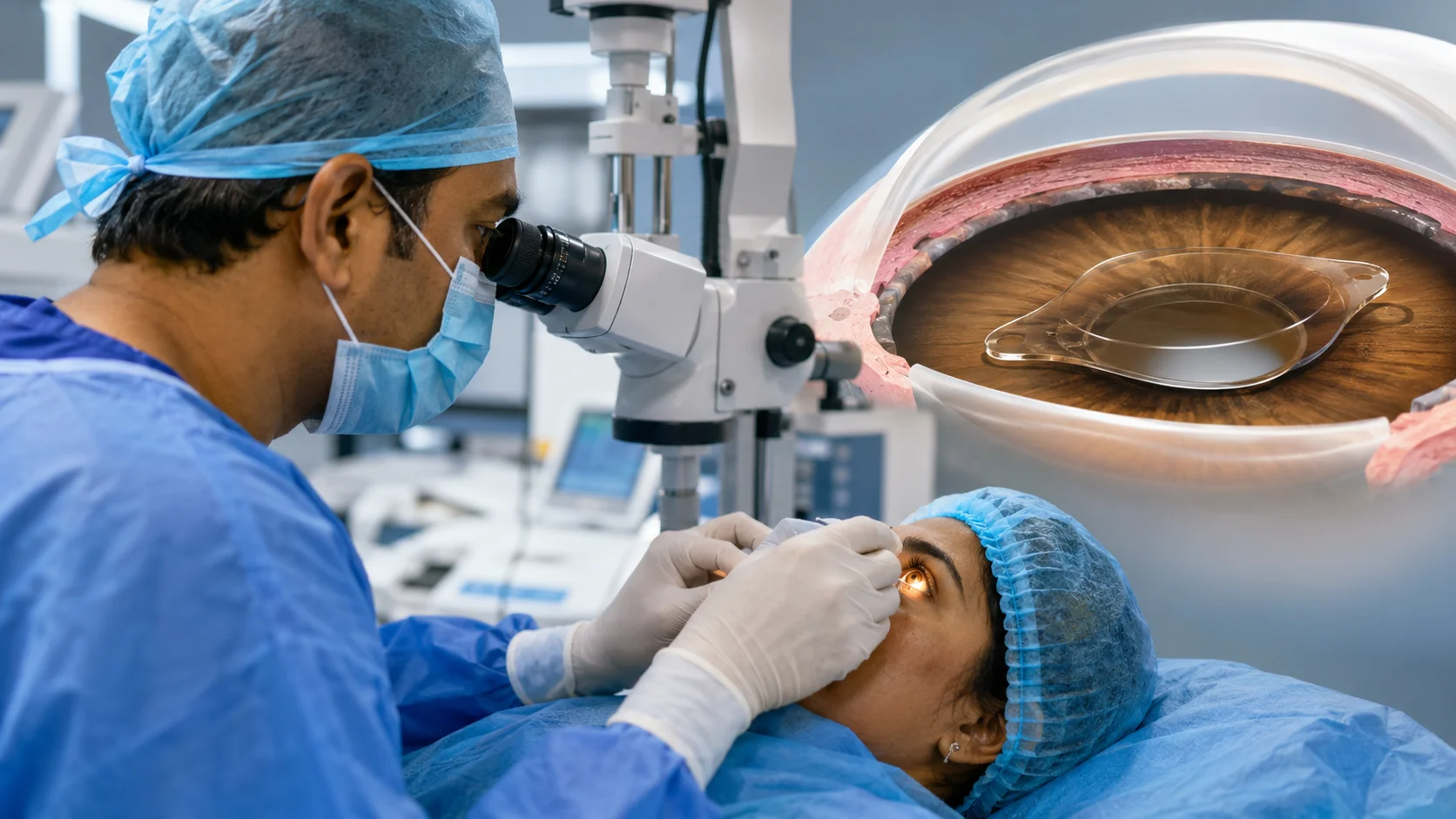
Determining eligibility requires specialized anterior segment imaging to confirm that the eye's internal space can safely accommodate the lens.
ESSENTIAL ICL CANDIDACY CHECKLIST:
- Age Window: Between 21 and 45 years old (stable refraction within 0.5 diopters for at least 12 months).
- Refractive Range: Myopia from -0.50 D up to -18.0 D (or -20.0 D with combined approaches); Astigmatism up to +6.0 D.
- Anterior Chamber Depth (ACD): Minimum internal depth of 2.8 to 3.0 mm from corneal endothelium to anterior lens capsule.
- Endothelial Cell Density (ECD): Healthy baseline endothelial cell count verified by specular microscopy based on age.
- Clean Eye Health: Zero active uveitis, uncontrolled glaucoma, untreated retinal tears, or diabetic retinopathy.
The most critical anatomical metric among icl surgery requirements is Anterior Chamber Depth (ACD). Because the lens rests in the posterior chamber directly behind the iris and over the ciliary sulcus, there must be adequate anatomical clearance, known as the central vaultto prevent the ICL from physically contacting either the back of the iris (which could disperse pigment) or the natural crystalline lens (which could induce early cataract formation).
Procedural Timeline: How Long Does ICL Surgery Take?
When preparing for surgery day, prospective patients routinely ask: how long does icl surgery take from entry to departure?
SURGERY DAY CHRONOLOGICAL TIMELINE:
- Pre-Operative Preparation (45 to 60 minutes): Pupillary dilation drops, topical anesthetic drop cycles, baseline vital checks.
- Active Micro-Surgical Step (10 to 15 minutes per eye): Incision, lens injection, footplate positioning, chamber washout.
- Post-Operative Pressure Monitoring (2 to 3 hours): Tonometry testing to confirm normal intraocular fluid drainage.
- Total Clinic Time: Approximately 3.5 to 4.5 hours from arrival to discharge.
The active surgical procedure takes approximately 10 to 15 minutes per eye. Most international centers operate on both eyes sequentially on the same day under sterile re-draping protocols, allowing patients to achieve immediate bilateral visual recovery. Vision improvement is noticed within hours after the pupillary dilation wears off, with over eighty to ninety percent of maximum visual sharpness attained by the morning of post-op day one.
Head-to-Head Comparison: ICL Surgery vs. LASIK Laser Correction
Evaluating the clinical differences between corneal ablation and phakic lens implantation clarifies why ICL is the treatment of choice for moderate-to-severe refractive errors.
REFRACTIVE PARADIGM CONTRASTS:
- ICL Surgery: Zero corneal tissue removed; 100% reversible; treats extreme myopia (-18 D); preserves natural cornea; zero dry eye.
- LASIK Laser: Permanent corneal flap and stromal ablation; irreversible; limited to -8 D; alters corneal shape; dry eye risk.
Clinical Parameter | ICL Surgery (Implantable Collamer Lens) | LASIK (Femto-LASIK Laser Ablation) |
Corneal Tissue Removal | None (Cornea remains completely intact) | 120 to 160 microns permanently ablated |
Treatment Reversibility | 100% Reversible (Lens can be removed or swapped) | Completely irreversible |
Maximum Corrective Power | Up to -18.0 D myopia & +6.0 D astigmatism | Typically capped at -8.0 D to -9.0 D myopia |
Corneal Thickness Dependency | Irrelevant (Works on thin, irregular corneas) | Requires thick, robust baseline cornea |
Dry Eye Induction Risk | Zero risk (Corneal sensory nerves preserved) | High temporary risk (Corneal nerves severed) |
Night Vision & Contrast | Superior contrast; minimal spherical aberrations | Potential higher-order aberrations / halos |
Safety Profile and Flying Protocols: Is ICL Surgery Safe and Can You Fly After?
Before committing to intraocular procedures, patients prioritize two major safety questions: is icl surgery safe and can you fly after icl surgery?
SAFETY PROFILE & FLIGHT CLEARANCE PROTOCOL:
- Long-Term Safety Profile: FDA-approved for decades; over 2 million implants worldwide; patient satisfaction exceeding 99%.
- Reversibility Safeguard: If prescriptions shift or cataracts develop in later decades, the lens is easily extracted.
- Flight Clearance Window: Safe to fly 48 to 72 hours post-surgery once intraocular pressure (IOP) is verified normal.
Regarding is icl surgery safe, clinical registry data spanning twenty-five years demonstrates an exceptional safety index. Because the modern EVO ICL includes the central fluid port, historical risks of pupillary block glaucoma are virtually eliminated. Severe complications such as intraocular infection (endophthalmitis) occur in less than one in ten thousand procedures when sterile protocols and prophylactic antibiotic drops are followed.
Regarding can you fly after icl surgery, the answer is yes, following a mandatory post-operative slit-lamp and eye pressure check. Modern aircraft cabins are pressurized to approximately six thousand to eight thousand feet, which does not alter the pressure inside an eye containing an ICL. However, cabin air is notoriously dry; patients flying home forty-eight to seventy-two hours post-op must pack their preservative-free artificial tears and medicated antibiotic-steroid eye drops in their carry-on luggage and administer lubricating drops hourly during flight.
Cost Determinants: Understanding Global ICL Pricing Variables
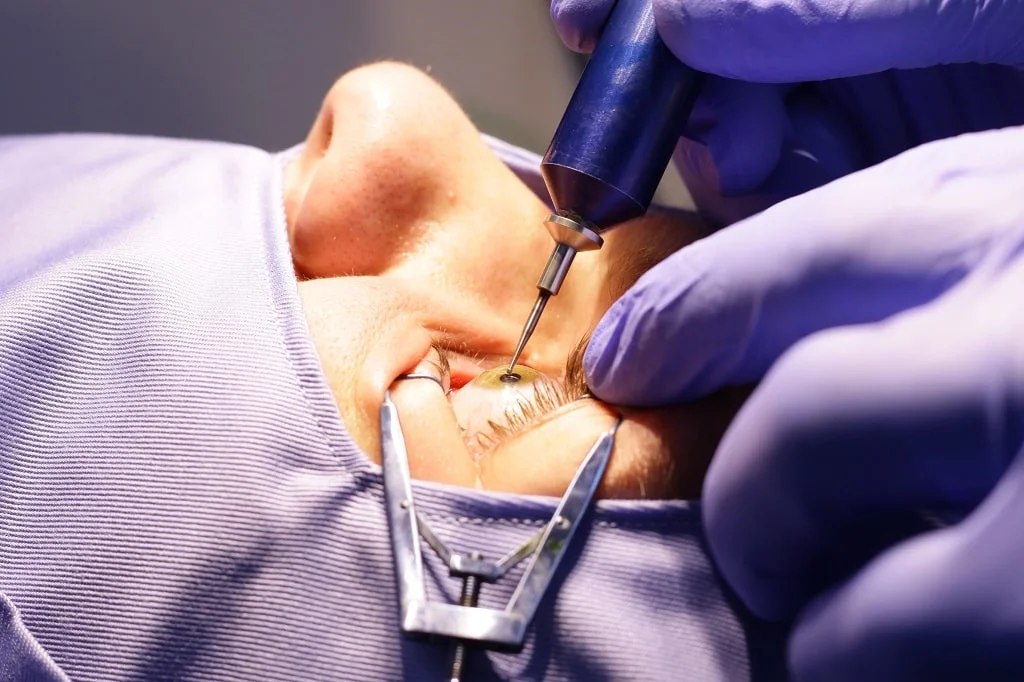
When evaluating lens implantation, prospective patients should note that pricing is customized based on individual refractive parameters and lens manufacturing specifications rather than a single flat fee. The overall icl surgery cost and icl surgery cost Turkey are influenced by several clinical and logistical variables:
- Spherical vs. Toric Lens Customization: Patients with significant astigmatism require a custom-engineered Toric ICL (TICL). Toric lenses incorporate individual axis alignments and require custom laboratory fabrication by Staar Surgical, which increases manufacturing costs compared to standard spherical lenses.
- Proprietary Lens Material Sourcing: Genuine EVO+ Visian ICLs are manufactured by Staar Surgical in Switzerland and the United States from proprietary Collamer, representing a fixed international material cost that cannot be substituted with generic plastics.
- Comprehensive Diagnostics: Pre-operative anterior segment optical coherence tomography (AS-OCT), high-frequency ultrasound biomicroscopy (UBM), and endothelial cell specular microscopy require specialized diagnostic platforms.
- Surgical Setting & Facility Standards: Procedures conducted in sterile, positive-pressure ophthalmic hospital operating theaters equipped with Zeiss or Leica surgical microscopes shape clinical overhead.
- Comprehensive Logistics: All-inclusive medical packages in Turkey incorporating VIP airport transfers, hotel accommodations, translation services, post-operative eye drops, and next-day checkups establish transparent pricing tiers.
Because refractive prescriptions are completely unique to each eye, exact quotations are established following a comprehensive clinical evaluation and anterior chamber measurement. The matrix below outlines relative regional price structures for 2026:
Healthcare Destination / Region | Cost Structure & Price Variability | Relative Price Level | Typical Package Framework |
United States (USA) | High variability per eye by surgeon & city | Very High | Per-Eye Surgery Only (Diagnostics & Drops Extra) |
United Kingdom (UK) | Variable per eye by private ophthalmic clinic | High | Per-Eye Surgery Only (Post-Op Visits Invoiced Separately) |
Germany / Switzerland | Variable by medical fee scale (GOÄ) | High | Per-Eye Surgery Only (Custom Toric Surcharges Apply) |
Stamboul (Turkey) | Dynamic Custom Package (Both Eyes) | High Value / Accessible | Comprehensive (Bilateral ICL, Hotel, Transfers & Meds) |
Frequently Asked Questions (FAQ)
Can I feel the ICL lens inside my eye or can other people see it?
No. You cannot feel the lens once it is placed inside your eye. Because it rests in the posterior chamber directly behind the colored iris and in front of your natural lens, it does not contact the sensitive corneal surface where sensations originate. Furthermore, the lens is completely invisible to the naked eye; friends and family cannot see it, and it can only be detected by an eye care professional using a specialized slit-lamp microscope.
What is the difference between ICL surgery and cataract surgery or RLE?
In ICL surgery, your eye's natural crystalline lens is left completely untouched and intact; a thin phakic lens is added inside the eye, preserving your natural accommodation (the eye's ability to shift focus between distance and reading effortlessly). In cataract surgery or Refractive Lens Exchange (RLE), the eye's natural lens is broken up using ultrasound and removed permanently from the eye, which is typically indicated for patients over fifty who have cataracts or presbyopia.
Can an ICL be removed or replaced in the future?
Yes. One of the greatest clinical benefits of ICL surgery is complete reversibility. While the lens is engineered to stay inside your eye permanently without degrading, it can be easily and safely removed or exchanged through a tiny micro-incision by an anterior segment surgeon if your prescription shifts significantly or if you develop cataracts in later decades of life.
What activities must I avoid during the first month after ICL surgery?
For the first week, avoid getting tap water, soap, or shampoo directly into your eyes, wear your protective eye shields while sleeping, and avoid rubbing your eyes under any circumstances. You should refrain from swimming pools, hot tubs, saunas, heavy weightlifting, and contact sports for three to four weeks to prevent infection and avoid sudden blunt trauma to the eye.
Why do ICL surgery prices vary between different patients?
Pricing varies primarily because treatment is customized to optical specifications. Patients requiring custom Toric ICLs to correct high astigmatism incur higher laboratory manufacturing costs than those needing standard spherical lenses. Additionally, whether bilateral treatment is performed simultaneously, the level of hospital technology utilized, and the inclusion of international travel accommodations all directly shape the overall cost structure.
Über den Autor