Relying daily on corrective eyeglasses or contact lenses introduces constant inconvenience from foggy lenses and dry eyes to ongoing financial expenses for solutions and replacements. When refractive errors like short-sightedness (myopia), long-sightedness (hyperopia), or astigmatism impair your natural visual acuity, modern ophthalmic optics provide a permanent, life-changing correction. In contemporary vision restoration, laser eye surgery stands as the world's most frequently performed, scientifically validated procedure for achieving complete spectacle independence.
At Stamboul Clinic, we coordinate world-class refractive ophthalmic procedures within accredited, state-of-the-art eye surgical hospital settings. Whether you are evaluating choices for vision correction, researching what is laser eye surgery from a biological standpoint, asking does laser eye surgery hurt, analyzing how long does laser eye surgery last, comparing provider technologies like optical express laser eye surgery standards, or calculating global laser eye surgery cost metrics, this comprehensive guide delivers deep clinical data and post-operative protocols.
Table of Content
- What Is Laser Eye Surgery
- Comparing Surgical Modalities: LASIK, LASEK, and SMILE
- High-Definition Customization & Provider Insights: Optical Express Laser Eye Surgery
- Patient Comfort & Safety: Is Laser Eye Surgery Safe and Does It Hurt?
- Longitudinal Stability: How Long Does Laser Eye Surgery Last?
- Analyzing Laser Eye Surgery Cost Globally
- Global Cost Matrix: Pricing Comparison in 2026
What Is Laser Eye Surgery
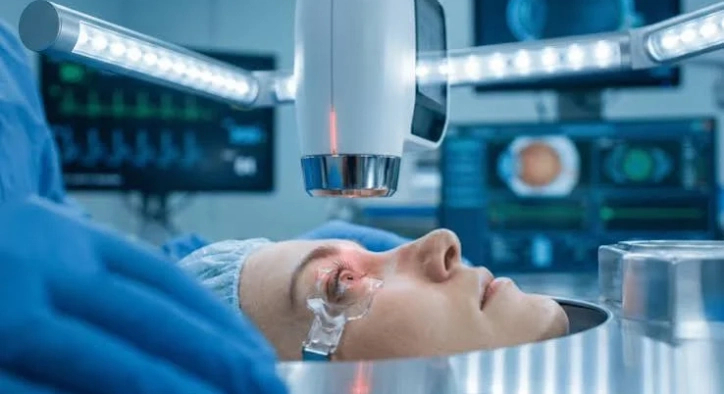
To establish a clear medical foundation, let us answer a primary question: what is laser eye surgery from an optical engineering perspective? Clinically defined as corneal refractive surgery, it is a painless outpatient procedure that reshapes the microscopic curvature of your eye's clear front surface (the cornea).
THE REFRACTIVE CORNEAL RESHAPING SEQUENCE:
- [Diagnostic Topography Mapping] ➡️ [Computer-Guided Micro-Flap / Lenticule Access] ➡️ [Excimer Laser Tissue Photoablation] ➡️ [Immediate Visual Focus Realignment]
In an eye with perfect vision (emmetropia), light rays pass cleanly through the cornea and lens to focus directly on the retina at the back of the eye. Refractive errors occur when an abnormally shaped cornea bends incoming light incorrectly, causing blurred images. By applying ultra-precise cool-laser light pulses, the ophthalmic surgeon reshapes corneal tissue with sub-micron accuracy:
- Myopia (Nearsightedness): The central cornea is flattened to reduce excessive focusing power.
- Hyperopia (Farsightedness): The peripheral cornea is steepened to increase focusing power.
- Astigmatism: The uneven, football-shaped cornea is smoothed into a symmetrical spherical contour.
Comparing Surgical Modalities: LASIK, LASEK, and SMILE
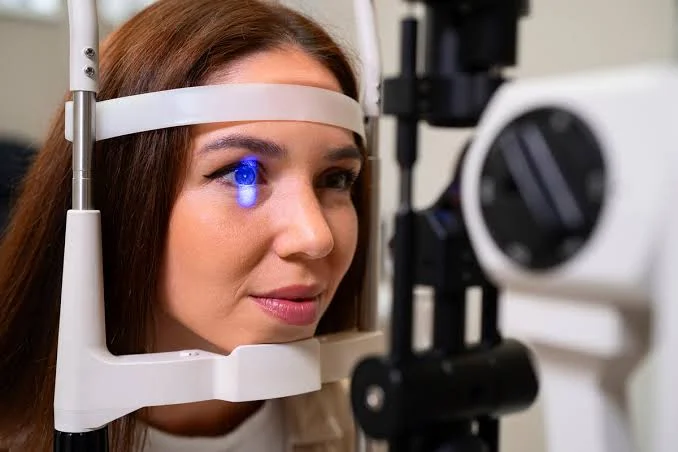
Selecting the appropriate laser technique depends on your corneal thickness, eye prescription, pupil size, and lifestyle demands.
REFRACTIVE PROCEDURE COMPARISON:
- - Femto-LASIK: Creates an ultra-thin corneal flap; delivers near-instant visual recovery within 24 hours.
- - LASEK / PRK: Surface ablation without flap creation; ideal for patients with thin or irregular corneas.
- - ReLEx SMILE: Flapless, keyhole lenticule extraction; offers maximum corneal structural integrity and minimal dry-eye risk.
1. Femto-LASIK (Laser-Assisted in Situ Keratomileusis)
Femto-LASIK utilizes two distinct high-precision lasers. First, a infrared femtosecond laser creates an ultra-thin, protective tissue flap on the corneal surface. The surgeon gently lifts this flap, and an excimer laser reshapes the exposed inner tissue bed within seconds. The flap is then repositioned, where it adheres naturally without stitches. LASIK offers rapid visual recovery, allowing over 95% of patients to resume work and driving within 24 to 48 hours.
2. LASEK / PRK (Surface Ablation)
For patients with naturally thin corneas, deep-set eyes, or those involved in high-impact contact sports, creating a corneal flap may not be advisable. LASEK (Laser-Assisted Sub-Epithelial Keratectomy) and PRK remove or loosen only the microscopically thin outer epithelial cell layer before applying the excimer laser directly to the surface. While initial visual recovery takes 4 to 7 days as the epithelium regenerates naturally, LASEK preserves maximum underlying corneal thickness.
3. ReLEx SMILE (Small Incision Lenticule Extraction)
SMILE represents the newest generation of flapless laser vision correction. A femtosecond laser creates a tiny, disc-shaped piece of tissue (lenticule) inside the intact cornea, along with a microscopic 2 mm keyhole incision. The surgeon removes the lenticule through this tiny opening, instantly altering the corneal curve. SMILE leaves over 80% of the upper corneal nerve network completely untouched, drastically reducing post-operative dry eye symptoms.
High-Definition Customization & Provider Insights: Optical Express Laser Eye Surgery
When researching top-tier clinical providers, prospective patients routinely look into established European standards, such as optical express laser eye surgery protocols and advanced wave-front diagnostic systems.
Modern high-definition laser treatments integrate 3D corneal topography (such as Johnson & Johnson’s iDesign technology) to capture over 1,200 unique microscopic imperfections across your eye. Because no two eyes are identical, applying custom wavefront mapping allows the laser software to tailor the ablation pattern specifically to your eye's unique digital footprint. Choosing advanced custom mapping ensures superior night vision clarity, reduces glare and halo artifacts around streetlights, and maximizes the probability of achieving 20/20 vision or better.
Patient Comfort & Safety: Is Laser Eye Surgery Safe and Does It Hurt?
A primary concern during pre-operative consultations revolves around procedure safety and pain management, prompting patients to ask is laser eye surgery safe and does laser eye surgery hurt during or after the treatment.
PATIENT SAFETY AND COMFORT PARAMETERS:
- Intraoperative Pain: Zero pain; topical anesthetic drops completely numb the ocular surface.
- Surgical Tracking: 3D eye trackers track micro-movements up to 1,000 times per second, pausing laser if eye moves.
- Complication Rate: Exceptionally safe; serious complication rates remain consistently under 0.5%.
The procedure itself is completely painless. Prior to entering the laser suite, your eye care team applies anesthetic eye drops to numb the ocular surface entirely. You may feel mild pressure from the eyelid holder or suction ring for 15 to 30 seconds, but no sharp pain occurs. Furthermore, computerized eye-tracking systems follow your eye's micro-movements up to 1,000 times per second; if you blink or look away, the laser pauses instantly and automatically resumes once your eye aligns.
Longitudinal Stability: How Long Does Laser Eye Surgery Last?
When investing in refractive correction, patients routinely ask: how long does laser eye surgery last over a lifetime?
The structural changes made to your corneal tissue by the excimer laser are 100% permanent. The reshaped cornea will not regress or return to its pre-surgery shape. However, laser eye surgery cannot stop the eye's natural, internal aging process. Around ages 40 to 45, the eye's natural internal lens naturally loses flexibility, leading to presbyopia (age-related reading vision loss). While laser eye surgery permanently fixes your distance prescription, natural age-related lens changes occur independently later in life.
Analyzing Laser Eye Surgery Cost Globally
A major consideration when planning vision correction is the total financial investment. Prospective patients routinely research the overall laser eye surgery cost or ask how much is laser eye surgery across different healthcare hubs globally.
In the United States, Canada, the UK, and Western Europe, refractive surgery is classified as an elective procedure and is rarely covered by public insurance. Private pricing in Western centers ranges from $2,000 to $4,500 per eye (or $4,000 to $9,000 for both eyes), depending on whether advanced wavefront technology is added.
Selecting a specialized clinic in Istanbul allows international patients to access certified wave-front laser systems (such as Zeiss VisuMax or SCHWIND Amaris) through transparent, fixed-price package pricing. The table below outlines structural pricing comparisons for 2026:
Global Cost Matrix: Pricing Comparison in 2026
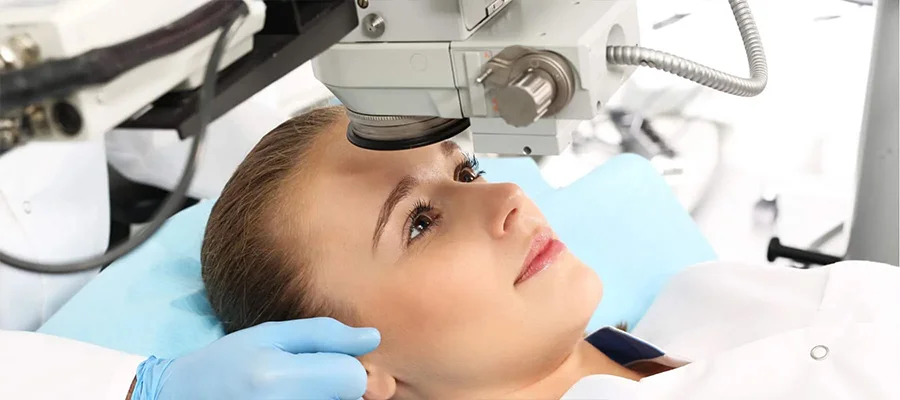
The table below highlights estimated costs for full dual-eye laser refractive procedures across major international ophthalmic hubs:
Surgical Option / Region | Average Cost in USA (Both Eyes) | Average Cost in UK / Germany (Both Eyes) | Average Cost at Stamboul (Turkey - Both Eyes) |
Standard LASIK / PRK | $3,500 – $5,000 | £2,500 – £4,200 / €2,800 – €4,500 | €900 – €1,500 (Full Package Tier) |
Femto-LASIK (Custom Wavefront) | $4,500 – $6,500 | £3,200 – £5,500 / €3,500 – €5,800 | €1,200 – €2,200 (All-Inclusive Package) |
ReLEx SMILE / SMILE Pro | $5,500 – $8,500 | £4,000 – £6,500 / €4,200 – €7,000 | €1,900 – €2,900 (Premium Package Tier) |
Frequently Asked Questions (FAQ)
How much does laser eye surgery cost in Turkey?
In 2026, an all-inclusive laser eye surgery package in Turkey typically ranges from €900 to €1,500 for standard LASIK/PRK, €1,200 to €2,200 for Femto-LASIK, and €1,900 to €2,900 for ReLEx SMILE for both eyes, including diagnostic exams, luxury hotel stays, and private VIP transfers.
Does laser eye surgery hurt during or after the procedure?
The procedure itself is entirely painless because anesthetic eye drops fully numb your eyes before treatment begins. After LASIK, you may experience a mild scratchy feeling or watery eyes for 3 to 5 hours, which resolves quickly with prescribed lubricating drops.
How long does laser eye surgery last over time?
The corneal reshaping performed by the laser is completely permanent. However, it does not prevent normal age-related lens changes (presbyopia) that naturally occur in your 40s or 50s.
Is laser eye surgery safe for long-term vision?
Yes, modern wave-front and femtosecond laser procedures have an exceptional safety record, with success rates exceeding 98% and serious complication rates remaining under 0.5% when performed by experienced ophthalmic surgeons.
Über den Autor