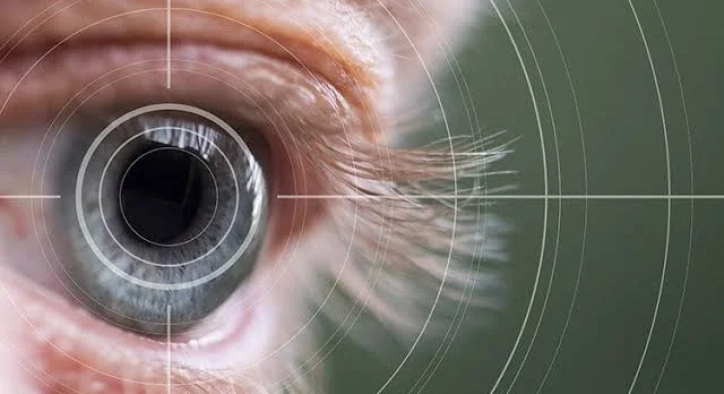
Experiencing age-related loss of near focus (presbyopia) or developing cloudiness in your eye's natural lens (cataracts) can significantly impair daily activities like reading digital screens, driving at night, and recognizing faces. For decades, traditional cataract surgery relied on monofocal implants that corrected distance vision only, leaving patients dependent on reading glasses for near and intermediate tasks. Today, modern ophthalmic engineering offers a permanent solution for total spectacle independence: the trifocal intraocular lens.
At Stamboul Clinic, we coordinate world-class ophthalmic and refractive procedures within accredited, state-of-the-art eye care centers. If you are evaluating options for a trifocal intraocular lens treatment, researching the best trifocal intraocular lens models, checking trifocal intraocular lens cost frameworks, or weighing trifocal intraocular lens pros and cons, this comprehensive clinical guide delivers deep medical insights and practical recovery parameters.
Table of Content
- What Is a Trifocal Intraocular Lens?
- How Is Trifocal Intraocular Lens Surgery Performed? Step-by-Step
- Evaluating Performance: Trifocal Intraocular Lens Pros and Cons
- Clinical Comparison: Selecting the Best Trifocal Intraocular Lens
- Analyzing Trifocal Intraocular Lens Cost Metrics
- Patient Outcomes: Clinical Trifocal Intraocular Lens Review Data
- Frequently Asked Questions (FAQ)
What Is a Trifocal Intraocular Lens?
To establish a clear medical foundation, let us answer a primary question: what is a trifocal intraocular lens implant from a technological standpoint? It is an artificial, foldable optic made from biocompatible acrylic material designed to replace your natural crystalline lens during a brief micro-surgical procedure.
THE THREE-TIER OPTICAL FOCUS SYSTEM:
- [Near Focal Point (~40 cm)] ➡️ Ideal for reading books, smartphones, and fine detailed work.
- [Intermediate Focal Point (~80 cm)] ➡️ Optimized for computer screens, car dashboards, and cooking.
- [Distance Focal Point (Infinity)] ➡️ Delivers sharp clarity for driving, sports, and outdoor activities.
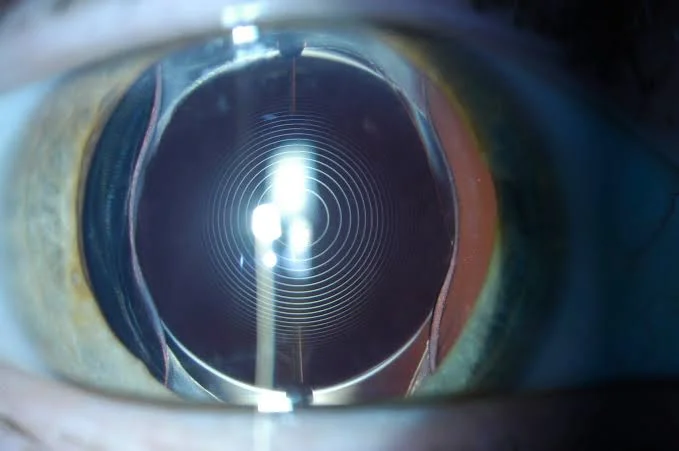
Unlike traditional monofocal or older bifocal implants, a trifocal optic uses diffractive rings across its surface to split incoming light into three distinct focal points simultaneously. This advanced light management allows your brain's visual cortex to naturally select the correct focus for any distance, effectively freeing you from dependence on reading glasses or bifocals.
How Is Trifocal Intraocular Lens Surgery Performed? Step-by-Step
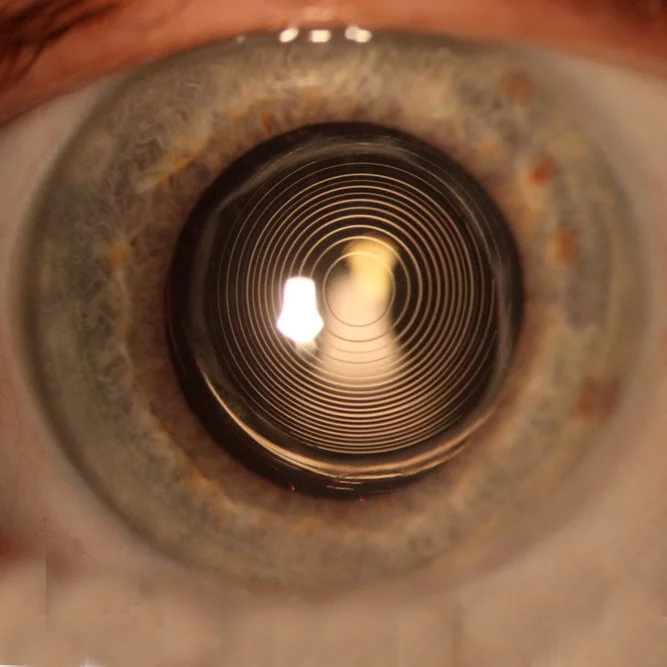
Understanding how a trifocal intraocular lens surgery is performed helps ease patient anxiety and highlights the minimally invasive nature of modern refractive lens exchange (RLE) or cataract procedures.
THE STEP-BY-STEP OPHTHALMIC SURGICAL WORKFLOW:
- Step 1: Local Anesthetic Drops ➡️ The eye surface is completely numbed; no needles or general anesthesia are required.
- Step 2: Micro-Incision Creation ➡️ A tiny, self-sealing incision (~2.2 mm) is made at the edge of the cornea.
- Step 3: Phacoemulsification ➡️ Ultrasound or femtosecond laser technology gently liquefies the natural lens.
- Step 4: Lens Insertion & Flex ➡️ The foldable trifocal lens is injected into the eye capsule where it unfolds perfectly.
1. Topical Anesthesia and Micro-Incision
Before the procedure begins, anesthetic eye drops are applied to numb the eye surface completely. The ophthalmic surgeon creates a microscopic, self-sealing incision at the corneal border that heals naturally without requiring stitches.
2. Phacoemulsification and Natural Lens Removal
Using high-frequency ultrasound energy or a precision femtosecond laser, the surgeon gently breaks apart and vacuums out the clouded or presbyopic natural lens, leaving the natural lens capsule completely intact.
3. Trifocal Implant Placement
The flexible trifocal lens is loaded into a specialized injector and inserted through the micro-incision directly into the lens capsule. Once inside, the lens unfolds gently and locks into its permanent position, providing immediate optical alignment.
Evaluating Performance: Trifocal Intraocular Lens Pros and Cons
When choosing premium refractive eye surgery, weighing the clinical trifocal intraocular lens pros and cons is essential for setting realistic optical expectations.
The Primary Advantages (Pros)
- Total Spectacle Independence: Over 90-95% of patients achieve complete freedom from glasses for near, intermediate, and distance tasks.
- Permanent Visual Solution: The artificial acrylic lens does not age, degrade, or develop cataracts, providing lifetime clarity.
- Fast Recovery Profile: Visual function improves significantly within 24 to 48 hours following the micro-incision procedure.
- Reverses Presbyopia and Cataracts Simultaneously: Corrects both reading difficulties and cloudy lens conditions in a single treatment.
Potential Drawbacks and Considerations (Cons)
- Nighttime Visual Phenomena: Some patients experience subtle halos or glare around bright light sources at night due to the diffractive optical rings, though this typically fades as neuroadaptation occurs.
- Slight Reduction in Contrast Sensitivity: Light splitting can result in minor contrast reduction in low-light environments.
- Higher Initial Financial Investment: Premium trifocal implants cost more than standard monofocal lenses.
Clinical Comparison: Selecting the Best Trifocal Intraocular Lens
Selecting the best trifocal intraocular lens depends on your unique eye anatomy, corneal topography, and lifestyle habits. Leading global ophthalmic manufacturers produce high-performance models utilized during trifocal intraocular lens review evaluations:
Lens Model & Manufacturer | Optical Architecture | Key Clinical Benefit | Ideal Patient Profile |
Zeiss AT LISA tri 839MP (Carl Zeiss Meditec) | Hydrophilic acrylic with hydrophobic surface | Outstanding intermediate clarity and low halo induction | Frequent computer users and active outdoor enthusiasts |
Alcon AcrySof IQ PanOptix (Alcon) | Hydrophobic acrylic with ENLIGHTEN technology | Exceptional near focus at 40 cm and high light utilization | Avid readers and patients prioritizing close-up detail |
Rayner RayOne Trifocal (Rayner) | Single-piece hydrophilic acrylic | Smooth optical transitions and ultra-thin injection profile | Patients seeking minimal surgical micro-incisions |
Analyzing Trifocal Intraocular Lens Cost Metrics
A major consideration before scheduling lens replacement surgery is the financial investment. Patients routinely research the overall trifocal intraocular lens cost to compare private healthcare expenses globally.
In the United States, Canada, the UK, and Western Europe, choosing premium trifocal optics over standard monofocal options involves high out-of-pocket facility fees, surgeon surcharges, and advanced diagnostic costs, resulting in pricing between $3,500 and $6,000 per eye.
Selecting Stamboul Clinic in Istanbul allows international patients to access identical, certified premium implants from Zeiss or Alcon within a clear, all-inclusive package format. The table below outlines structural pricing for 2026:
Destination / Ophthalmic Hub | Average Cost per Single Eye | Average Cost for Both Eyes | Included Medical Amenities |
United States (USA) | $3,800 – $6,000 | $7,600 – $12,000 | Surgery Only (Diagnostics extra) |
United Kingdom (UK) | £3,000 – £5,200 | £6,000 – £10,400 | Surgery Only (Consults extra) |
Germany / Switzerland | €3,200 – €5,500 | €6,400 – €11,000 | Surgery Only (Aftercare extra) |
Stamboul (Turkey) | €1,650 – €2,400 | €3,300 – €4,800 | All-Inclusive (Hotel, VIP Transfers & Aftercare) |
Patient Outcomes: Clinical Trifocal Intraocular Lens Review Data
Analyzing verified trifocal intraocular lens review data reveals high overall patient satisfaction rates, particularly regarding the ability to read smartphones and work on laptops without glasses.
During the first 3 to 6 months post-surgery, the brain undergoes neuroadaptation—a natural learning process where the visual cortex adapts to receiving light from three focal planes simultaneously. As neuroadaptation completes, nighttime glare decreases, contrast sensitivity improves, and seamless visual transitions become effortless.
Frequently Asked Questions (FAQ)
What is a trifocal intraocular lens?
It is a premium artificial lens implant placed inside the eye during cataract or lens replacement surgery to provide clear vision at near, intermediate, and far distances simultaneously without glasses.
How much does a trifocal intraocular lens cost in Turkey?
In 2026, a premium all-inclusive package utilizing certified Zeiss or Alcon trifocal lenses typically ranges from €1,650 to €2,400 per eye (or €3,300 to €4,800 for both eyes), including VIP transfers and hotel stays in Istanbul.
Is trifocal intraocular lens surgery painful?
No. Anesthetic eye drops fully numb the eye before surgery begins. You may feel mild pressure during the brief 15-minute procedure, but no sharp discomfort.
What are the main pros and cons of trifocal lenses?
The primary advantage is complete independence from glasses across all distances. The main potential drawback is experiencing temporary night halos or glare around lights during early neuroadaptation.
How long does recovery take after trifocal lens surgery?
Most patients notice improved vision within 24 to 48 hours. Full visual stabilization and complete neuroadaptation develop over 4 to 8 weeks.
Über den Autor