
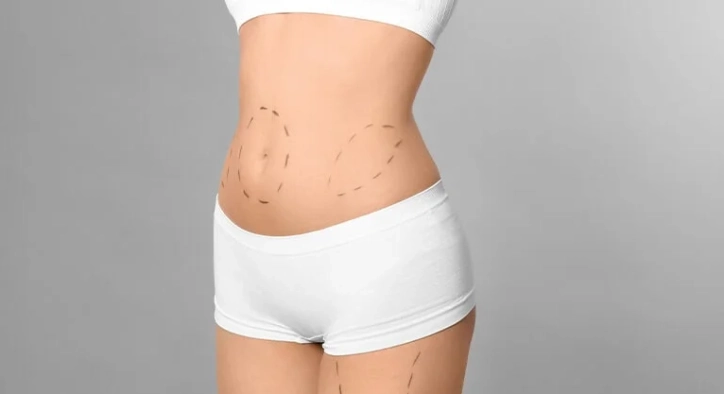
Many individuals maintain an active fitness lifestyle, lean body weight, and strong upper core muscles, yet struggle with a persistent, localized bulge of loose skin and fat resting directly below the belly button. Commonly referred to as the "C-section shelf" or "lower belly pooch," this isolated tissue laxity often results from previous pelvic surgeries, pregnancy, or localized genetic elasticity loss. For patients whose upper abdominal skin and muscles remain tight, undergoing a full hip-to-hip abdominoplasty is clinically unnecessary. In contemporary aesthetic body surgery, a mini tummy tuck (partial abdominoplasty) provides a focused, minimally invasive procedure to flatten the lower abdomen with a shorter scar and accelerated healing.
At Stamboul Clinic, we coordinate post-pregnancy and body sculpting surgeries within accredited hospital facilities in Istanbul. Whether you are researching an all-inclusive medical trip to Turkey, seeking anatomical clarity on what is a mini tummy tuck, evaluating mini tummy tuck vs full tummy tuck differences, examining mini tummy tuck scar placement, assessing the mini tummy tuck recovery timeline, or analyzing factors influencing the overall mini tummy tuck price, this clinical guide provides comprehensive insights.
Table of Content
- What Is a Mini Tummy Tuck?
- Head-to-Head Comparison: Mini Tummy Tuck vs. Full Tummy Tuck
- Incision Placement and Scar Maturation: The Mini Tummy Tuck Scar
- Healing Milestones: The Mini Tummy Tuck Recovery Timeline
- Mini Tummy Tuck Before and After Transformations
- Cost Determinants: Understanding Price Variables and Estimates
- Frequently Asked Questions (FAQ)
- Can a mini tummy tuck repair separated abdominal muscles (diastasis recti)?
- How does a mini tummy tuck incision compare to a C-section scar?
- How long do I need to wear the compression garment (faja) after a mini tummy tuck?
- Can a mini tummy tuck remove stretch marks?
- Why do mini tummy tuck prices vary between different patients?
What Is a Mini Tummy Tuck?
To establish a clear medical foundation, let us answer a primary question: what is a mini tummy tuck from an anatomical perspective? Clinically defined as a partial abdominoplasty, a mini tummy tuck surgery is performed under general anesthesia or deep IV sedation to address localized tissue laxity confined strictly below the umbilicus (belly button).
THE PARTIAL ABDOMINOPLASTY SURGICAL SEQUENCE:
- [Low Pelvic Micro-Incision] ➡️ [Targeted VASER Lipo of Lower Belly] ➡️ [Sub-Umbilical Muscle Plication] ➡️ [Lower Dermal Excision] ➡️ [Concealed Multi-Layer Closure]
The 3 Defining Anatomical Characteristics
Unlike a standard abdominoplasty, a partial tummy tuck features three specific technical limits:
- Untouched Belly Button: The umbilical stalk remains intact and connected to the abdominal wall. The skin is not cut around the belly button, leaving zero circular scars on the abdomen.
- Sub-Umbilical Dissection: The surgeon elevates the skin flap only up to the lower edge of the navel, preserving the blood supply and nerve pathways of the upper abdomen.
- Targeted Lower Muscle Tightening: Internal muscle plication (suturing) is performed exclusively on the lower rectus abdominis and pyramidalis muscles beneath the navel.
Head-to-Head Comparison: Mini Tummy Tuck vs. Full Tummy Tuck
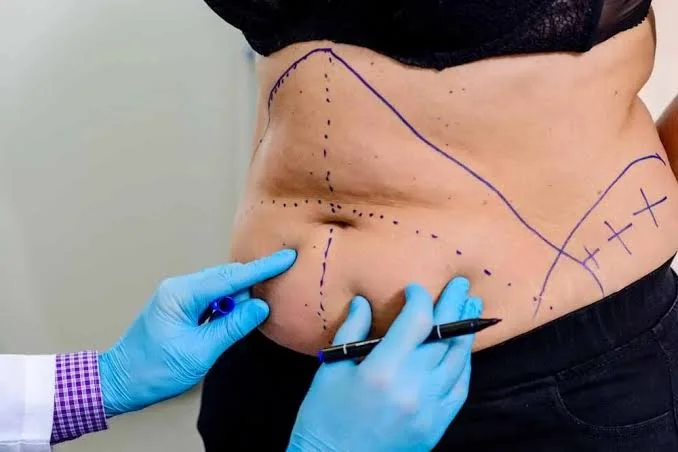
Evaluating the clinical differences between a mini tummy tuck vs full tummy tuck helps determine which procedure matches your anatomical profile.
KEY CLINICAL CONTRASTS:
- Mini Abdominoplasty: Shorter scar (10–15 cm); operates strictly below navel; no navel repositioning; 1–2 week recovery.
- Full Abdominoplasty: Hip-to-hip scar (25–40 cm); full muscle repair ribs-to-pubis; new navel opening; 3–4 week recovery.
Clinical Parameter | Mini Tummy Tuck (Partial) | Full Tummy Tuck (Standard) |
Primary Indication | Lower belly pooch / C-section overhang | Upper and lower abdominal skin laxity |
Incision Length & Position | Short horizontal line (10–15 cm) | Hip bone to hip bone line (25–40 cm) |
Belly Button (Navel) Impact | Untouched (No repositioning or scar) | Transposed (New opening & circular scar) |
Muscle Repair (Diastasis Recti) | Limited to area below the navel | Full repair from ribcage down to pubic bone |
Anesthesia & Operative Time | 1.5 to 2 hours | 3 to 4 hours |
Drain Requirement | Often drainless or 1 drain for 24–48 hrs | Typically 2 surgical drains for 3–7 days |
Initial Return to Desk Work | 5 to 7 days | 10 to 14 days |
Incision Placement and Scar Maturation: The Mini Tummy Tuck Scar
Managing patient expectations regarding the mini tummy tuck scar is a vital part of surgical planning.
THE MINI SCAR MATURATION SEQUENCE:
- Placement: Positioned horizontally across the lower pelvic crease, hidden inside standard bikini or underwear lines.
- Dimensions: Approximately 10 to 15 cm in length (slightly longer than a standard C-section incision).
- Maturation: Fades from pink to a thin, pale white line over 6 to 12 months with silicone scar therapy.
Because the amount of skin excised is smaller than in a full tummy tuck, the incision does not need to extend past the anterior superior iliac spines (hip bones). The incision is placed low on the pubic mound, allowing patients to wear low-rise swimwear and lingerie without visible scarring.
Healing Milestones: The Mini Tummy Tuck Recovery Timeline
Understanding the biological milestones of mini tummy tuck recovery ensures a smooth return to active daily routines.
THE POST-OPERATIVE RECOVERY TIMELINE:
- Days 1 to 3: Acute Healing ➡️ Mild lower abdominal tightness; supportive compression faja worn 24/7.
- Days 5 to 7: Mobility Milestone ➡️ Standing fully upright without discomfort; return to light desk work.
- Weeks 2 to 3: Tissue Settlement ➡️ 60% of localized swelling clears; light walking and driving resumed.
- Weeks 4 to 6: Active Clearance ➡️ Medical faja discontinued; gym workouts and abdominal training safely resumed.
Because surgical dissection does not extend above the belly button, post-operative swelling and discomfort are significantly reduced compared to full abdominoplasty. Most patients stand upright within 3 to 5 days and return to light office duties by the end of the first week.
Mini Tummy Tuck Before and After Transformations
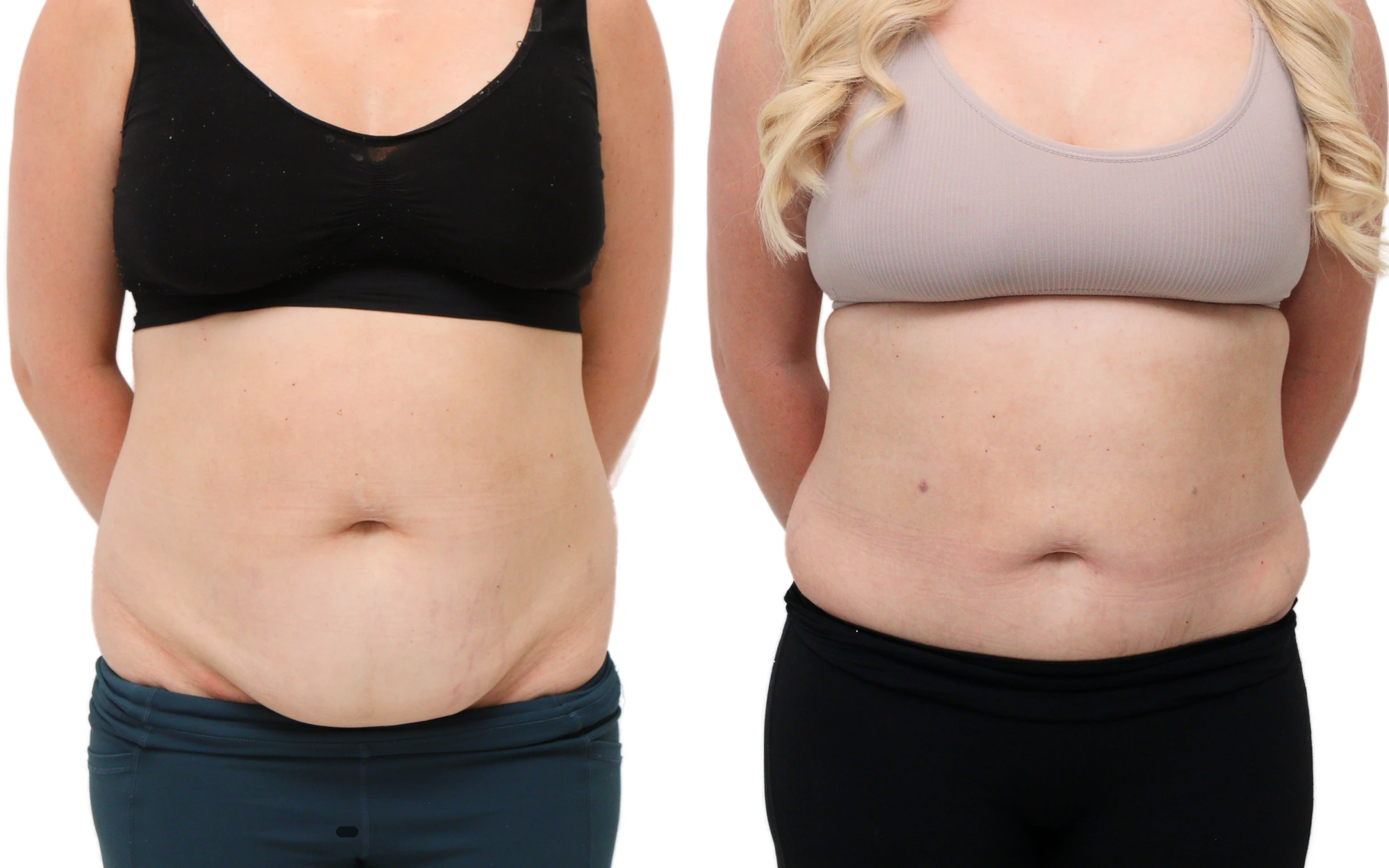
Reviewing unedited mini tummy tuck before and after patient profiles demonstrates how removing localized skin overhang restores a smooth abdominal profile:
Modern techniques often integrate gentle Vaser liposuction along the lower abdomen and flanks during the same session. This thins the subcutaneous fat layer, creating a flat transition between the upper abdomen, the lower pelvic contour, and the waistline.
Cost Determinants: Understanding Price Variables and Estimates
When evaluating partial abdominoplasty, prospective patients should note that fees are customized and vary based on individual clinical requirements. Rather than a single fixed rate, the overall mini tummy tuck price is influenced by several clinical and logistical variables:
- Complementary Liposuction (Lipo-Mini Tuck): Adding Vaser ultrasonic liposuction across the flanks, hips, or upper abdomen to blend contours alters operating room time.
- Muscular Repair Requirements: The presence and severity of sub-umbilical muscle separation requiring internal plication affects surgical complexity.
- Previous Surgical Scar Tissue: Excising dense scar tissue from previous C-sections or pelvic surgeries requires meticulous dissection.
- Hospital Facility & Inpatient Care: The level of accredited hospital facility, anesthesia support, and overnight observation services shape package pricing.
Because surgical plans are tailored to individual body anatomy, exact pricing is established following a personalized clinical evaluation. The matrix below outlines relative regional price structures for 2026:
Healthcare Destination / Region | Cost Structure & Price Variability | Relative Price Level | Typical Package Framework |
United States (USA) | High variability by surgeon & state | High | Surgery Only (Facility, Anesthesia & Garments Extra) |
United Kingdom (UK) | Variable by private clinic & hospital | High | Surgery Only (Consultations & Aftercare Invoiced Separately) |
Germany / Switzerland | Variable by medical fee scale (GOÄ) | Moderate to High | Surgery Only (Hospitalization & Meds Invoiced Separately) |
Stamboul (Turkey) | Dynamic Custom Package | High Value / Accessible | Comprehensive (Hospital Stay, Hotel, VIP Transfers & Care) |
Frequently Asked Questions (FAQ)
Can a mini tummy tuck repair separated abdominal muscles (diastasis recti)?
Yes, but only in the area located below the belly button. If your muscle separation extends into the upper abdomen between the navel and the ribcage, a mini tummy tuck cannot reach that area without cutting around the belly button; a full abdominoplasty is required to repair full-length muscle separation.
How does a mini tummy tuck incision compare to a C-section scar?
A mini tummy tuck scar is placed in the same low pelvic location as a C-section scar, but is typically 2 to 5 centimeters wider on each side. The surgeon uses the existing C-section scar line to excise the stretched skin and old scar tissue, leaving a single, clean, low-lying surgical line.
How long do I need to wear the compression garment (faja) after a mini tummy tuck?
You must wear a medical compression garment 24 hours a day for the first 3 to 4 weeks (removing it only briefly for showering), followed by 12 hours a day for an additional 2 weeks. The garment controls swelling, prevents fluid collection (seroma), and supports the lower abdominal wall during healing.
Can a mini tummy tuck remove stretch marks?
A mini tummy tuck removes stretch marks located exclusively on the lower abdominal skin below the navel that is excised during surgery. Stretch marks located on the upper abdomen above the belly button or across the flanks remain intact, although they may appear slightly tighter.
Why do mini tummy tuck prices vary between different patients?
Pricing varies because every patient presents with unique anatomical requirements. Factors such as whether internal lower muscle tightening is needed, the volume of skin to be excised, whether complementary Vaser liposuction is added to sculpt the waist, and the required length of hospital observation all directly influence the surgical plan and total cost.
Über den Autor