For many people, a Hair Transplant is not only a cosmetic decision but also an emotional one. Hair loss can affect self-image, social confidence, and even the way a person perceives aging. Yet before choosing a Hair Transplant, it is worth slowing down and understanding what the process actually involves, what science suggests, and what realistic expectations should look like. At Stamboul Clinic, we believe informed patients tend to make calmer, smarter, and more satisfying decisions.
The modern world often presents Hair Transplant procedures as simple, quick, and universally successful. That impression is incomplete. While contemporary hair restoration techniques have advanced remarkably, outcomes may vary depending on genetics, donor quality, scalp characteristics, surgeon planning, and long-term hair loss progression. In other words, a transplant is not magic; it is a carefully designed medical-aesthetic strategy. This guide explores the ten most critical things you should know before moving forward.
İçindekiler
- Hair Transplant Candidacy Depends on More Than Hair Loss
- Hair Transplant Techniques Are Not Identical
- Hair Transplant Results Are Limited by the Donor Area
- Hair Transplant Hairlines Should Be Age-Appropriate, Not Just Low
- Hair Transplant Recovery Is a Process, Not a Weekend Event
- Hair Transplant Density Has Biological and Artistic Limits
- Hair Transplant Success Depends Heavily on Clinic Standards
- Hair Transplant Costs Should Be Judged by Value, Not Just Price
- Hair Transplant Expectations Should Be Realistic and Long-Term
- Hair Transplant Research, Evidence, and Planning Matter More Than Hype
- A Hair Transplant Is Best Understood as Strategy, Not Shortcut
Hair Transplant Candidacy Depends on More Than Hair Loss
A common misconception is that anyone with thinning hair is automatically a good candidate for a Hair Transplant. In practice, candidacy is often shaped by several intersecting factors. The pattern of hair loss matters. So does age. So does the stability of shedding over time. People with diffuse thinning, limited donor reserves, or rapidly progressing loss may require a more cautious approach.
Another important factor is donor area quality. In hair restoration, the back and sides of the scalp are usually considered the “safer” donor zones because these follicles are often more resistant to androgen-related miniaturization. However, resistance is not identical in every patient. A clinic should assess density, follicle caliber, scalp elasticity, and likely long-term retention before recommending a transplantation plan. This is one reason a thoughtful evaluation tends to be more valuable than a rushed sales conversation.
Research in hair restoration literature frequently emphasizes patient selection as one of the strongest predictors of satisfaction. In simple terms, the best procedure on the wrong candidate can still lead to disappointment. A strong medical and photographic assessment helps clarify whether Hair Transplant surgery is timely, premature, or perhaps only one piece of a broader hair restoration plan.
Hair Transplant Techniques Are Not Identical
The phrase Hair Transplant sounds singular, but the field includes different harvesting and implantation approaches. The two most discussed methods are FUE (Follicular Unit Extraction) and FUT (Follicular Unit Transplantation). FUE involves extracting follicular units individually, while FUT generally removes a strip of donor tissue that is then dissected into grafts. Each method has practical trade-offs.
FUE is often associated with tiny circular extraction points and greater flexibility for those who prefer shorter hairstyles. FUT may allow efficient harvesting in selected cases and can sometimes be considered when donor management is especially important. Neither method is universally “best.” The ideal option depends on donor characteristics, scalp laxity, styling habits, graft goals, and the surgeon’s expertise. Technique names can dominate marketing, but planning quality often matters more than buzzwords.
There is also the implantation side of the process: channel opening, direction design, hairline artistry, density planning, and graft handling. These details can strongly shape the naturalness of the result. Two clinics may both advertise Hair Transplant services, yet deliver very different outcomes because of differences in microscopic handling, graft survival protocols, and aesthetic judgment.
Quick Comparison Table
Factor | FUE | FUT |
Harvesting style | Individual extraction | Strip removal |
Visible scarring pattern | Small dot-like marks | Linear scar |
Short hairstyle compatibility | Often favorable | May depend on scar visibility |
Session planning | Flexible | May be efficient in selected cases |
Suitability | Varies by patient | Varies by patient |
Hair Transplant Results Are Limited by the Donor Area
One of the most scientific and least glamorous truths about Hair Transplant planning is this: the donor area is finite. You are not creating new hair; you are redistributing existing follicles. This is why experienced clinics tend to speak about donor management with unusual seriousness. Every graft used today is a graft that cannot be used again in the same way tomorrow.
This matters because hair loss is often progressive. A patient may want a dense frontal restoration now, but if thinning continues in the mid-scalp or crown, future planning becomes essential. Overharvesting the donor area can create visible patchiness, while overbuilding the hairline can result in an unnatural contrast later. Intelligent restoration requires balance between current cosmetic goals and future flexibility.
A good consultation should explore questions such as these:
- How stable does the current pattern of loss appear?
- Is the donor density strong enough for the proposed coverage?
- What happens if hair loss progresses over the next five to ten years?
- Is crown work appropriate now, or should priority be given to the frontal zone?
- How conservative should the hairline be?
These are not trivial details. They are the foundation of sustainable Hair Transplant design.
Hair Transplant Hairlines Should Be Age-Appropriate, Not Just Low
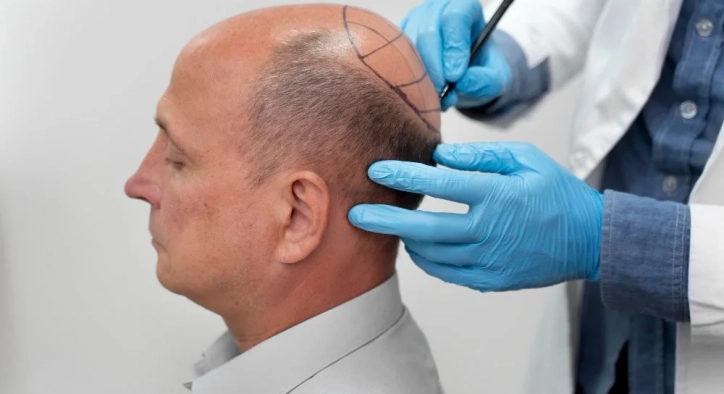
Patients often arrive with photos of youthful hairlines and ask whether the same look can be recreated. In a scientific sense, this is where anatomy, aesthetics, and long-term planning intersect. A natural-looking Hair Transplant hairline is usually not defined by how low it is, but by whether it fits the patient’s facial proportions, forehead shape, ethnicity, age, and likely future hair loss pattern.
Natural hairlines are irregular. They contain micro-variations in direction, softness, and density. They do not resemble a ruler-drawn border. The first rows often require finer single-hair grafts, while denser multi-hair grafts are typically placed behind them. This layered design contributes to realism. Hairline artistry is one of the clearest differences between technically adequate work and aesthetically refined work.
An aggressively low hairline can look tempting on paper, but it may consume grafts rapidly and become difficult to maintain over time. A more mature, face-compatible design often ages better. In that sense, a successful Hair Transplant is not simply about “more hair.” It is about creating harmony that still makes sense years later.
Hair Transplant Recovery Is a Process, Not a Weekend Event
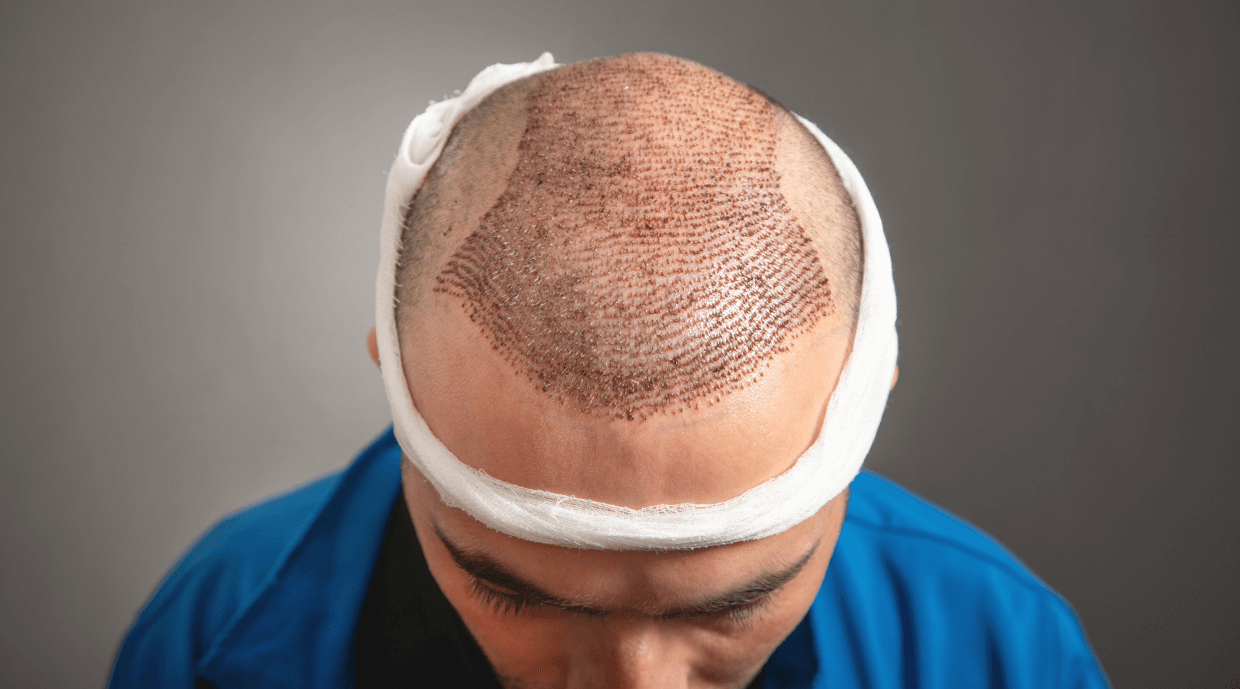
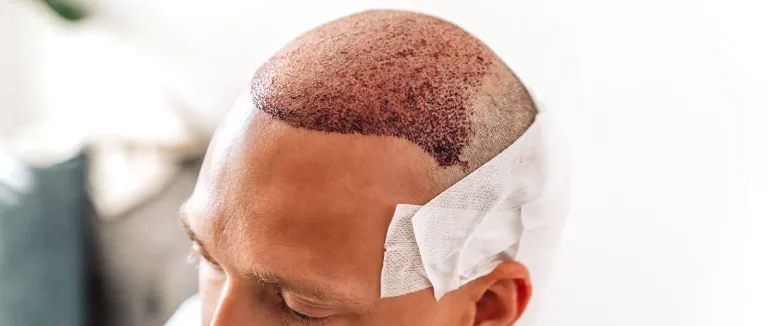
Many people imagine a Hair Transplant as a one-day procedure followed by instant transformation. The reality is more nuanced. The procedure itself may be completed in a day or spread over multiple stages, but visible progress usually unfolds over months. There can be redness, scabbing, temporary shedding, and a waiting period that tests patience more than most promotional photos admit.
One of the most surprising phases for first-time patients is “shock loss,” the temporary shedding of transplanted hairs after the procedure. This does not necessarily mean graft failure. In many cases, the follicles remain in place while the hair shafts shed before entering a new growth cycle. New growth often appears gradually, not all at once. Texture, thickness, and coverage can evolve over time.
Recovery experiences vary from person to person, and no clinic should reduce the process to an oversimplified promise. The psychology of waiting is part of the journey. Understanding the timeline in advance can make the experience feel less dramatic and more predictable. A Hair Transplant is often better understood as a staged biological event rather than an instant makeover.
Hair Transplant Density Has Biological and Artistic Limits
One of the most searched topics in Hair Transplant decision-making is density. Patients understandably want full-looking hair. Yet density is influenced by more than graft count alone. Hair shaft thickness, curl, color contrast between hair and scalp, skin tone, scalp laxity, and graft survival all affect how dense the final result appears.
For example, coarse or wavy hair may provide better visual coverage than fine, straight hair at the same graft count. Likewise, dark hair on light skin may create stronger contrast, making thinning more noticeable. This is why identical numbers do not always produce identical visual outcomes. Numbers matter, but context matters more.
Clinics that promise extreme density without discussing blood supply, recipient site limits, or donor preservation may be oversimplifying the biology. The scalp can only support so much in one session. Good planning often prioritizes natural distribution and future options over short-term visual exaggeration. A realistic Hair Transplant plan respects both science and aesthetics.
Hair Transplant Success Depends Heavily on Clinic Standards
Not all Hair Transplant clinics operate with the same medical standards, staffing structure, or ethical framework. Some centers are deeply physician-led, with clear protocols for diagnosis, design, extraction, implantation, and follow-up. Others function more like high-volume production lines. To the untrained eye, their marketing may look equally polished. Their internal quality systems may not be.
This is where patients should pay attention to who performs each part of the procedure, how many surgeries are scheduled per day, whether donor planning is individualized, and how complications or revisions are handled. Sterility protocols, graft storage conditions, magnification systems, and team training all influence outcomes. A beautiful website cannot replace clinical discipline.
At Stamboul Clinic, we believe transparency matters. Patients should feel comfortable asking direct questions about team roles, planning logic, and post-procedure communication. A well-run Hair Transplant center should welcome informed questions rather than avoid them. In many ways, the quality of the consultation predicts the quality of the care.
Hair Transplant Costs Should Be Judged by Value, Not Just Price
The cost of a Hair Transplant is often one of the first concerns, and understandably so. Yet low price alone can be misleading. Hair restoration is one of those fields where bargain decisions may become expensive later through poor growth, unnatural design, donor depletion, or corrective work. A cheaper procedure that compromises future options may not be cheaper in any meaningful sense.
Cost can reflect several variables: team experience, physician involvement, procedural complexity, clinic infrastructure, location, graft numbers, and aftercare systems. However, high price is not automatically proof of excellence either. The better question is whether the fee corresponds to strong planning, transparent process, realistic communication, and a credible standard of care.
A useful way to think about value is to ask what the package truly includes:
- Diagnostic assessment
- Personalized design strategy
- Physician oversight
- Graft handling quality
- Post-procedure follow-up
- Donor area preservation
- Long-term planning logic
In short, a Hair Transplant should be evaluated as a long-term investment in appearance and confidence, not as a simple commodity purchase.
Hair Transplant Expectations Should Be Realistic and Long-Term
The most satisfied patients are not always those with the highest graft counts. Often, they are the ones whose expectations were aligned with biology from the beginning. A Hair Transplant can improve framing, density illusion, and confidence, but it does not always restore childhood hair or stop future native hair loss. Understanding this distinction is crucial.
Many patients also underestimate how much subtle improvement can matter. A carefully restored frontal hairline may dramatically change facial balance even if the crown remains thinner. Likewise, strategic density can create the appearance of fullness without covering every square centimeter. Visual impact and mathematical coverage are not always the same thing.
This long-term mindset is especially important for younger patients. Hair loss patterns may continue to evolve, and what looks ideal at 28 may need a different strategy by 38. The smartest Hair Transplant planning leaves room for the future instead of spending every resource at once.
Hair Transplant Research, Evidence, and Planning Matter More Than Hype
The internet is full of dramatic before-and-after images, celebrity rumors, and miracle language around Hair Transplant procedures. But useful decision-making comes from evidence, not excitement. Scientific discussions in dermatology and surgical hair restoration consistently emphasize diagnosis, donor preservation, graft survival, natural design, and long-term management. These themes are less flashy than viral transformations, but they are far more reliable.
Patients can benefit from looking for signals of trustworthiness: educational content, case consistency, transparent limitations, and medically grounded explanations. Clinics that discuss both possibilities and constraints tend to be more credible than those offering universal guarantees. Hair restoration is a field where nuance is often a sign of professionalism, not weakness.
At Stamboul Clinic, our approach is simple: provide clear information, respect individual variation, and prioritize planning over pressure. A well-considered Hair Transplant decision should feel informed, not rushed. If a clinic’s message sounds too perfect, it may be worth asking what has been left unsaid.
A Hair Transplant Is Best Understood as Strategy, Not Shortcut
A Hair Transplant can be a meaningful step for people seeking a fuller hairline, improved facial framing, or a renewed sense of confidence. But the best outcomes usually begin long before the procedure itself. They begin with honest evaluation, realistic expectations, donor awareness, and a clinic that values medical judgment as much as aesthetic appeal.
The ten points above all lead to one central idea: successful hair restoration is rarely about speed or hype. It is about fit. The right candidate, the right technique, the right design, and the right long-term plan can make all the difference. At Stamboul Clinic, we view Hair Transplant planning as a thoughtful partnership one built on clarity, science, and natural-looking goals rather than exaggerated promises.
About the Author