Deciding to undergo a surgical hair restoration is a major step toward rebuilding your appearance and self-confidence. When performed within an accredited medical facility by licensed specialists, modern micro-grafting is remarkably safe and predictable. However, the global rise of uncertified, low-cost "black market" clinics operating without direct doctor supervision has led to an increase in severe post-operative complications. The most critical and destructive of these structural risks is hair transplants necrosis.
At Stamboul Clinic, we believe that providing honest, transparent medical education is vital for protecting patient safety. Facing an unusual healing sign can be deeply stressful, leading to urgent questions: what are the primary hair transplant necrosis symptoms, how to treat necrosis after hair transplant tissue damage safely, and what steps prevent this complication from occurring? This comprehensive clinical guide details the warning signs of tissue ischemia (restricted blood supply), outlines professional medical treatment protocols, and explains why choosing strict hospital safety standards eliminates this risk completely.
Table of Content
What Is Scalp Necrosis and What Causes It After a Hair Transplant?
To establish a clear medical foundation, let us analyze the biological definition of this condition. Scalp necrosis after hair transplant surgery is a severe complication characterized by the premature death of skin cells and localized tissue layers.
The condition occurs when the micro-vascular blood vessels supplying the scalp are severely disrupted, starving the skin cells of the oxygen and nutrients needed to survive.
THE PATHWAY TO TISSUE ISCHEMIA:
Oversized Incisions ➡️ Traumatic Vascular Disruption ➡️ Micro-Circulation Failure ➡️ Cell Suffocation ➡️ Localized Necrosis
When evaluating what causes scalp necrosis, medical data indicates that the condition is almost always the direct result of technical errors during the surgery:
- Excessive Use of Adrenaline (Epinephrine): Technicians often inject high doses of adrenaline into the scalp to restrict blood vessels and control bleeding during long sessions. If the concentration is too high, it can starve the skin cells of oxygen for extended periods, triggering tissue death.
- Densely Packed Overtraumatization: Attempting to place too many grafts too close together using oversized steel blades creates extensive mechanical trauma. The crowded incisions sever the fine capillary network beneath the epidermis, cutting off the blood supply.
- Oversized Channel Incisions: Utilizing uncalibrated or blunt instruments damages the deep dermal tissue layers, disrupting the vital blood pathways shown in anatomical skin profiles.
- Severe, Unmanaged Infections: Allowing a deep bacterial infection to spread across a healing area can destroy local blood vessels, leading to secondary tissue loss.
Identifying the Warning Signs: Hair Transplant Necrosis Symptoms
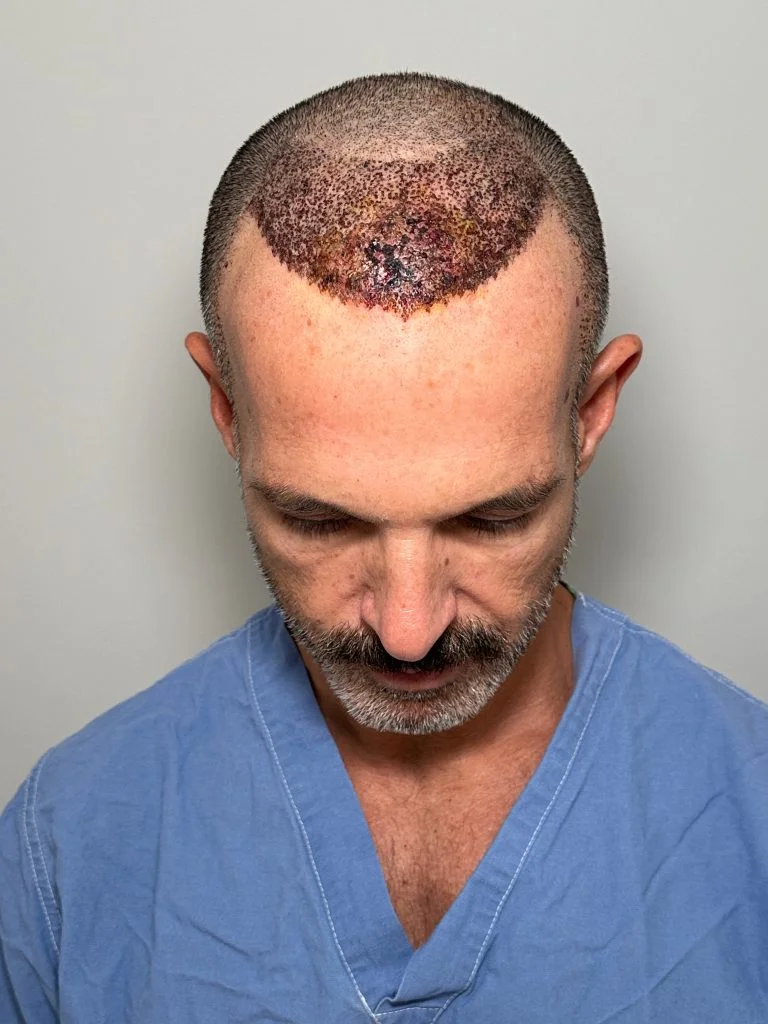
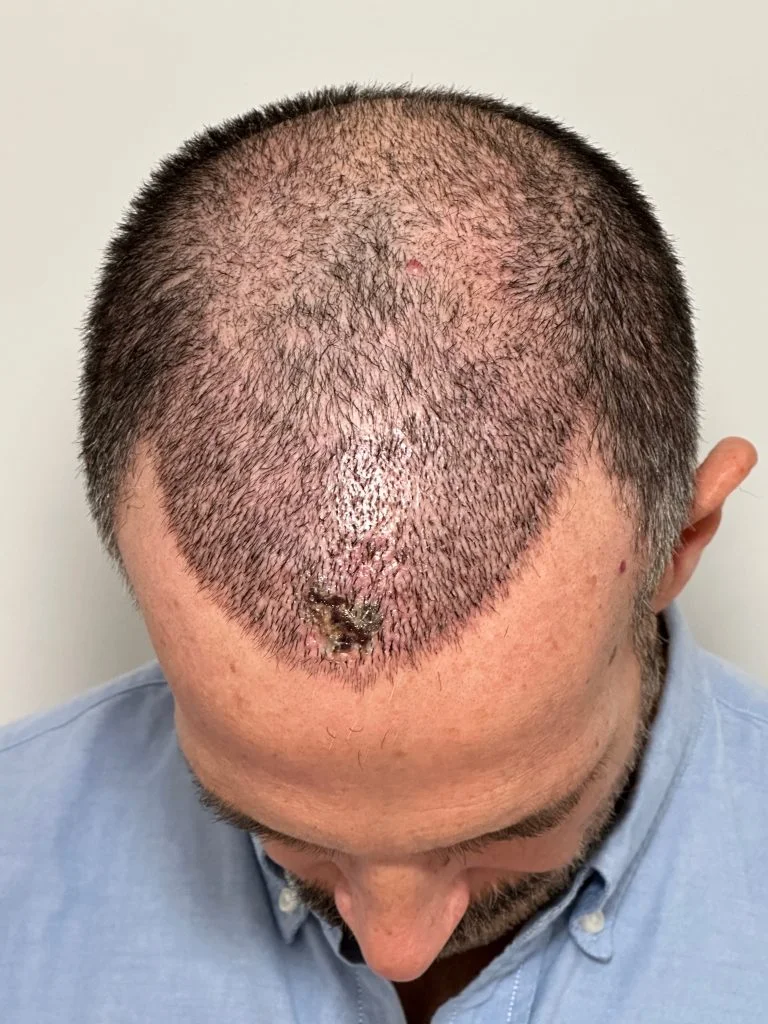
Recognizing the early signs of necrosis after hair transplant surgery is critical for seeking immediate medical attention. If caught early, targeted treatments can stabilize the blood circulation before permanent skin tissue loss occurs.
Pay close attention to these explicit hair transplant necrosis symptoms during the first two weeks:
THE CHRONOLOGICAL SYMPTOM PROGRESSION:
- Days 1 to 3: Dark purple, deep blue, or blackish skin discoloration that does not fade when lightly pressed.
- Days 4 to 6: Intense, throbbing pain that is significantly worse than normal post-operative soreness.
- Days 7 to 10: Formation of dark, thick, hard scabs that sink deeply into the skin tissue instead of flaking away.
- Day 12+: Development of deep sores or open ulcers that release a foul-smelling fluid, accompanied by complete graft loss.
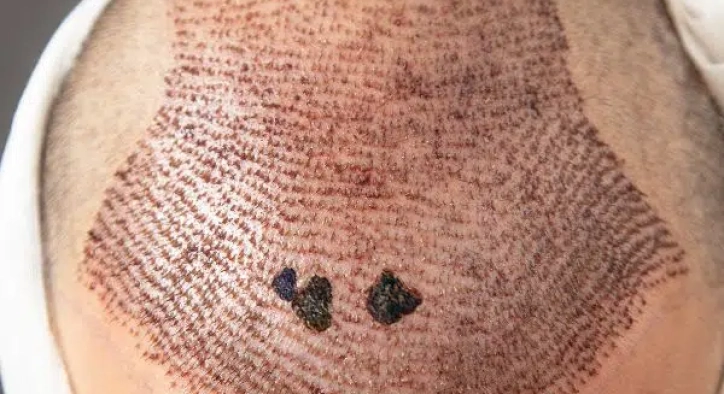
It is vital to differentiate normal micro-scabs from necrotic tissue. Normal scabs are small, reddish-brown dots that sit lightly on the surface of your skin and flake away naturally within 10 to 12 days. In contrast, necrotic tissue looks like a large, solid, sunken black patch that expands across the skin and feels completely cold to the touch due to a lack of blood flow.
Professional Medical Care: How Do You Treat Hair Transplant Necrosis?
If you notice signs of tissue discoloration or severe, throbbing pain, you must contact an accredited medical specialist immediately. Knowing How do you treat hair transplant necrosis requires a quick transition from basic aftercare to intensive clinical wound management.
THE CLINICAL WOUND STABILIZATION WORKFLOW:
- Immediate Vascular Stimulation: Administering targeted vasodilators to restore vital oxygen delivery.
- Surgical Debridement: Gently removing dead tissue layers to expose healthy, living cells.
- Advanced Antibiotic Support: Prescribing broad-spectrum antibiotics to stop secondary infections.
- Hyperbaric Oxygen Therapy (HBOT): Breathing pure oxygen in a pressurized chamber to accelerate cell repair.
The primary objective when deciding how to treat necrosis after hair transplant tissue damage is to stop the dead zone from expanding. The medical team applies specialized topical preparations to widen local blood vessels and increase blood flow to the surrounding skin.
Once the area stabilizes, a surgeon performs a gentle debridement to clear away dead skin layers safely, allowing the underlying tissue to heal. After the wound closes completely advanced treatments like scar revision or a high-precision corrective transplant using soft DHI pens can be planned to restore natural hair density.
Premium Safety Standards vs. High-Risk Setups
The risk of experiencing severe vascular complications during hair restoration can be eliminated entirely by choosing a clinic that prioritizes licensed medical expertise and patient safety. The table below outlines the differences between professional hospital standards and high-risk setups:
Quality and Safety Frameworks | Premium Hospital Standard (Stamboul) | High-Risk Low-Cost Clinic Setup |
Surgical Supervision | Fully led by licensed doctors and oral surgeons | Performed entirely by uncertified technicians |
Anesthesia Fluid Control | Micro-metered, personalized adrenaline doses | High, unmonitored doses to speed up sessions |
Channel Opening Tools | Custom sapphire crystal micro-blades (V-shaped) | Oversized steel blades that cause tissue tearing |
Clinical Environment | Fully accredited, sterile hospital surgical suites | Basic office rooms or uncertified flats |
Patient Follow-Up Care | 12-month surgeon-led digital tracking program | Minimal or zero professional post-operative support |
Frequently Asked Questions (FAQ)
Is hair transplant necrosis a common complication?
No, scalp necrosis is an exceptionally rare complication, occurring in less than 0.5% of procedures globally. It happens almost exclusively at uncertified low-cost clinics where unmonitored technicians over-inject adrenaline or cause heavy tissue trauma.
What are the first symptoms of necrosis after a hair transplant?
The earliest warning signs include a deep purple or blackish skin discoloration within the first 3 days that does not fade when pressed, accompanied by severe, throbbing pain that is significantly worse than normal soreness.
How do you treat hair transplant necrosis?
Treatment requires immediate medical attention. A specialist will administer targeted vasodilators to restore blood flow, prescribe antibiotics to prevent infections, perform a gentle debridement to remove dead skin cells, and may recommend hyperbaric oxygen therapy.
Can hair grow back in an area affected by necrosis?
Hair grafts placed inside the necrotic area cannot survive because the local blood supply was cut off. Once the skin tissue heals completely and the scar tissue matures, a specialized corrective transplant can be performed to rebuild density.
How does the Sapphire FUE technique help prevent necrosis?
Sapphire FUE utilizes ultra-sharp micro-blades carved from smooth sapphire crystal. These blades open clean, precise V-shaped channels without causing the heavy tissue tearing or micro-vibrations associated with steel, protecting your natural blood supply.
Über den Autor