The biological value of preserving natural adult enamel has completely re-shaped the modern approach to aesthetic smile transformations. For decades, traditional porcelain restorations required irreversible tooth preparation meaning a clinician had to shave down a healthy layer of protective tooth enamel to create space for a ceramic shell. While highly effective for severe alignment issues, this structural tooth destruction caused many patients with healthy but slightly uneven teeth to hesitate. Today, high-precision laboratory engineering has established an elite, conservative alternative: non prep veneers.
At Stamboul Dental Clinic, we treat enamel conservation as a core priority of modern digital smile design. If you are researching choices to enhance your teeth without painful drilling or looking into an organized non prep veneers Turkey package, this comprehensive clinical guide provides clear medical insights. We answer the question, what are non-prep veneers, break down the microscopic structural application process, analyze how much do non prep veneers cost, examine long-term durability metrics, and detail the realistic price structures in Istanbul.
Table of Content
- What Are Non-Prep Veneers? The Evolution of No-Shave Esthetics
- The Clinical Procedure: How Are No-Shave Restoration Shells Applied?
- Candidate Suitability: Who Can Benefit from Non-Prep Ceramic Shells?
- When Is Traditional Veneer Preparation Necessary?
- How Long Do Non Prep Veneers Last?
- What Are the Non Prep Veneers Cost Factors?
- Comprehensive Cost Comparison: Global Structural Pricing in 2026
- Frequently Asked Questions (FAQ)
What Are Non-Prep Veneers? The Evolution of No-Shave Esthetics
To establish a clear medical foundation, let us answer a primary question: What are non-prep veneers? Clinically referred to as contact-lens veneers or ultra-thin laminate shells, they are custom-crafted dental restorations made from lithium disilicate (E-max) or specialized feldspathic porcelain.
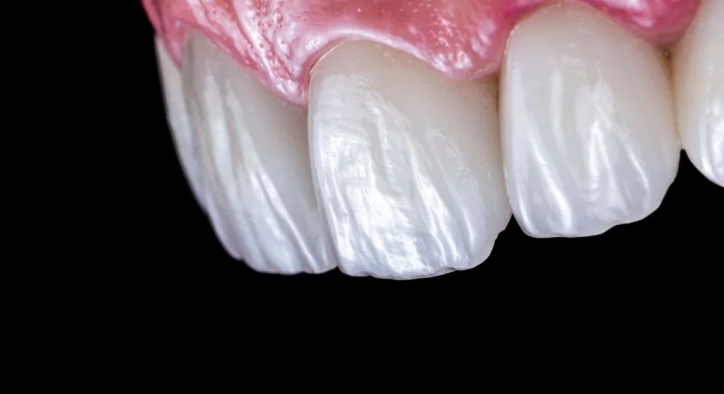
The defining technological feature of these restorations is their microscopic thickness. While traditional ceramic shells require a tooth reduction of 0.5mm to 1.0mm, a non-prep shell is fabricated at an ultra-thin measurement of just 0.2mm to 0.3mm—matching the exact thickness of a standard contact lens.
STRUCTURAL PROFILE COMPARISON:
- [Traditional Veneer]: Shave 0.6mm - 1.0mm Enamel ➡️ Layered Ceramic Shell (Destructive, Irreversible)
- [Non-Prep Veneer]: Zero Shaving / Acid Conditioning ➡️ Ultra-Thin 0.2mm Ceramic Shell (Reversible, Conservative)
Because these restorations are incredibly thin, they can be bonded directly over your raw, un-shaved teeth. The workflow completely eliminates the need for mechanical drilling, avoids temporary acrylic teeth, and does not require local anesthesia injections, making it an exceptionally comfortable cosmetic option in 2026.
The Clinical Procedure: How Are No-Shave Restoration Shells Applied?
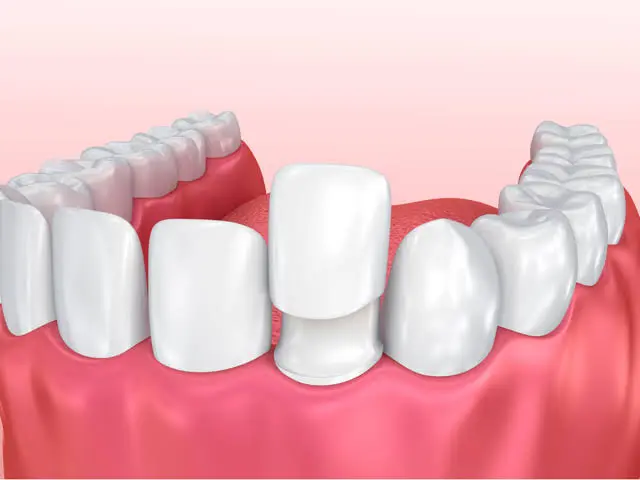
Although the procedure avoids mechanical tooth shaving, it remains an advanced, technique-sensitive treatment that requires meticulous attention to detail during laboratory fabrication and chemical bonding. A standard placement at Stamboul follows a highly planned digital sequence:
1. 3D Digital Smile Design Architecture
Your smile is captured using high-resolution intraoral scanners and digital photography. Our cosmetic dental specialists map out your tooth angles, lip lines, and facial symmetry digitally. This step allows us to design a custom look that fits smoothly over your natural teeth without looking bulky.
2. Additive Laboratory Wax-Up Production
Because this method is additive—meaning it adds a very thin layer over your existing teeth—the lab technician uses CAD/CAM milling to craft the ultra-thin ceramic shells from high-translucency lithium disilicate blocks. This ensures the restorations fit the irregular surfaces of your un-shaved enamel with micrometer precision.
3. Micro-Chemical Enamel Conditioning and Bonding
Since your natural enamel stays fully intact, the tooth surface is gently conditioned with a mild phosphoric gel to create a microscopic texture. The ultra-thin ceramic shells are then permanently adhered to your teeth using high-strength, bio-compatible resin cement. A specialized curing light cures the bond instantly, locking the new shells into place as a seamless, highly integrated part of your tooth structure.
Candidate Suitability: Who Can Benefit from Non-Prep Ceramic Shells?
While a no-shave smile transformation is highly appealing, an honest clinical review must emphasize that non prep options require explicit dental conditions. Because the ceramic layer adds volume without removing underlying tooth structure, it is ideal for specific smile profiles:
- Microdontia and Small Teeth: Perfect for naturally small or narrow teeth, where adding a thin layer balances the smile proportions beautifully.
- Diastema and Gap Closures: An excellent option for closing minor spaces or gaps between teeth without drilling.
- Minor Incisal Chips and Uneven Edges: Easily levels slight length variations or small chips along the chewing edges.
- Mild Internal Tooth Discoloration: Effectively covers slight yellowing or minor stains that resist professional teeth whitening treatments.
When Is Traditional Veneer Preparation Necessary?
If a patient presents with severe dental crowding, protruding teeth, an uneven bite, or deep tetracycline stains, non-prep shells are contraindicated. Placing an additive shell over a tooth that is already misaligned or protruding will make the tooth look unnaturally thick or bulky. For these complex cases, a minimal preparation approach using custom sapphire blades is necessary to achieve proper alignment and a natural look.
How Long Do Non Prep Veneers Last?
A major consideration before choosing any advanced cosmetic dental treatment is its long-term reliability. Prospective patients frequently ask: How long do non prep veneers last?
Long-term clinical data from 2024 to 2026 demonstrates that when bonded correctly to raw enamel, non-prep restorations are exceptionally durable, with an average lifespan of 10 to 15 years, and often longer with proper care.
THE ADHESION ADVANTAGE LEDGER:
- Traditional Prepped Bond: Ceramic bonded to Dentin (Lower bond strength matrix).
- Non-Prep No-Shave Bond: Ceramic bonded directly to Enamel (Highest chemical bond strength possible).
The secret to this impressive longevity lies in the underlying bond chemistry. Traditional tooth shaving often cuts through the enamel layer, forcing the restoration to adhere to the deeper, moisture-rich dentin layer, which naturally has a weaker bond strength.
In contrast, non-prep shells bond directly to the outer enamel layer. Pristine, un-shaved enamel provides the strongest chemical bond possible in modern dentistry, ensuring the thin ceramic shells resist lifting, leakage, and debonding over years of chewing.
What Are the Non Prep Veneers Cost Factors?
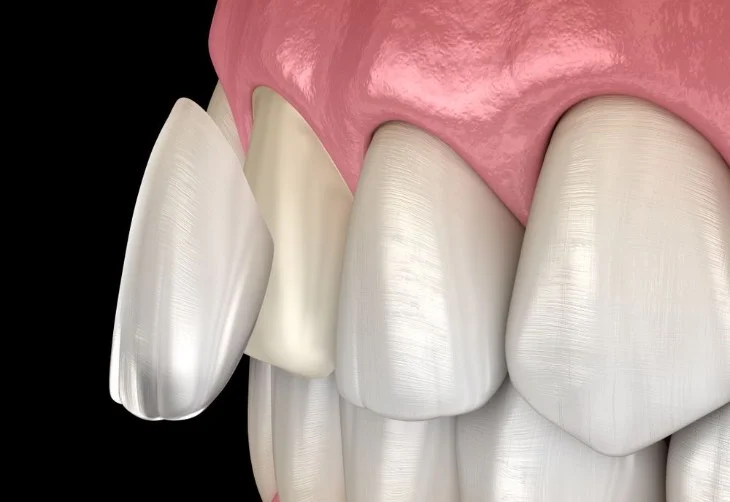
When calculating the overall investment for a smile makeover, looking closely at global market structures is essential. Prospective patients routinely ask: how much do non prep veneers cost, and why is the no prep veneers Turkey price so much more economical?
On a base laboratory level, fabricating a non-prep ceramic shell requires specialized, high-translucency materials and ultra-precise milling calibration to prevent the thin edges from fracturing during production. Because of this high-tech manufacturing process, the raw material cost is generally slightly higher than standard porcelain options.
However, when comparing global costs, private clinics in the United States, the UK, and Western Europe charge a high premium for no-shave procedures, often ranging from $1,500 to $2,500 per tooth. Choosing non prep veneers Turkey allows international patients to access identical, certified premium materials at a fraction of the cost, usually structured within clear all-inclusive packages.
Comprehensive Cost Comparison: Global Structural Pricing in 2026
The following table provides an estimated cost framework for single-unit and full smile package options across major international dental hubs:
Treatment Scope & Package Size | Average Cost in USA | Average Cost in UK / Germany | Average Cost at Stamboul (Turkey) |
Single Non-Prep Unit (Per single tooth area) | $1,500 – $2,500 | £900 – £1,600 / €1,100 – €1,800 | €250 – €400 (Premium E-max Material) |
Upper Smile Package (8 Custom Ultra-Thin Shells) | $12,000 – $20,000 | £7,200 – £12,800 / €8,500 – €14,000 | €2,000 – €3,200 (All-Inclusive Tier) |
Complete Smile Makeover (20 Shells Upper & Lower) | $30,000 – $50,000 | £18,000 – £32,000 / €21,000 – €36,000 | €4,500 – €6,000 (Premium Package Rate) |
Note: The optimized pricing in Istanbul is driven by lower local operational costs, supportive national infrastructure for health tourism, and a streamlined clinical ecosystem designed specifically for international travel needs.
Frequently Asked Questions (FAQ)
What are non-prep veneers?
They are an advanced class of cosmetic dental restorations consisting of ultra-thin porcelain or lithium disilicate (E-max) shells that are custom-milled and bonded directly over your teeth without requiring any mechanical shaving of your natural enamel.
How much do non prep veneers cost in Turkey?
In 2026, a single high-grade E-max non-prep shell at a premium clinic in Turkey typically ranges from €250 to €400, while complete smile transformation packages covering 20 teeth fall between €4,500 and €6,000.
How long do non prep veneers last?
With proper oral hygiene, regular professional cleanings, and avoiding habits like ice-biting, non-prep restorations can easily last 10 to 15 years, thanks to the exceptionally strong bond created directly on raw enamel.
Does the no-shave veneer procedure hurt?
No, the procedure is entirely painless. Because there is no drilling or removal of sensitive enamel tissue, patients do not experience discomfort and do not require local anesthesia injections during the treatment.
Can non-prep veneers be removed later?
Yes, because your natural enamel remains fully intact beneath the restoration, the procedure is technically reversible. If necessary, a specialist can use an advanced dental laser to safely dissolve the resin bond and remove the ceramic shells without damaging your underlying teeth.
Über den Autor